Most small laundry rooms fail for the same reason. The machines take the floor, everything else lands on top of them, and the room slowly turns into a pile. You do not need a bigger room to fix that. You need a job for every surface you already own: the wall above the machines, the back of the door, the gap beside the washer, and the space under a shelf that is currently empty air.
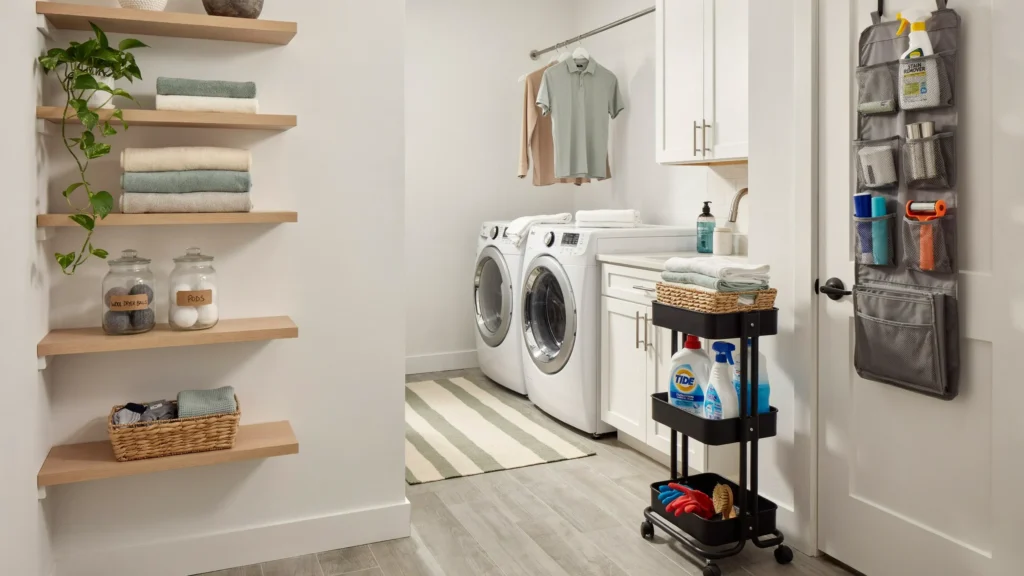
The best small laundry room storage plan gives each job its own spot: washing supplies beside the machines, drying on a wall rack that folds away, folding on a surface you can clear in seconds, and spare stock up high. Start with the wall above the washer and dryer, add door storage next, then fill the narrow gaps with a slim cart.
I have seen plenty of laundry rooms where the owner bought three organisers before measuring anything, and none of them fit. That is the trap. A cart that is 2 cm too wide, a shelf hung too low for a top loader lid, or a cabinet that blocks the dryer vent will all end up in a cupboard somewhere else. Measure first, and the rest of the choices get much easier.
Measure the room before you buy anything
Take five measurements and write them on your phone. The width of the wall above the machines, the gap on each side of them, the height from the top of the machines to the ceiling, the depth of any cabinet or shelf, and the space the door needs to swing.
For a top loader, open the lid fully and measure to the top of the open lid, because a shelf must sit above that point. For a front loader, check the door swing too, since a cart parked too close will block it.
Leave room for the unglamorous parts as well. Hoses, the dryer vent and the power outlet need breathing space behind the machines. Never push storage into that gap or crush a vent hose to make a shelf fit. If the room is a closet, check the ceiling height for stacking: a stacking kit only works if the pair is made to stack, so check the manual before you assume.
| Spot to measure | What to note | Why it decides the storage |
|---|---|---|
| Wall above the machines | Width and height to the ceiling | Decides shelf length and whether a cabinet fits |
| Gap beside each machine | Width at front and back | Decides whether a slim cart will slide in |
| Top loader lid | Height when fully open | Sets the lowest safe shelf height |
| Door swing | Clear arc inside the room | Decides if door storage will hit a shelf |
| Floor in front of the machines | Space to stand and load | Protects the folding and sorting area |
Once those numbers are known, work through the room in zones. That way you are not buying random boxes. You are solving one small area at a time, and you can stop when the room works, even if you never buy the fancy cabinet.
Zone 1: the wall above the machines
The wall above the washer and dryer is usually the largest empty area in the room, and it is the first place to use. A single long shelf over both machines holds detergent, stain remover and folded towels where you can reach them without walking across the room. Two or three floating shelves at staggered heights work better if your bottles are different sizes, because a tall jug and a small spray bottle do not share a shelf happily.
Keep heavy things low. A full jug of liquid detergent on a high shelf is awkward to lift down, and it is the bottle you reach for every load. Put everyday items at arm height and backup stock higher up, with a small folding step stool parked beside the machines if you need it.
Open shelves suit things that look tidy, like folded towels and matching baskets. A cabinet with doors suits everything else, because it hides visual clutter and makes a tiny room feel calmer.
An over the washer shelf unit that stands on the floor and straddles both machines is a good renter friendly alternative to drilling. It gives two or three shelves without a single hole, and you can take it with you when you move. The same no drill thinking works in other rented rooms too: our renter friendly apartment upgrades show how to add storage without risking a deposit.
Light the wall you are about to use
Lighting is easy to overlook, and it changes how usable the new shelves are. A single overhead bulb often leaves shadows over the machines, which makes it hard to spot stains or sort dark colours accurately. A semi flush mount fixture sits close to the ceiling and will not clash with cabinet doors or shelving above the appliances.
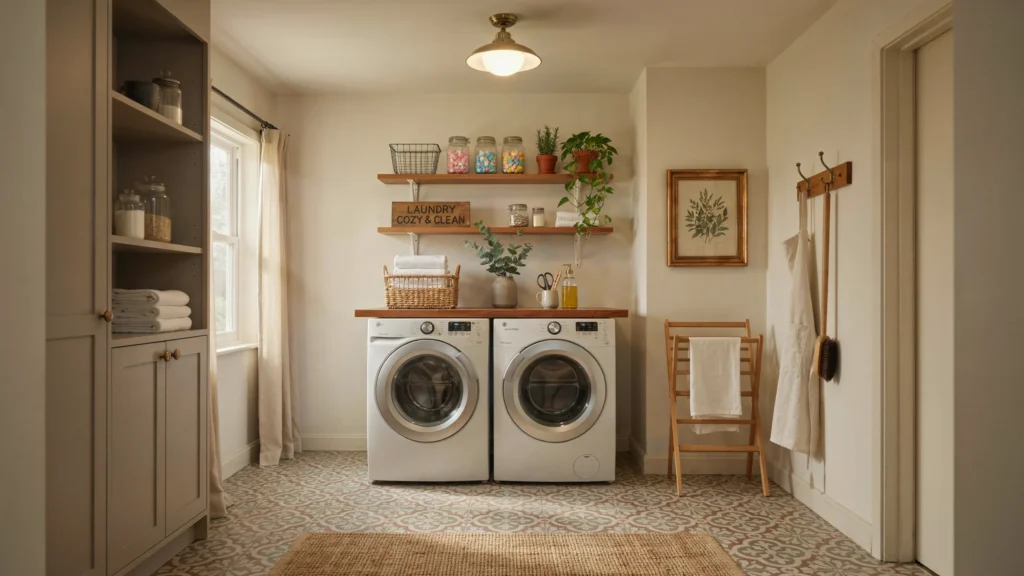
Look for a fixture that holds two or three bulbs for even coverage, and choose a warm or neutral white bulb so the space feels bright without looking clinical. If you add a shelf with a hanging rod underneath, that rod doubles as a place to hang shirts straight out of the dryer, which saves a whole drying step later.
Make furniture do two jobs
In a tight footprint, single use furniture wastes floor. A sturdy counter over a stacked pair, or over a storage crate, doubles as a folding station and a spot to sort mail or treat stains. The rule is simple: the top must be flat and stable, and it must not block appliance doors or walkways. If you have to shuffle it every time you open the washer, it is not saving space.
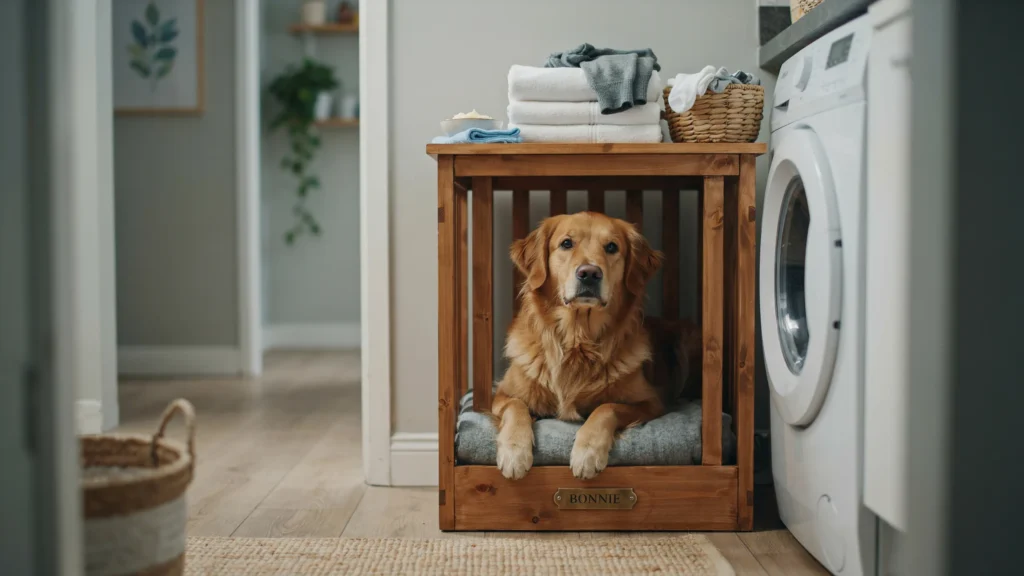
A ventilated pet crate topped with a flat surface is a good example of this thinking in a laundry room that also holds pet gear. The dog gets a resting spot, you get a workstation, and a crate disappears from the living room. Keep pet items compact and washable in this room, because it collects moisture and pet hair together.
Give pets a corner, not the whole room
Laundry rooms are a popular spot for pet essentials because they are tucked away from main living areas. If floor space is tight, look for an awkward corner or an unused nook rather than trying to carve out a dedicated zone. A small pet bed fits neatly into a gap beside a cabinet, or a pull out drawer near the bottom of a built in can hide food and water bowls when not in use.
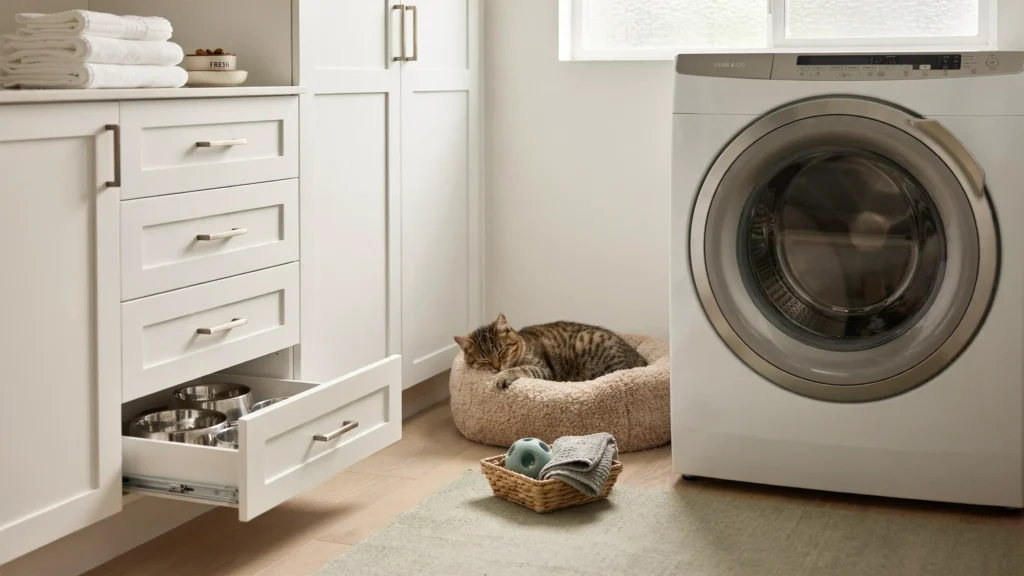
That keeps kibble off the floor and out of sight, and it stops the pet corner from creeping across the room. Washable bowls and a washable bed matter here more than pretty ones, because this room gets damp and hairy faster than any other.
Zone 2: drying without losing the floor
Drying is where small laundry rooms usually collapse, because a floor rack takes the only free square metre. Wall mounted racks solve it. Many fold flat against the wall when not in use, so they disappear between loads. Mount one over a sink or a hamper to catch drips, and you have a drying station that costs no floor at all.
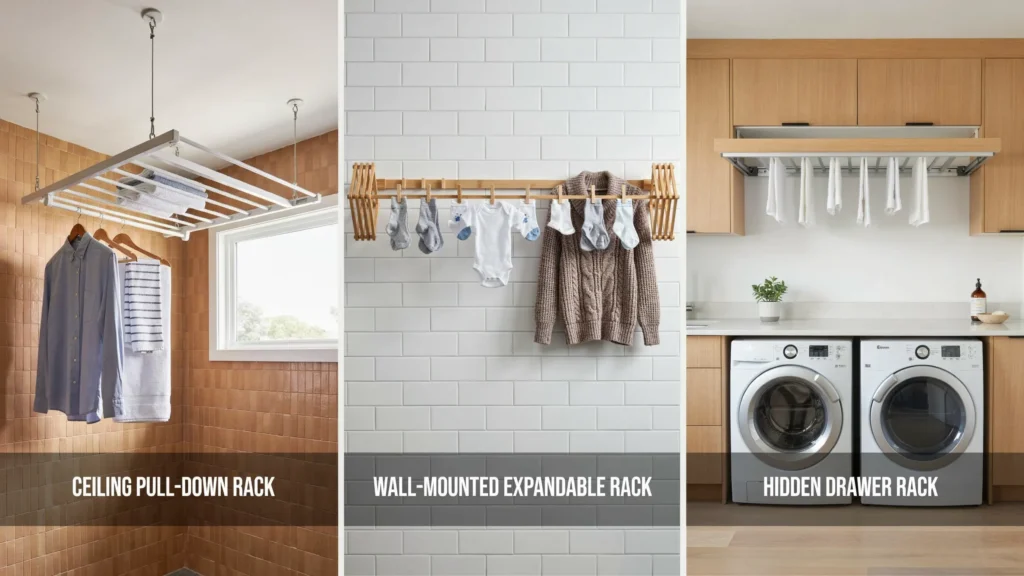
A pull down rack that lowers from the ceiling stays completely out of the way when folded, which suits rooms with little wall space. A vintage style wooden rack that expands outward from the wall and folds flat afterwards does the same job with a bit more charm.
If you are planning cabinetry, a hidden drying rack drawer above the appliances is worth asking about: pull it open for delicates, slide it shut when you are done. For a full no drill drying plan, the same approach appears in our apartment bathroom ideas without drilling, where every fix has to survive a rental inspection.
Hide the machines when there is no laundry room
If your setup lives in a corner of a bathroom, kitchen or hallway rather than its own room, custom cabinet doors can conceal the appliances entirely. That creates a cleaner look and muffles some washer and dryer noise during a cycle. Match the cabinet fronts to your existing cabinetry for a built in feel, and include ventilation gaps behind the doors so the appliances do not overheat.
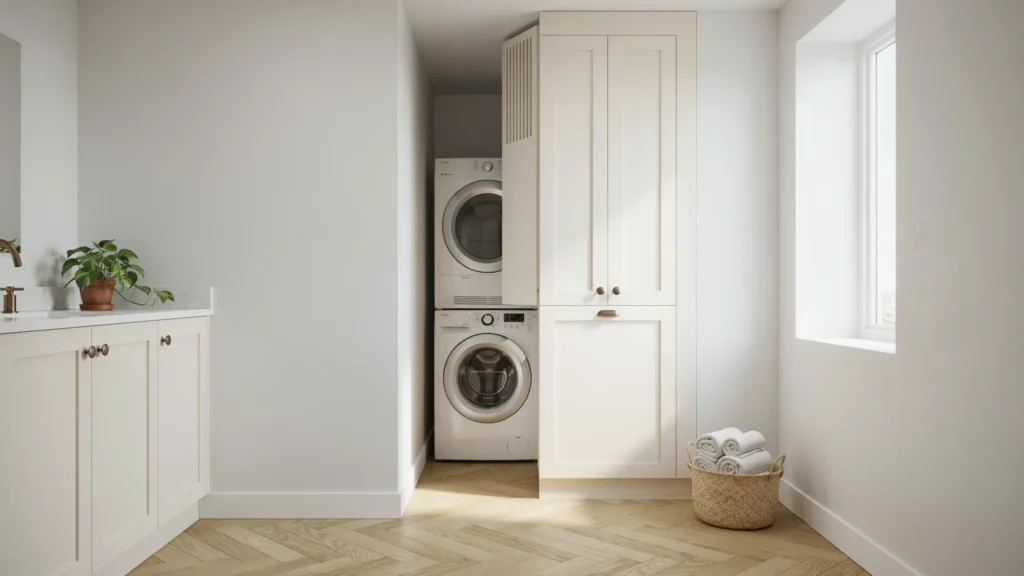
A curtain on a tension rod is the budget version of the same idea, and it works surprisingly well in a hallway nook. It hides the machines, it costs almost nothing, and you can take it down in a minute. What matters is not the material. It is that the machines stop dominating the room visually when they are not running.
Zone 3: pegboards, magnetic strips and small tools
Small tools are the clutter you notice most, because they have nowhere obvious to live. A pegboard turns an empty wall into a flexible organiser. Hang spray bottles, brushes and lint rollers from hooks, and rearrange them whenever your needs change. A magnetic strip inside a cabinet door holds small metal items like scissors, clips or safety pins, which otherwise vanish into a drawer.
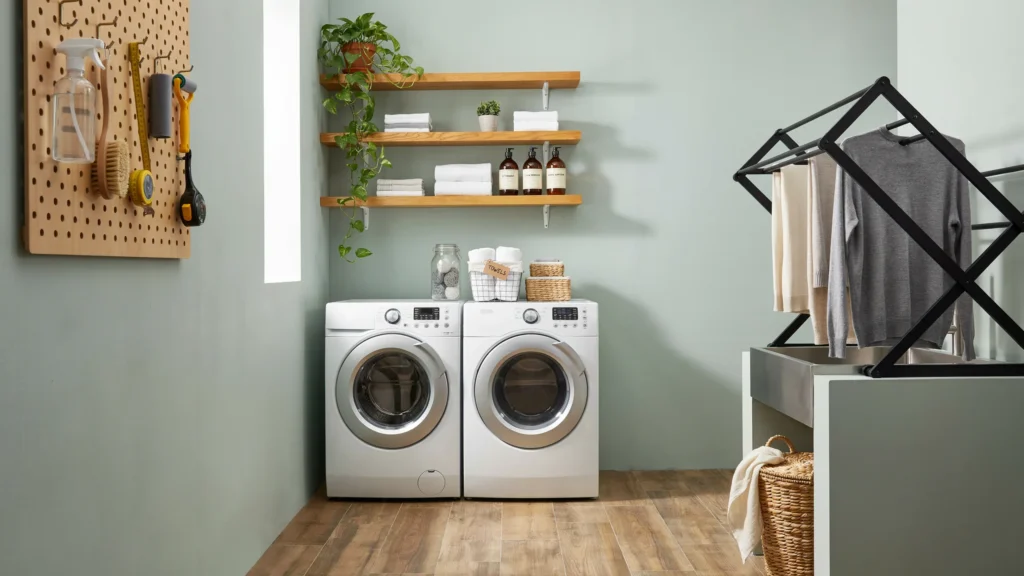
The trick with pegboard is to keep it to one wall section, not the whole room. A full wall of tools looks like a workshop. One neat panel beside the machines, with only the tools you use weekly, looks like a plan. Everything else goes in a labelled box up high.
Zone 4: hidden storage behind closed doors
Custom cabinetry and built ins hide clutter behind closed doors, which instantly makes a small room feel calmer. They cost more than shelves, but they are worth considering if you want a polished, long term setup. Small rooms often have odd corners, slim gaps or spaces above appliances that standard furniture cannot fill, and a cabinet built to fit a tricky spot exactly can turn dead space into storage.
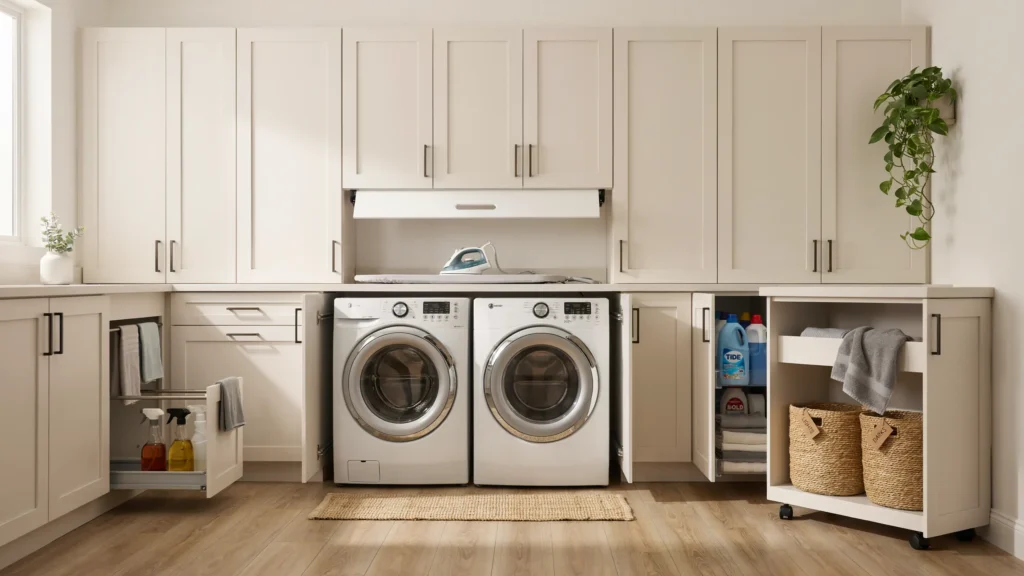
A narrow pull out cabinet between the washer and the wall, for example, can store detergent bottles in a gap as slim as 15 cm. If custom work is out of budget, look for modular cabinets or stock units you can combine to fit your space.
A pull out hamper inside a cabinet hides dirty laundry and frees floor space, and many designs include two or three bins so you can sort lights and darks as you go. A fold out ironing board that slides into a drawer or mounts inside a cabinet is another smart upgrade, because a full size board takes a whole closet to store.
Under sink storage follows the same logic. If the room has a sink, the space beneath it often goes to waste. Add stackable bins, a small pull out drawer, or a tension rod to hang spray bottles, and choose containers that fit around the pipes rather than fighting them.
Zone 5: the door you already own
Doors are easy to overlook, but they offer storage you already own. Both the back of the room door and the cabinet doors can hold a surprising amount. An over the door organiser with pockets or small shelves corrals dryer sheets, lint rollers, clothespins and travel size stain pens. It hangs in seconds, requires no tools, and keeps clutter off your counters. Clear pockets make it easy to see what you have at a glance.
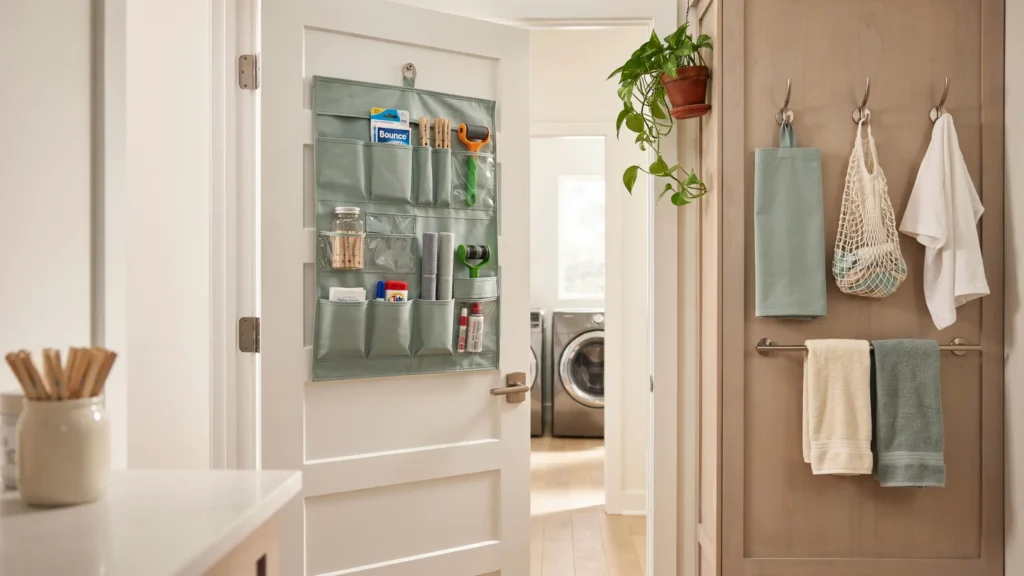
A few hooks on the back of a door give you a spot to hang drying garments, mesh laundry bags or an apron. A slim towel rack mounted on a cabinet door holds hand towels without taking wall space. These small additions add up to a noticeable difference in a tight room, and they are the first fix to try if you rent, because nothing is drilled.
Arrange the machines and the supplies around them
How you place the appliances has a huge effect on how much usable space you have. If you have front loaders, stacking them is one of the biggest space savers available. A stacked unit takes up half the floor footprint, leaving room for a tall cabinet or a folding counter beside it. Use a proper stacking kit to keep the units secure and reduce vibration, and never stack a pair that the manufacturer does not approve for stacking.
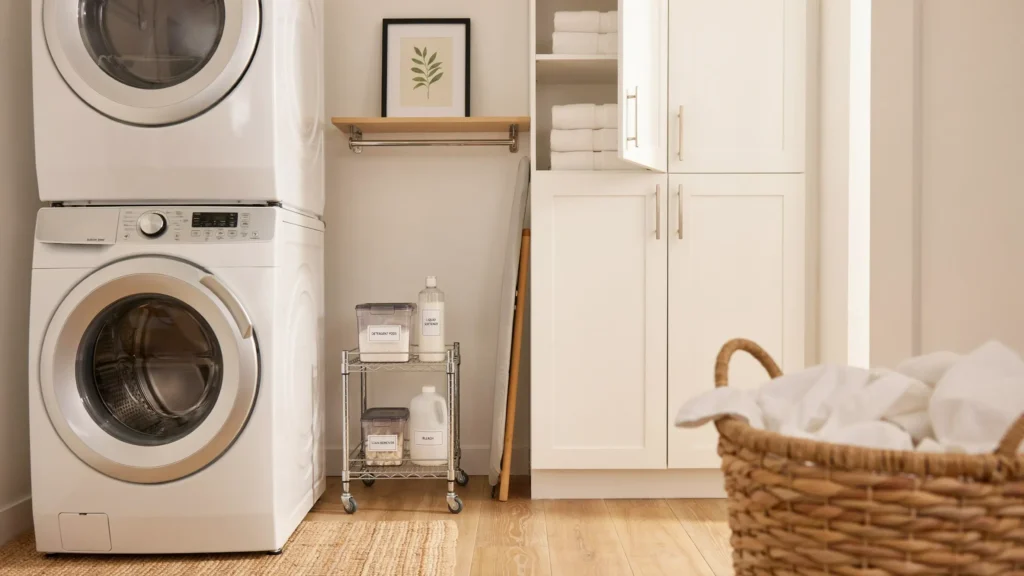
Keep the things you use most within arm’s reach of the machines. A slim rolling shelf in the gap between appliances holds detergent and softener neatly. Decant powders and pods into clear, labelled containers so you can spot when you are running low, and group products by task: washing, drying, stain treating. That way everything you need for one step is in one place, and you are not opening five cupboards per load.
Mobile storage for a room that changes shape
Flexibility matters when every centimetre counts. Mobile storage lets you move things exactly where you need them, then tuck them away when you are done. A slim rolling cart is one of the most versatile tools for a small laundry room. Park it in the gap between the washer and dryer, fill it with supplies, and roll it out when you need access. When folding clothes, wheel it over to use as a temporary surface.
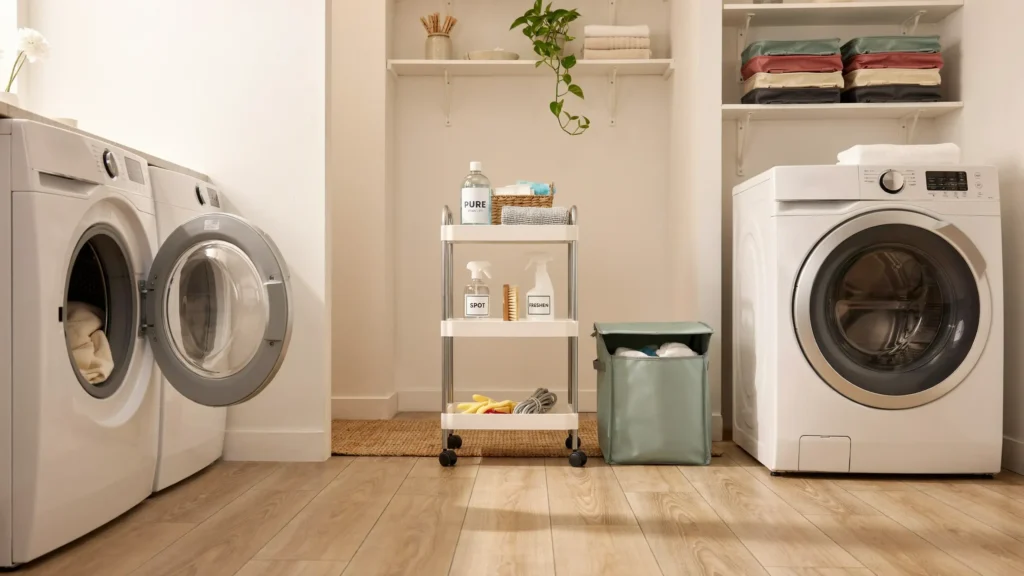
Look for a cart no wider than the gap you want to fill. Many are designed to be just 20 to 25 cm wide, which fits the gap most side by side sets leave.
Collapsible bins solve the other classic problem: laundry baskets take up space even when empty. Pop up fabric bins flatten down when not in use, so you can store several in the space of one, then use them to sort laundry, carry clean clothes or hold cleaning supplies.
The same rolling cart idea works beyond the laundry room. On a balcony, a cart can hold bulky items without turning the space into a dumping ground, as our balcony storage ideas for small spaces show, and in a bedroom a rolling bin under the bed does the same job for shoes and off season clothes.
Budget DIY fixes that actually add storage
You do not need to spend a fortune to get organised. A basic shelf from a wooden plank and a pair of brackets, cut to fit an exact gap, is often cheaper and more precise than a store bought option. For small supplies, mount the lids of mason jars under a shelf, then screw the jars into place. Fill them with clothespins, safety pins or spare buttons for storage that is both useful and charming.
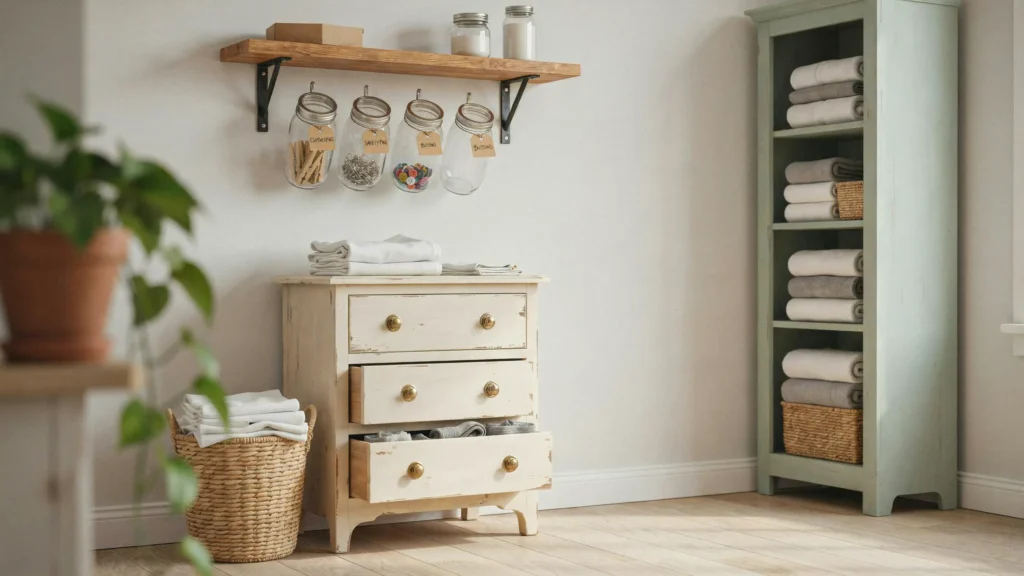
Repurposing old furniture is the other budget win. A narrow bookcase makes a great spot for folded towels and supply baskets. A small dresser hides clutter in its drawers while giving you a surface to fold on top. Repurposing furniture saves money and keeps usable pieces out of landfill, and it often fits awkward gaps better than a new unit, because you can trim or adapt a piece you already own.
Keep it tidy with two small habits
Smart storage only works if you maintain it. A few simple habits keep a newly organised room from sliding back into chaos. Set aside a few minutes once a month to clear out what you do not need. Toss empty bottles, recycle stray packaging, and donate any baskets or tools you no longer use. Regular small cleanups are far easier than one big, overwhelming purge.

Follow the one in, one out rule. Whenever you bring a new item into the laundry room, remove an old one. Buy a new stain remover? Use up or toss the old bottle first. This simple rule stops supplies from quietly piling up and keeps your storage from overflowing. It also forces a useful question every time you shop: do I have a spot for this, or am I just adding to the pile?
Mistakes that undo a good laundry plan
The most common mistake is buying before measuring, which we covered at the start. The second is putting everyday items too high and backup stock at eye level, so every load becomes a stretch and a search. Swap them. The third is filling every shelf to the edge, which leaves nowhere to put a basket down while you sort. Leave one clear surface, even a small one, for folding and sorting, and protect it.
Another mistake is treating the laundry room as overflow storage for the whole house. Bulk paper goods, seasonal items and anything that is not laundry related should live elsewhere. If it does not help you wash, dry, fold or store laundry, it does not earn floor space here. Our small bedroom layout ideas use the same rule for bedrooms: one room, one main job, and everything else has to justify its footprint.
Questions readers ask about small laundry room storage
How much does it cost to organise a small laundry room?
Budget DIY solutions like floating shelves, over the door organisers and rolling carts can cost as little as $20 to $100 in total, as a typical range rather than a fixed price. Custom cabinetry and built ins are a bigger investment, often running several hundred to a few thousand dollars depending on materials and the size of your space.
What is the best storage solution for a very tiny laundry closet?
Focus on vertical and door storage. Floating shelves above the appliances, an over the door organiser, and a slim rolling cart that fits between or beside the units give you the most storage without crowding the floor. Stacking front loaders, where the manufacturer allows it, also frees up significant space.
How do I store detergent and supplies in a small space?
Keep supplies close to the machines using a slim shelf or rolling cart in the gap between them. Decant powders and pods into clear, labelled containers to save space and track when you are low. Group products by task so everything for one step stays together.
Can I add storage without drilling into the walls?
Yes. Over the door organisers, tension rods, freestanding rolling carts, collapsible bins and repurposed furniture all add storage with no drilling required. These options are ideal for renters or anyone who wants a flexible, damage free setup.
How often should I declutter a laundry room?
A quick two minute tidy a few times a week, plus a proper clear out once a month, is usually enough. Check expiry dates, toss empty bottles and move anything that is not laundry related out of the room before it settles in.
Start with the wall above the washer
A small laundry room does not have to mean a cramped, frustrating one. By using your walls, doors and vertical space, hiding clutter in smart cabinetry, and keeping supplies mobile, you can fit far more into a tight footprint than you might think. Add in a few budget DIY hacks and steady decluttering habits, and your space stays functional for the long haul.
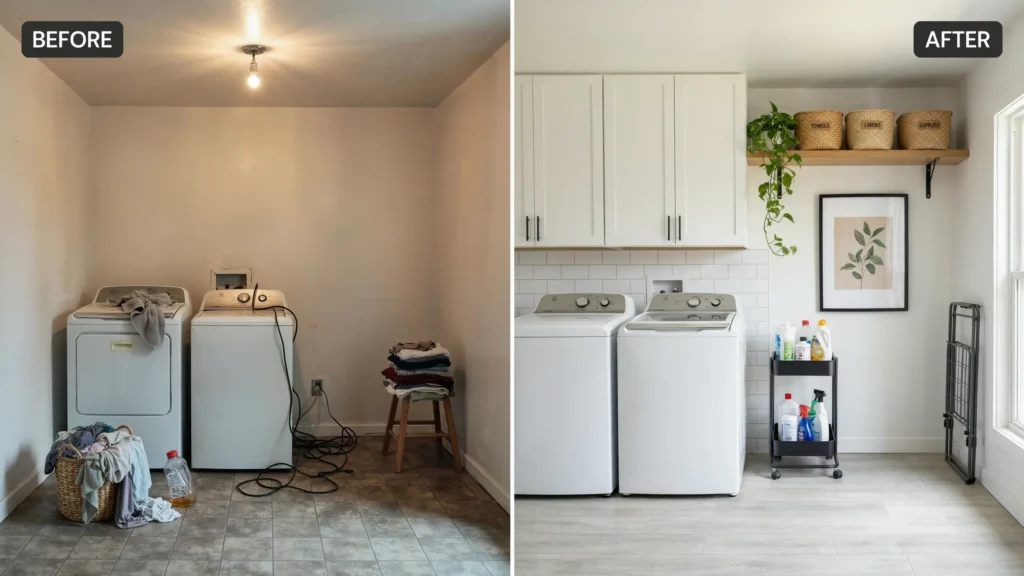
The biggest payoff is how much smoother laundry day feels when everything has its place. Start with one change, maybe a set of floating shelves or a rolling cart, and build from there. If you are short on space elsewhere too, our studio apartment layout ideas show how the same zone thinking works across a whole small home. Small steps add up to a space that works for you instead of against you.