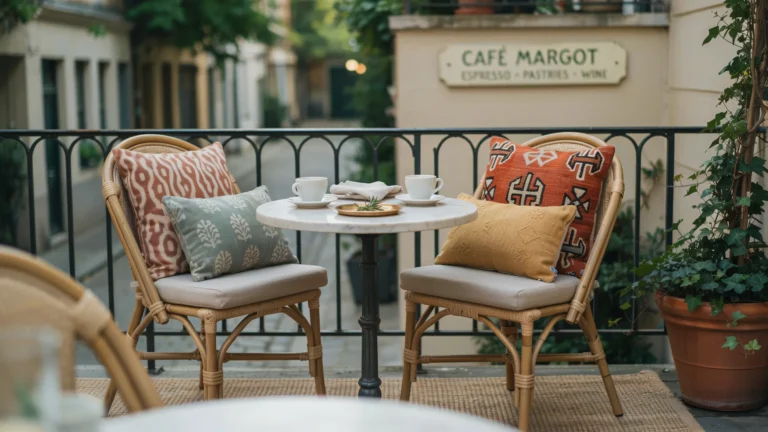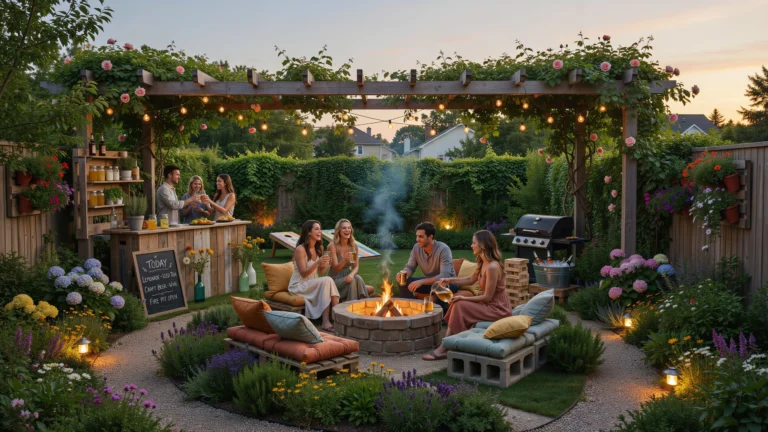
Farmhouse style built its popularity on natural materials, neutral palettes, and cozy comfort, but many homeowners are ready for something more personal. Evolving beyond the farmhouse doesn’t mean starting over. Strategic swaps in furniture, color, lighting, and accessories can transform your space into something timeless, distinctive, and entirely your own.
How to Evolve Your Style Beyond Farmhouse Décor is all about refreshing your home with thoughtful updates that reflect your personality while preserving the warmth and comfort you already love. Instead of replacing everything, you can mix modern details, classic textures, and meaningful décor to create a space that feels elegant, balanced, and uniquely yours.
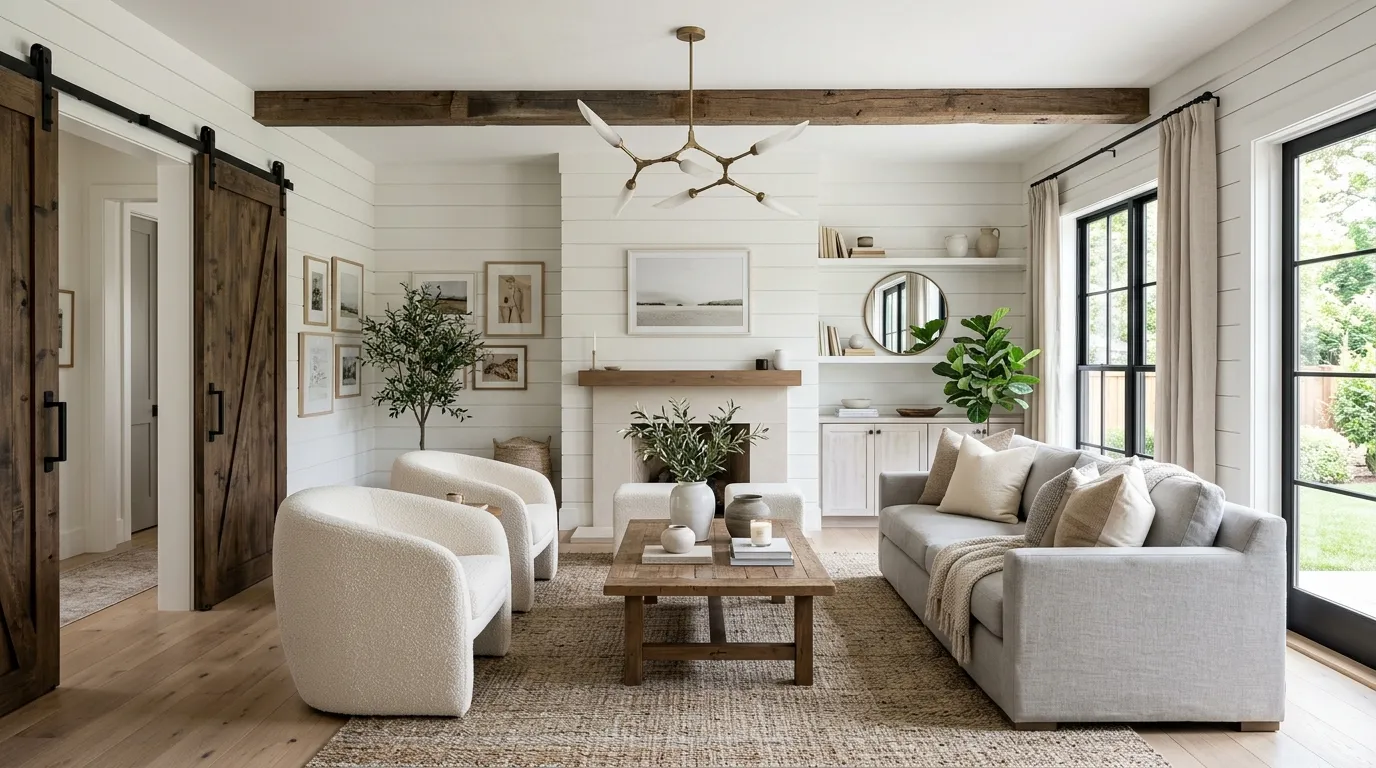
There’s a reason farmhouse style dominated home design for over a decade. Shiplap walls, reclaimed wood accents, and a palette of warm whites felt like a collective exhale a retreat from the overly ornate and the aggressively modern. For millions of homeowners, it was the first design language that truly felt accessible.
But somewhere along the way, “accessible” started to feel “expected.” Walk into enough open-concept kitchens with subway tile backsplashes and galvanized metal accents, and the charm begins to blur. What once felt personal now feels like a showroom. And if your home has started to feel more like a Pinterest board than a reflection of who you actually are, you’re not alone.
The good news? Evolving your style beyond farmhouse doesn’t require a demolition crew or a designer’s budget. More often, it requires a clearer sense of what you love, a few strategic changes, and the confidence to let your home grow alongside you.
This guide walks you through exactly how to do that from identifying your evolving aesthetic to making room-by-room changes that feel intentional rather than impulsive.
What Makes Farmhouse Style So Appealing and Where It Falls Short
At its core, farmhouse design is built on a handful of enduring principles: natural materials like wood and linen, a neutral color palette anchored in whites and warm beiges, rustic accents that nod to rural life, and above all, comfort. These are not bad principles. In fact, many of them are worth keeping.
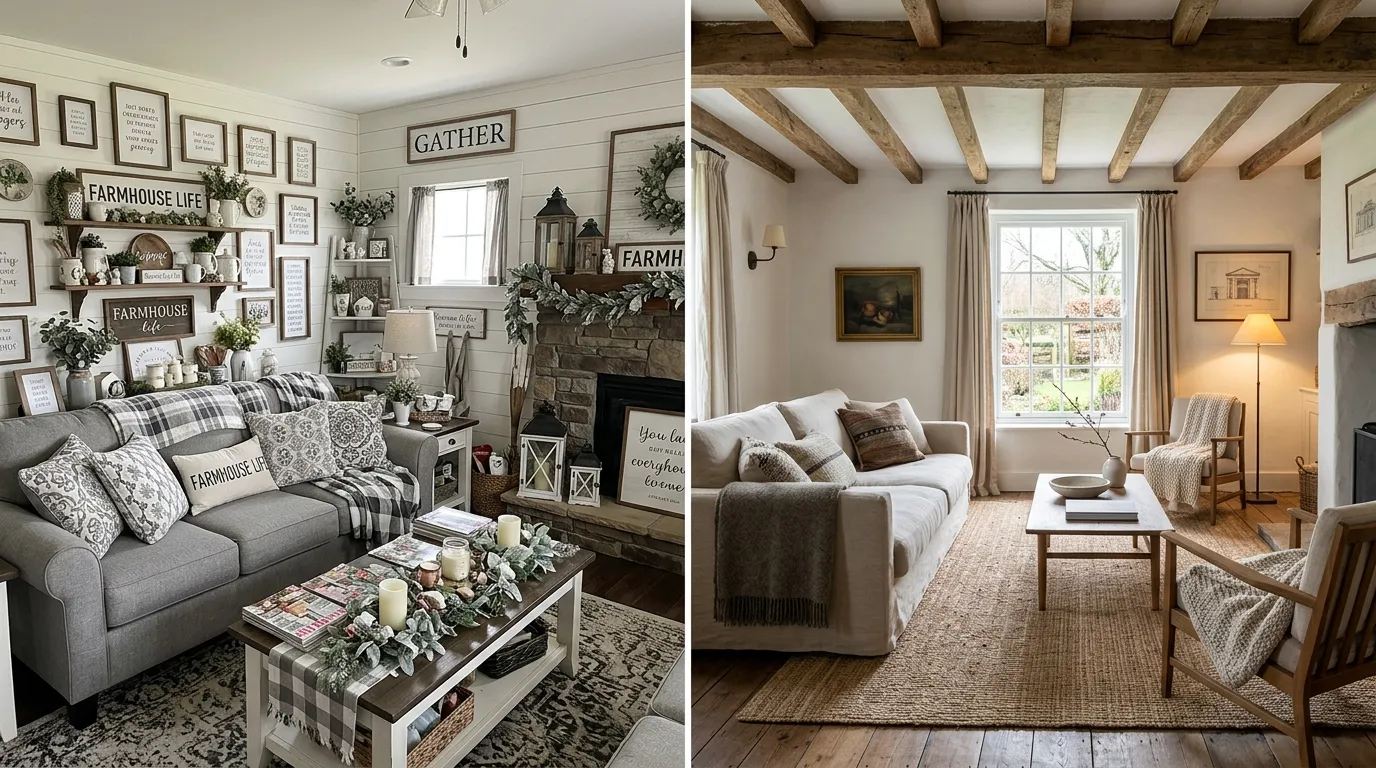
The problem is execution. When a style becomes mainstream enough to fill the shelves of every major home retailer, its defining elements become visual shorthand rather than genuine expression. Buffalo check throw pillows, “gather” signs, and shiplap panels stop feeling curated and start feeling like a checklist.
This is the central tension of any popular design movement: the very things that made it appealing are eventually diluted by mass production. A style that once felt warm and personal can start to feel generic and that’s the signal that it’s time to evolve.
How Do You Discover What Your Evolving Aesthetic Actually Is?
Before you start shopping or painting, spend some time in honest self-reflection. Pull up your saved photos on Pinterest or Instagram and look for patterns that have nothing to do with farmhouse. Are you drawn to the clean lines and warm wood tones of Scandinavian design? The disciplined restraint of Japandi? The bold curves and rich colors of mid-century modern?
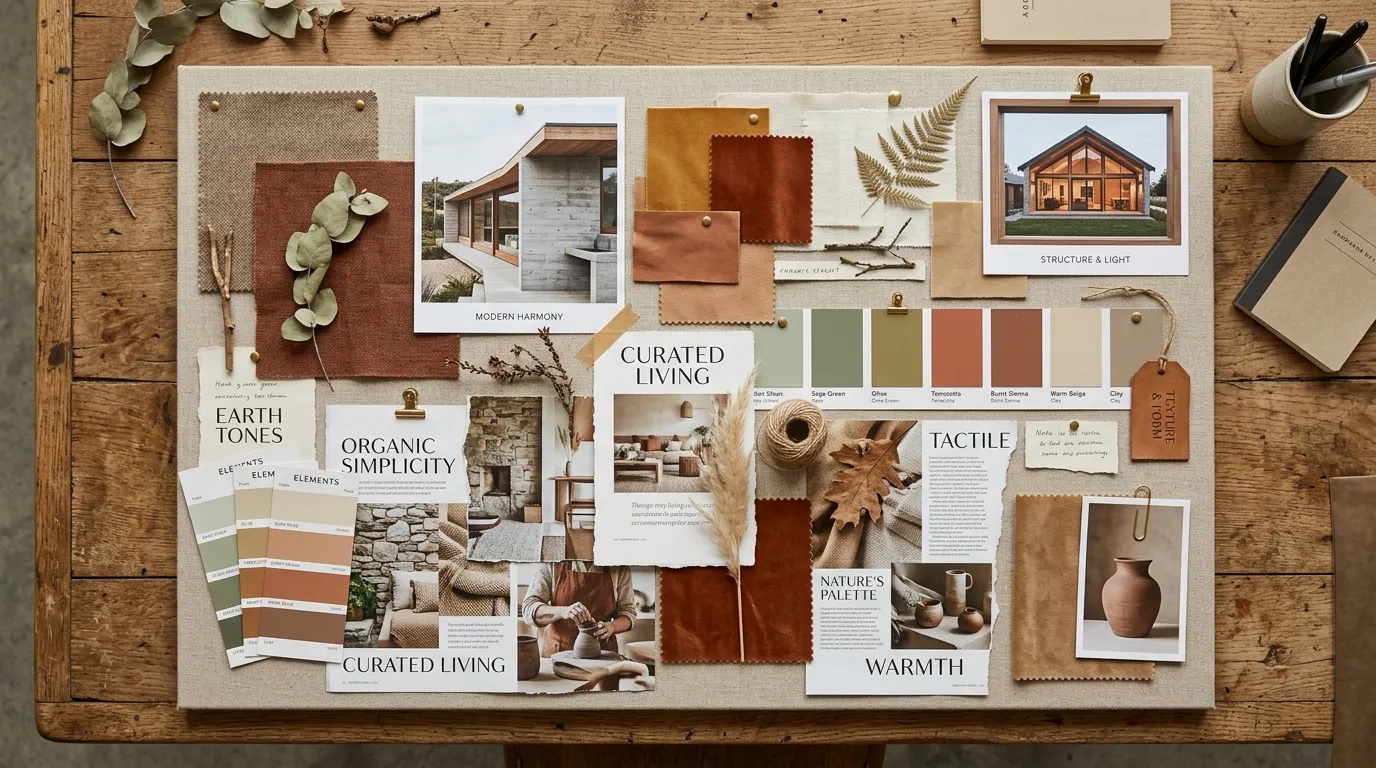
Create a mood board digital or physical that captures textures, colors, furniture silhouettes, and lighting styles you genuinely respond to. Include images from hospitality spaces, fashion editorials, and travel photography, not just interior design accounts. Your aesthetic is broader than any single category.
The goal at this stage is not to pick a new label (e.g., “I’m a Japandi person now”). It’s to identify the specific qualities warmth, texture, quietness, drama that matter most to you. Those qualities will guide every decision that follows.
Strategic Swaps That Make the Biggest Difference
How Should You Update Your Furniture Without Starting From Scratch?
You don’t need to replace every piece of furniture just the ones working hardest against your new direction.
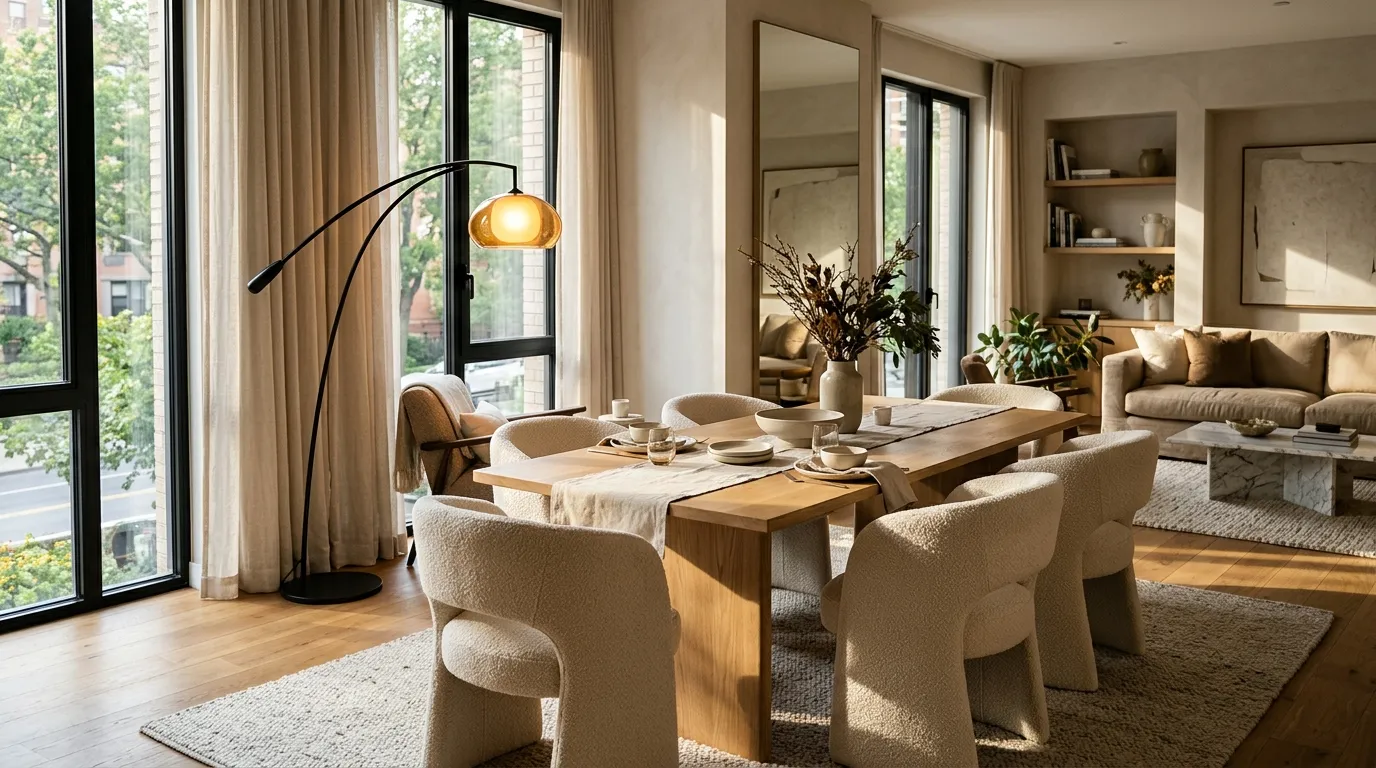
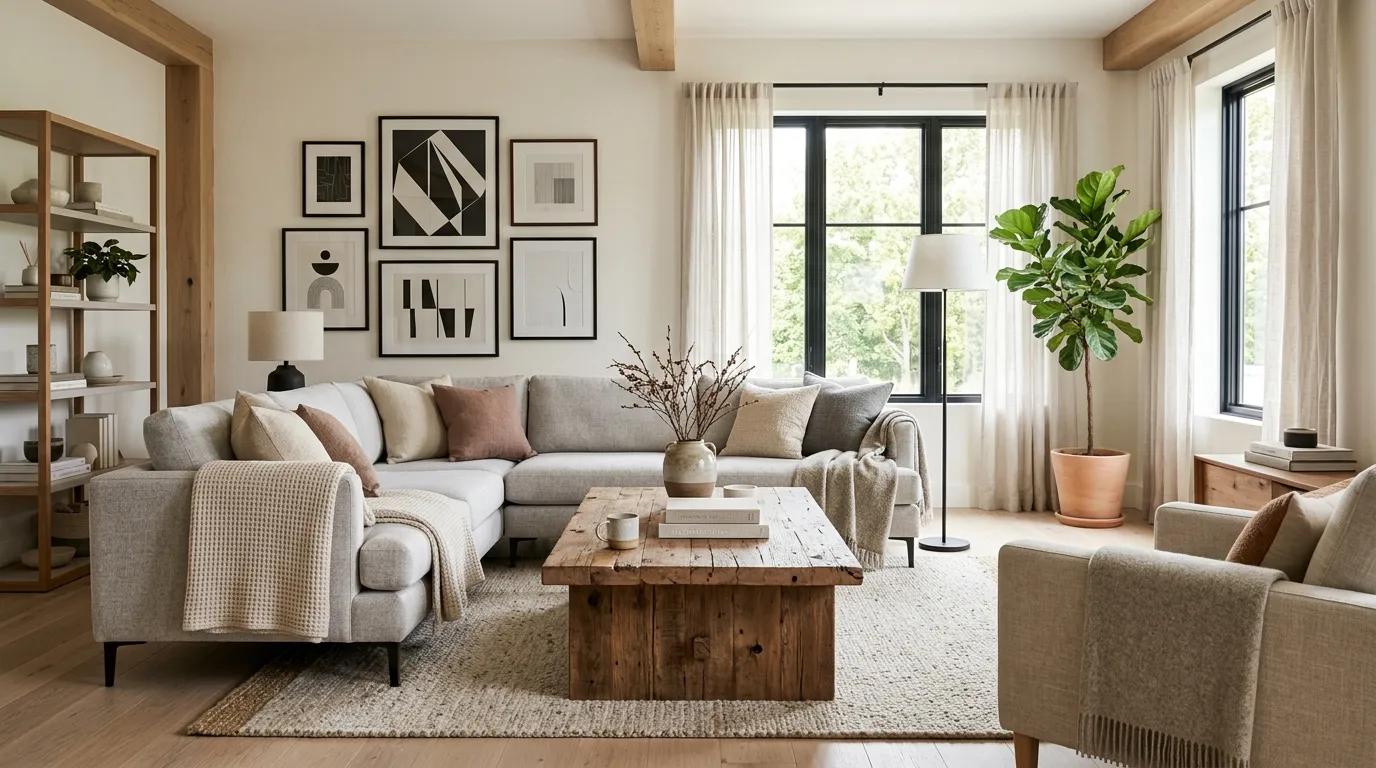
Start by identifying the most visually dominant pieces in each room. An oversized, heavily distressed farmhouse dining table, for example, may be worth replacing with something that has cleaner lines and a slightly more refined finish think solid oak with straight legs rather than turned, chunky ones. For seating, introduce upholstered pieces in emerging textures: boucle chairs add softness and visual interest without veering into rustic territory. At the same time, velvet sofas bring a quiet luxury that farmhouse style rarely allows.
The shift here is from “worn and weathered” to “warm and considered.”
What Color Palette Works Best When Moving Beyond All-White Farmhouse?
All-white rooms photograph beautifully. They’re also notoriously difficult to live in and easy to get wrong.
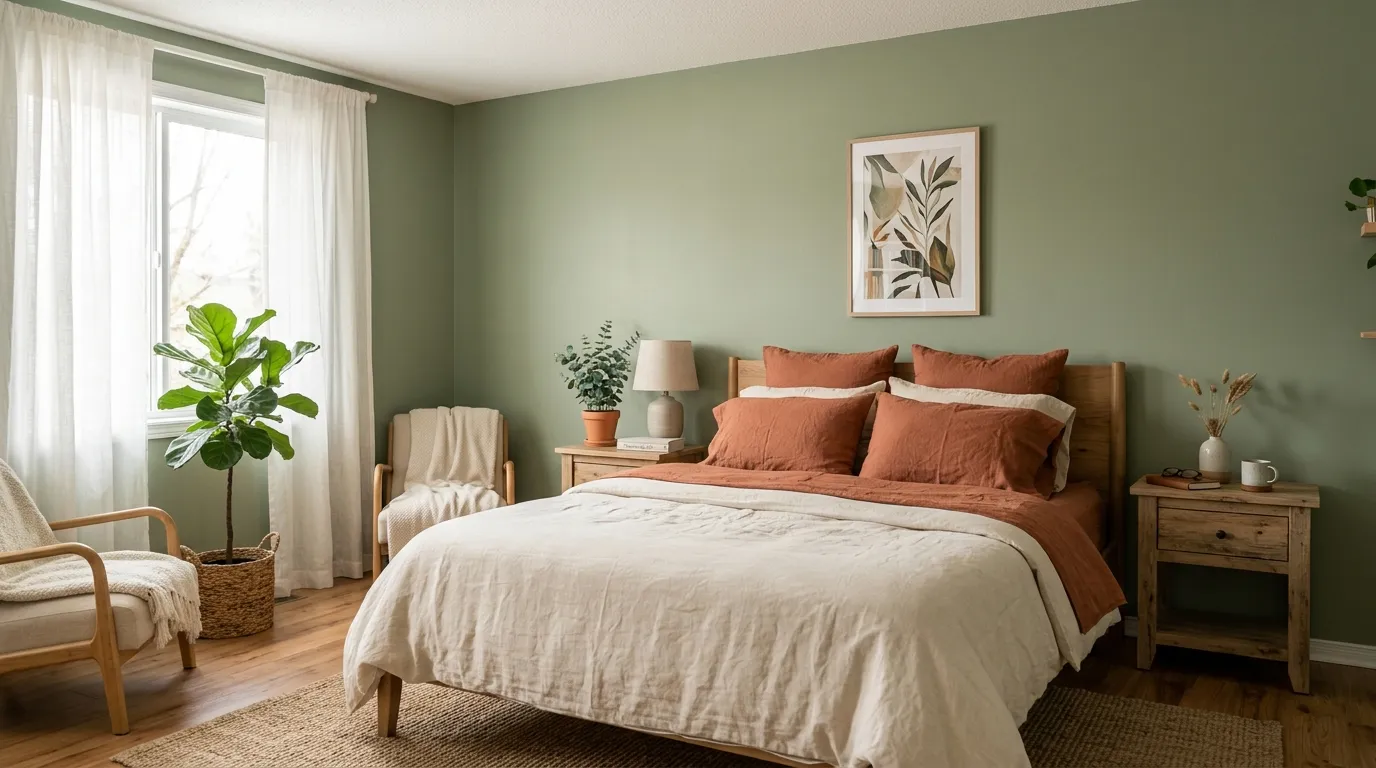
Moving beyond farmhouse white doesn’t mean going dark or dramatic (though it can). It means introducing depth through color relationships. Warm grays, sage greens, and dusty blues create a calm, grounded palette that retains the farmhouse’s relaxed energy while feeling more considered. Soft terracotta works especially well as an accent tone earthy enough to complement natural materials, distinct enough to signal a clear shift in direction.
The key is to move from a single dominant tone to a layered palette: one or two anchor colors supported by complementary accents in textiles, art, and accessories.
How Can Lighting Transform a Farmhouse Space Into Something More Refined?
If shiplap is the farmhouse’s most visible characteristic, barn-style pendants and mason jar fixtures are a close second. Replacing them is one of the highest-impact changes you can make.
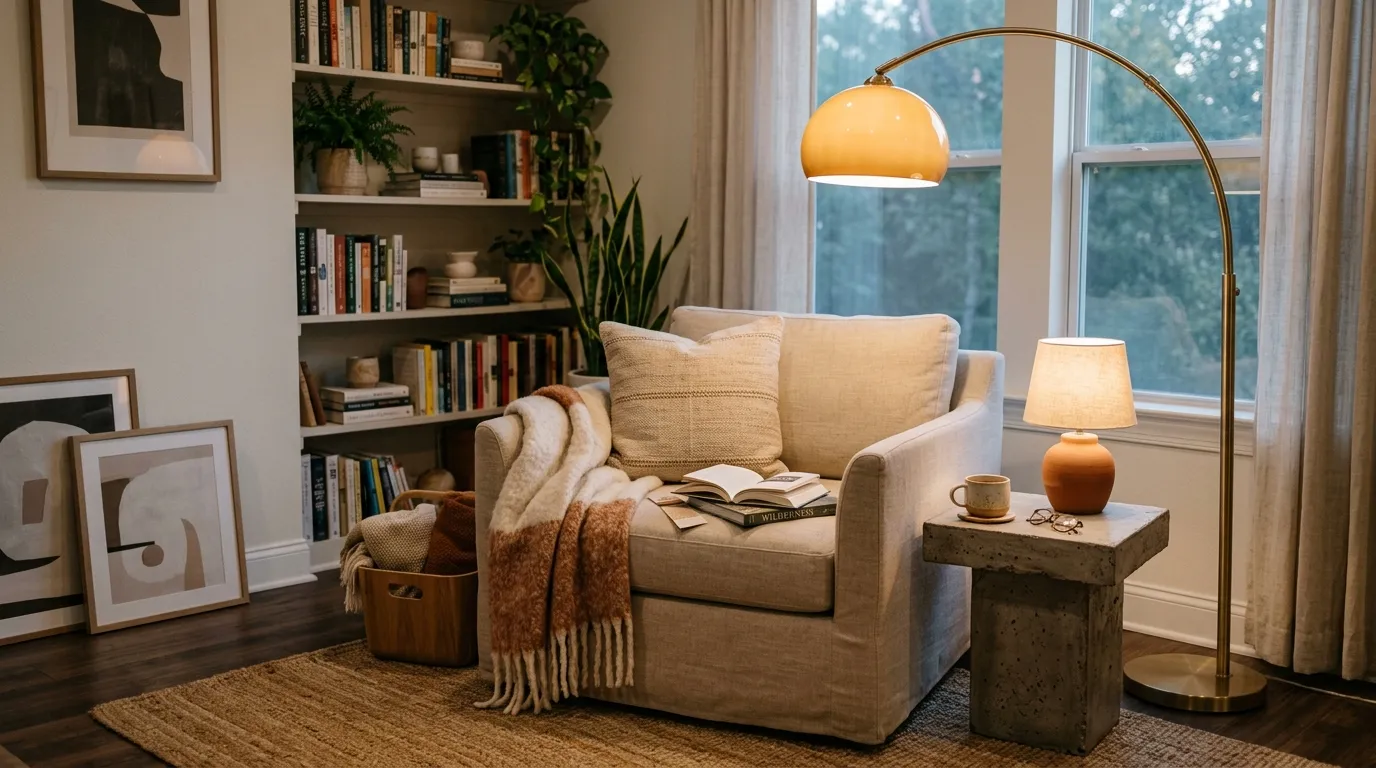
Contemporary and sculptural lighting rattan pendants with cleaner silhouettes, arched floor lamps, or concrete table lamps signals a clear design shift without touching a single wall. Equally important is the concept of layered lighting: ambient, task, and accent sources working together rather than relying on a single overhead fixture. Layered lighting makes any room feel more intentional, and it’s a hallmark of well-designed spaces across virtually every style category.
Which Textiles Help Bridge the Gap Between Farmhouse and a More Elevated Look?
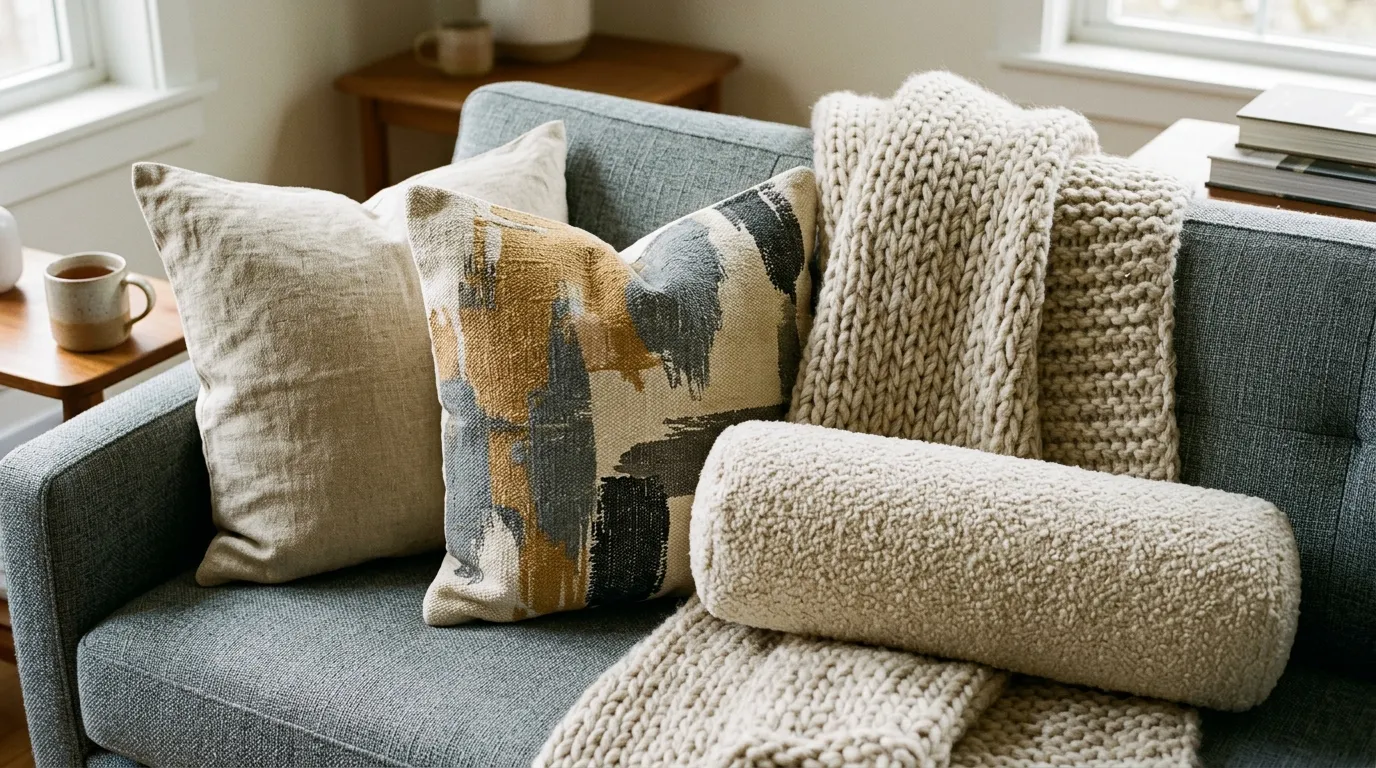
Buffalo check and grain sack patterns are the farmhouse’s most recognizable textile signatures. To evolve, replace them with fabrics that carry more visual nuance: abstract patterns in muted tones, subtle stripes, or rich, high-quality solids.
Material matters as much as pattern. Linen remains a strong choice it’s natural, breathable, and ages beautifully but layering it with wool throws, performance velvet, and textured boucle creates a more complex, livable palette. The goal is variety in texture rather than uniformity in pattern.
Curated Collections: Art, Accessories, and the Power of Meaningful Objects
What Kind of Art Works Best When Moving Beyond Generic Farmhouse Prints?
The “Home Sweet Home” print has had its moment. As you evolve your style, let your wall art do more meaningful work.
Abstract pieces whether affordable prints or original works sourced from local artists or platforms like Society6 or Saatchi Art introduce color, emotion, and personality that mass-produced farmhouse art rarely achieves. Landscape photography with a strong compositional point of view, personal travel photography in high-quality frames, or even a single large-scale botanical illustration can anchor a wall beautifully. Frame selection matters, too: thin black metal frames or natural wood gallery frames read as more contemporary than the chunky white frames typical of farmhouse interiors.
How Do You Accessorize Without Falling Into the Farmhouse Clutter Trap?
Less is considerably more. Farmhouse style has a tendency toward abundance layered signs, seasonal vignettes, and every horizontal surface holding something decorative. The antidote is curation.
Focus on a smaller number of objects with genuine meaning or visual quality: a ceramic vase handmade by a local artist, a piece of driftwood collected on a trip, a vintage brass bowl found at a market. These items carry weight and specificity that mass-produced décor cannot replicate. The question to ask of each accessory is not “Is this pretty?” but “Does this belong here?”
Why Are Plants One of the Easiest Ways to Evolve Any Farmhouse Interior?
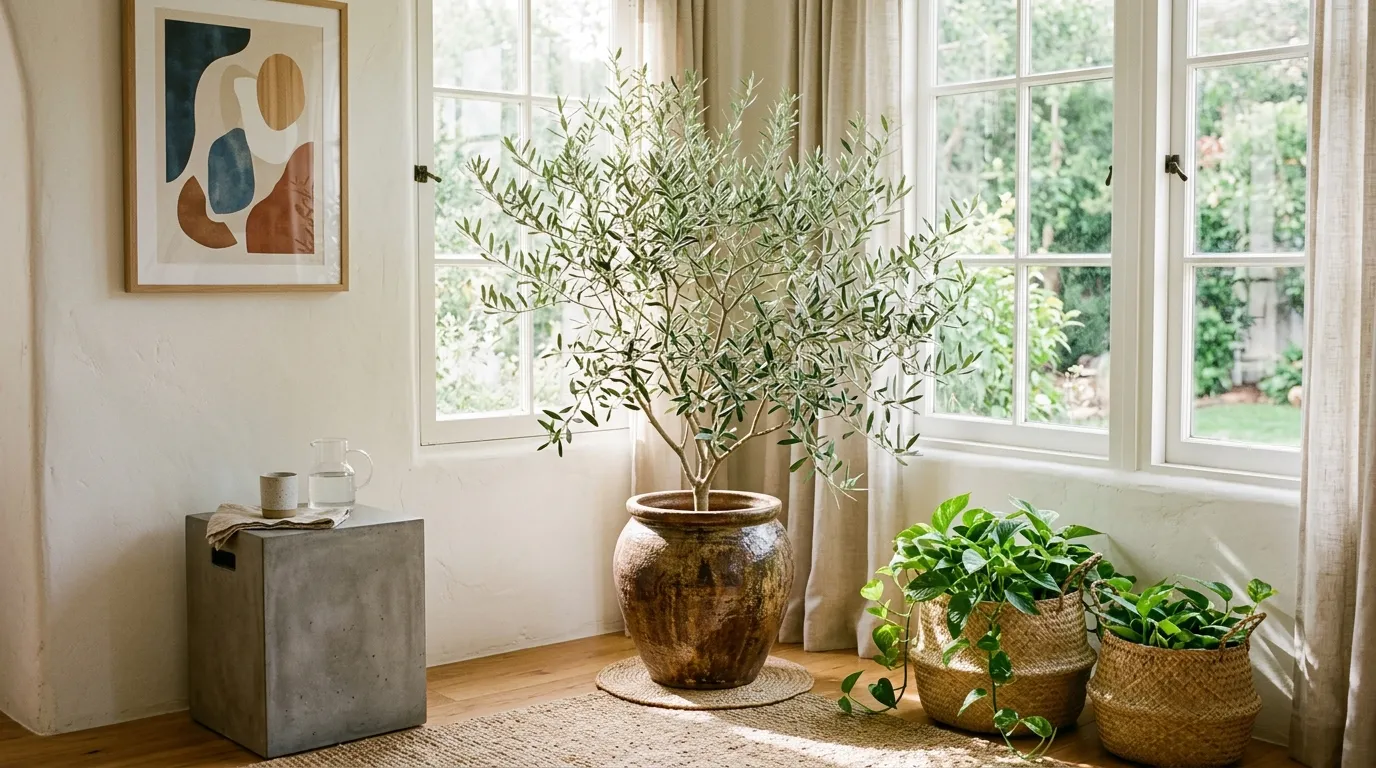
Greenery bridges virtually every design style, and it’s one of the most affordable ways to shift a room’s energy. Moving beyond the ubiquitous eucalyptus stem, consider incorporating a large fiddle leaf fig or olive tree as a structural element, trailing pothos for softness, or a cluster of terracotta-potted succulents for texture.
Planter selection is as important as plant selection. Textured ceramic planters, aged terracotta, woven baskets, and brushed concrete pots all add material interest while feeling decidedly less “farmhouse store.”
How Do You Blend Styles Without Your Home Feeling Incoherent?
The fear most homeowners have when evolving their style is ending up with a home that looks confused rather than curated. The antidote is intentionality and a simple rule of thumb.
The 80/20 principle works well in interior design: let approximately 80% of your space reflect your dominant style direction, and allow the remaining 20% to introduce complementary elements or deliberate contrast. A room that’s primarily Scandinavian in its furniture and palette can absolutely accommodate a single rustic wooden bench or a collection of vintage ceramics as long as those pieces feel chosen rather than leftover.
Cohesion comes from repeated visual elements a consistent finish in metals, a limited color palette, a recurring texture rather than from strict adherence to a single style label.
Room-by-Room Examples: What Does This Evolution Actually Look Like?
Living Room: From Shiplap to Textured Walls
Rather than removing shiplap (an expensive and disruptive project), consider painting it a deeper tone a warm putty, a soft sage, or even a moody navy to shift its visual weight. Pair with contemporary furniture, upgrade the lighting, and let a single large-scale art piece anchor the room.
Kitchen: From Open Shelving to Minimalist Cabinetry
Open shelving requires constant curation. Replacing or painting lower cabinets in a muted tone warm white, sage, or deep slate and reducing the number of displayed objects gives a farmhouse kitchen a more refined, contemporary edge. Hardware upgrades (brushed gold or matte black rather than oil-rubbed bronze) make a significant visual difference at low cost.
Bedroom: From Distressed Wood to Luxurious Textiles
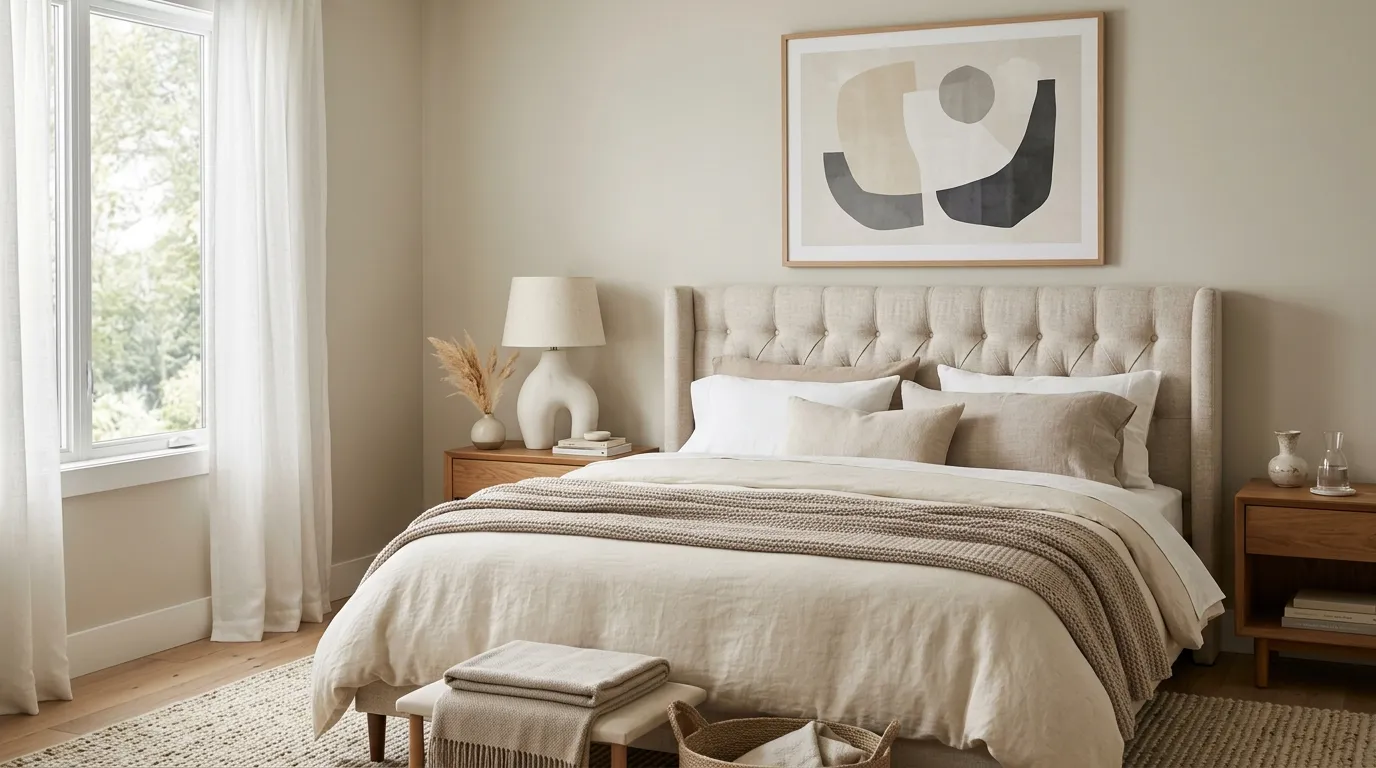
The bedroom is where textile evolution makes the biggest impact. Swap distressed wood bed frames for upholstered headboards in linen or boucle, invest in high-quality bedding in a restrained palette, and remove any decorative signage. Let the room breathe.
How Do You Future-Proof Your Home Against the Next Big Trend?
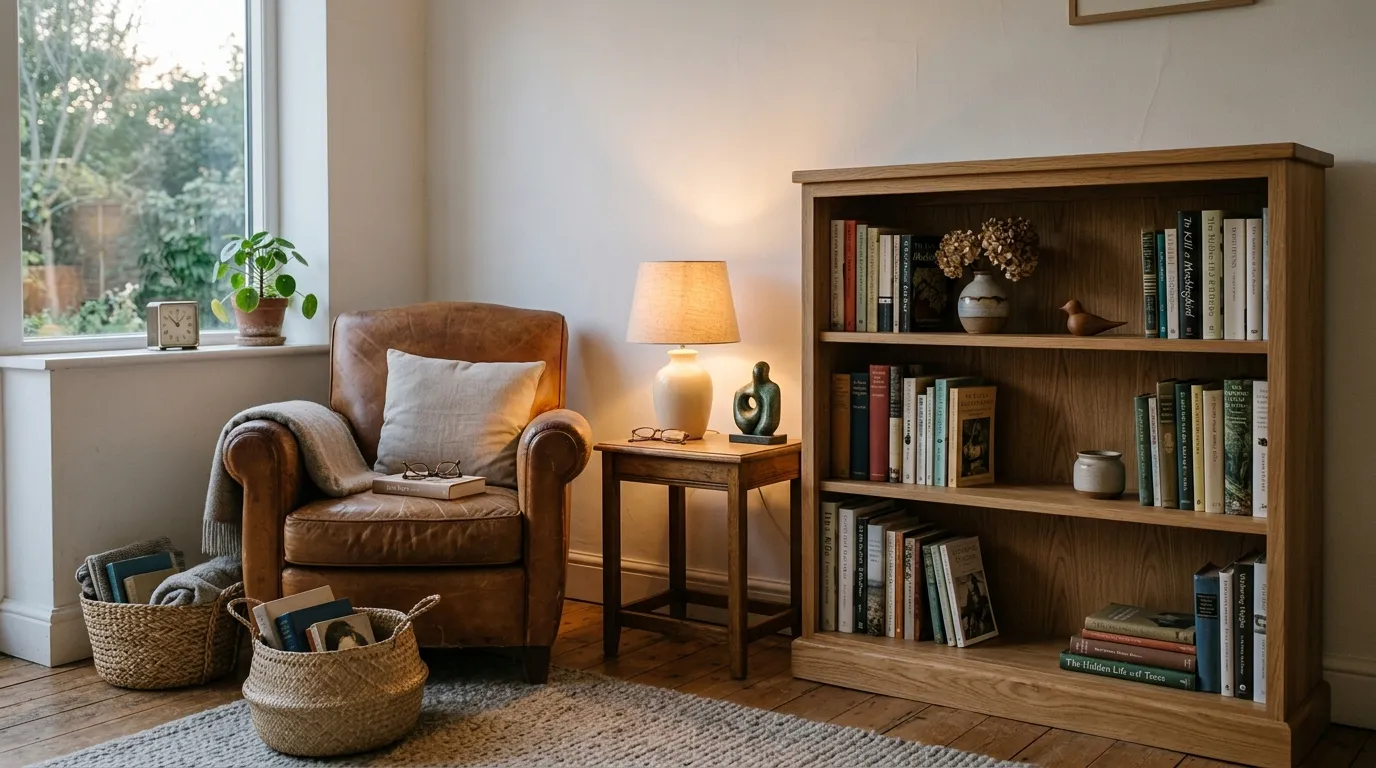
The lesson farmhouse décor teaches if you’re paying attention is that trend-driven design has a shelf life. The solution is to invest in timeless pieces and treat trendy elements as temporary.
Spend more on furniture with strong bones: well-made sofas, solid wood dining tables, quality case goods. These are the pieces that carry a room. Budget more freely on accessories and textiles, which are far easier (and less expensive) to refresh as your tastes evolve. Avoid fast-fashion décor the $15 throw pillow from a big-box store that perfectly captures this season’s color story will look exactly like what it is in two years.
A home that evolves gracefully is one that was built on quality and intention from the start.
Your Home Is an Evolving Story Let It Be One
Style evolution is not betrayal. Letting go of the farmhouse doesn’t mean the years you spent loving it were wasted it means you’ve grown, your tastes have deepened, and your home deserves to reflect that.
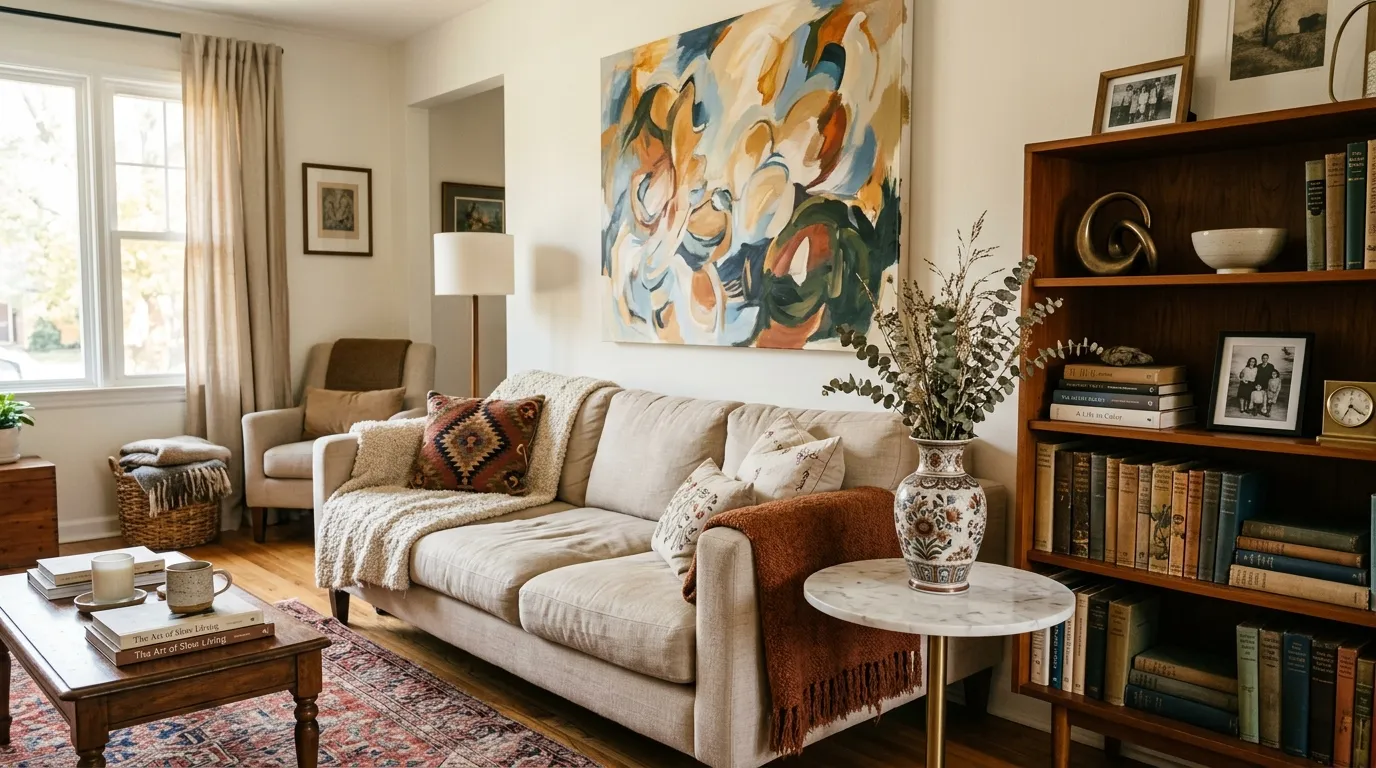
The most interesting interiors are the ones that carry the marks of a life actually lived: a piece of art chosen because it moved you, furniture that’s been reupholstered rather than replaced, objects gathered from places that mattered. That kind of home can’t be assembled in a single shopping trip. It develops over time, with intention.
Start small. Swap one textile. Repaint one wall. Replace one light fixture. Notice how the room shifts. Then keep going.
Frequently Asked Questions
How do I evolve my farmhouse style without making it look inconsistent?
Focus on cohesion through repeated elements a consistent metal finish, a limited color palette of two to three tones, and recurring textures like linen or natural wood. Use the 80/20 rule: let 80% of the room reflect your new direction, and allow 20% for contrast or complementary pieces. Intentional mixing reads as curated; accidental mixing reads as cluttered.
What design styles work best as an evolution from farmhouse?
Scandinavian, Japandi, and transitional design all share the farmhouse’s emphasis on natural materials and comfort while offering greater refinement and restraint. Mid-century modern is a stronger departure, but it works well if you introduce it gradually through furniture forms and lighting rather than all at once.
Do I need to gut my farmhouse kitchen to update it?
No. Painting existing cabinets, swapping hardware, updating lighting, and reducing the number of open-shelf displays are all high-impact, lower-cost changes. If your cabinets are structurally sound, a paint refresh can dramatically shift the room’s feel without a full renovation.
How do I know which farmhouse pieces to keep and which to replace?
Keep pieces with strong bones and personal meaning. Replace visually dominant pieces, trend-specific (like barn doors and mason jar fixtures), or those that actively conflict with your new direction. When in doubt, ask: Would this piece work in a room that had nothing to do with a farmhouse? If yes, keep it.
What’s the most affordable way to start evolving my home style?
Begin with textiles and accessories they’re the lowest-cost, highest-impact changes available. Swap throw pillows, replace a rug, update a lamp. These changes cost relatively little and let you test a new direction before committing to larger investments like furniture or paint.