That awkward corner in your living room or dining nook has more potential than you think. Corners get overlooked constantly too narrow for a sofa, too small for a full cabinet so they usually end up empty or cluttered with whatever doesn’t have a home anywhere else. But a corner is actually one of the smartest spots in any house for a home bar. It’s tucked out of the main walkway, it doesn’t compete for floor space, and it gives you a natural, contained zone for entertaining without carving out a whole extra room.
If you’re searching for 16 corner home bar ideas to maximize small spaces, you’re in the right place. Whether you live in a compact apartment or a spacious home, a well-designed corner bar can turn an unused area into a stylish focal point. Below are 16 corner home bar ideas to maximize small spaces, including fully built-in designs, floating shelves, compact bar cabinets, and renter-friendly setups that are easy to install while making the most of every inch.
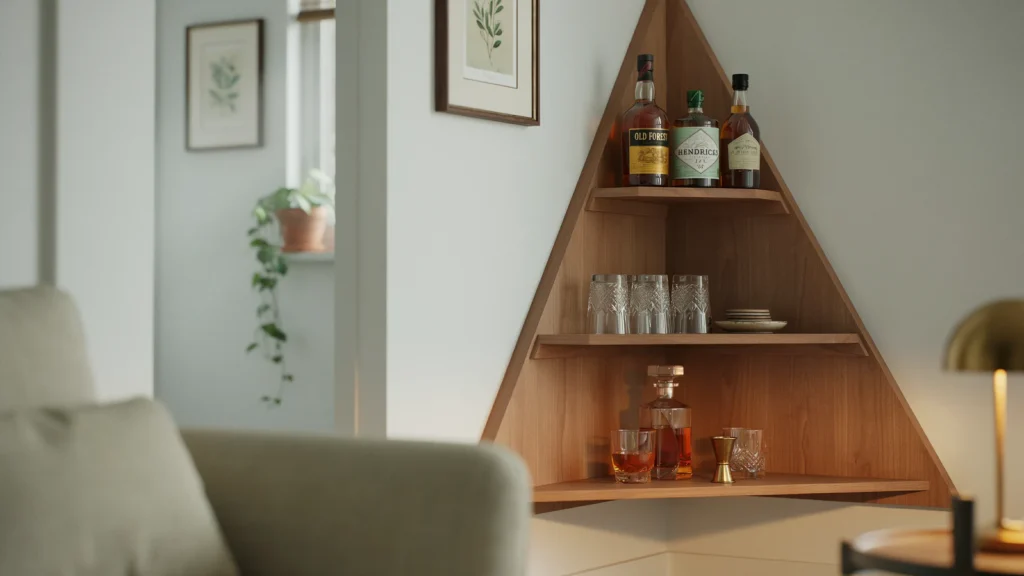
1. Triangular Floating Shelf Bar
A set of triangular floating shelves fitted flush into the corner angle uses the space more efficiently than a straight shelf ever could. Stack bottles on the lower shelf and glassware above, and the open design keeps the whole nook feeling light instead of boxed in.
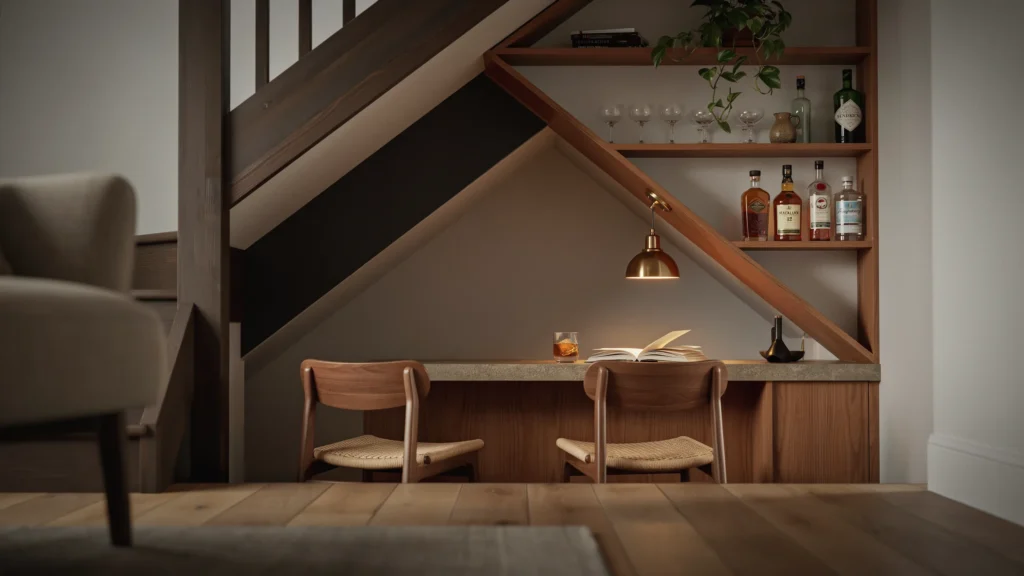
2. Under-the-Stairs Corner Nook
If your stairs create a triangular dead zone underneath, that gap is one of the best-hidden spots for a compact bar. Built-in shelving along the sloped ceiling holds bottles at every height, while a small counter at the base gives you room to pour.
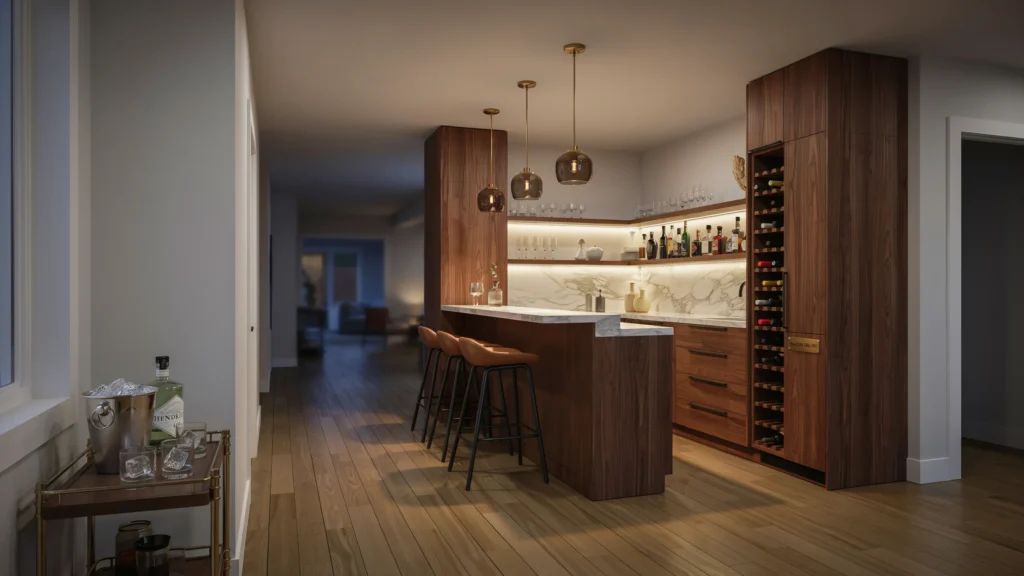
3. L-Shaped Built-In Bar
For a corner with enough depth on both sides, an L-shaped built-in wraps the angle completely, giving you a full counter, upper cabinets, and lower storage in one continuous run. It reads like a proper wet bar without needing a separate room.
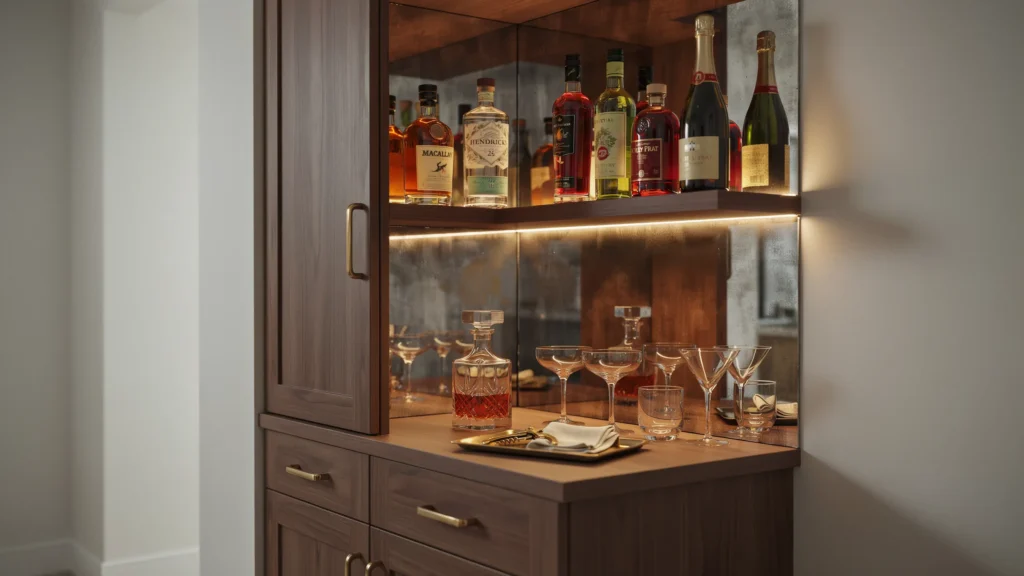
4. Mirrored Backsplash Corner Cabinet
A slim corner cabinet gets an instant upgrade with a mirrored backsplash behind the shelves. The mirror bounces light around the tight angle and makes the collection of bottles and glassware look twice as full without adding a single extra inch.
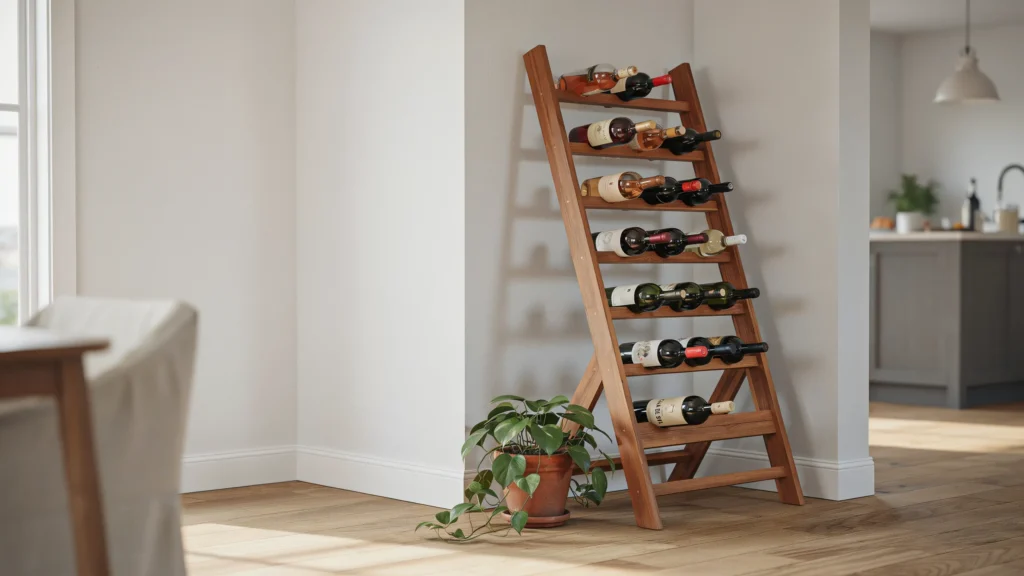
5. Vertical Ladder Wine Rack
A slim ladder-style wine rack leaned directly into the corner angle stores bottles diagonally from floor to ceiling. It takes up almost no floor space and turns an empty triangle into a striking display piece rather than dead space.
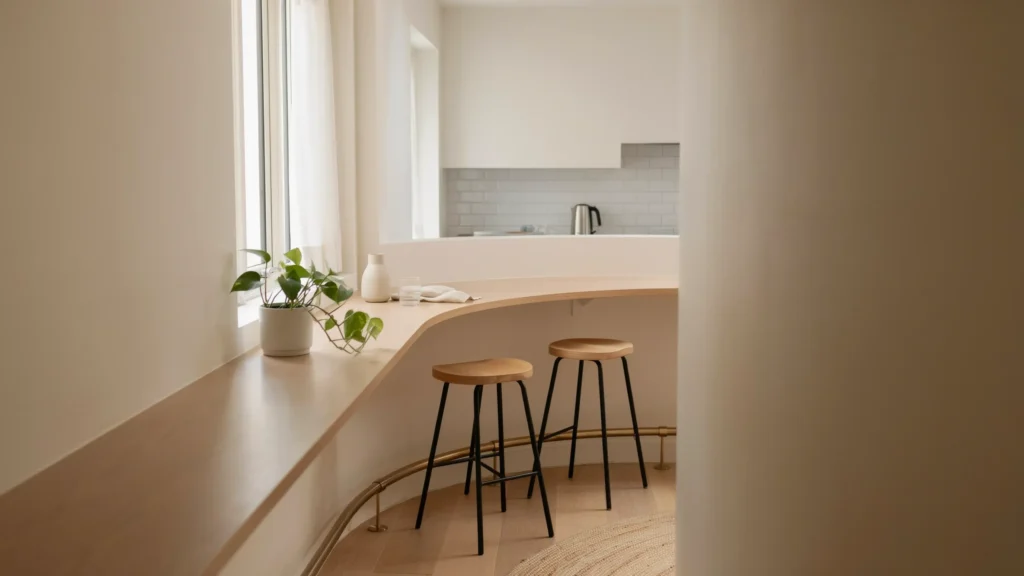
6. Curved Corner Counter
Instead of a hard angle, a gently curved counter softens the corner and creates a small rounded pour station. It works especially well in open-plan spaces where you want the bar to feel like part of the flow rather than a sharp interruption.
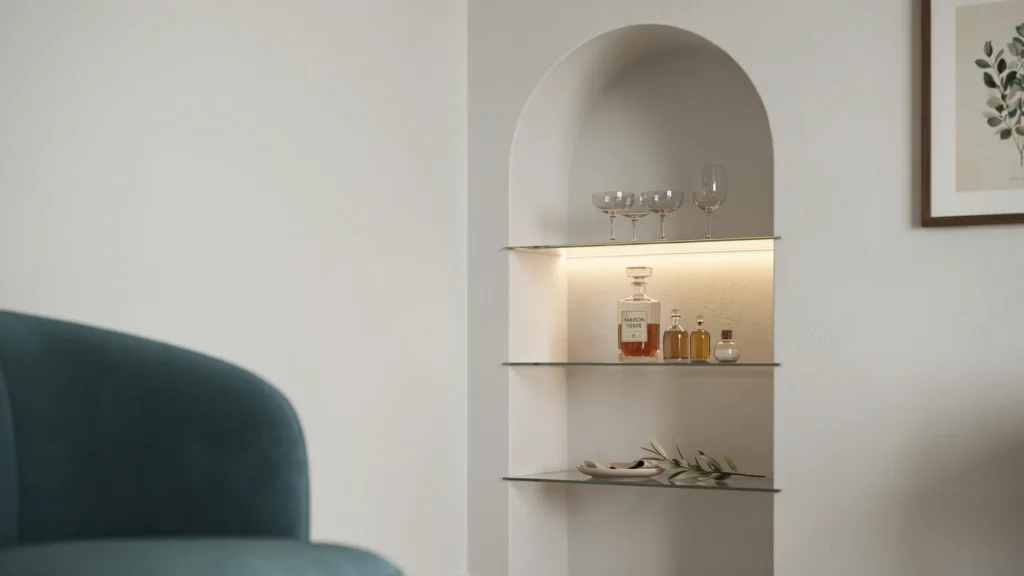
7. Arched Niche Bar
Framing the corner with an arched recess instantly gives it architectural presence, even in a small footprint. Glass shelves inside the arch hold the essentials, while the curved frame draws the eye upward instead of emphasizing how little space you actually have.
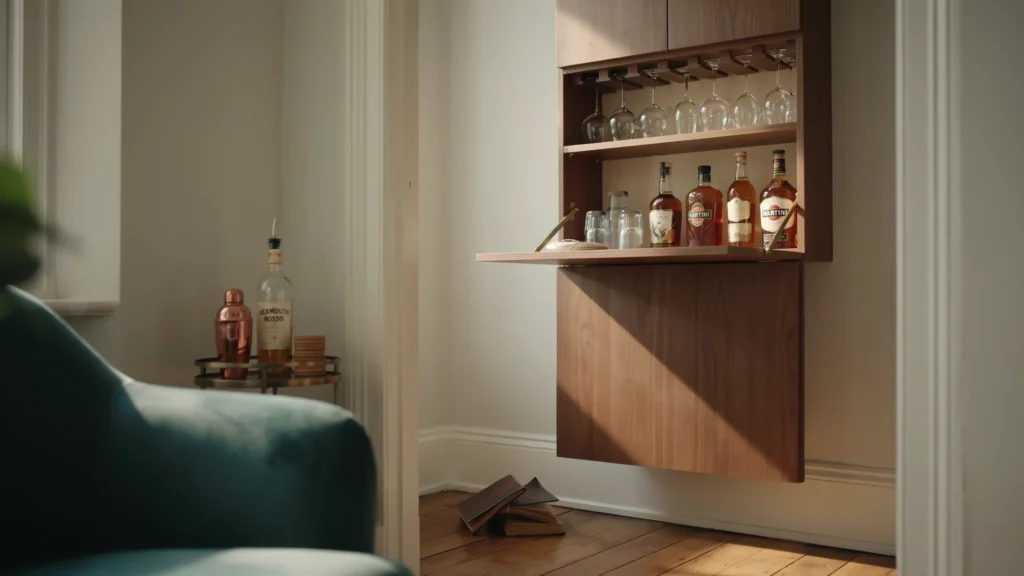
8. Fold-Down Corner Cabinet
A wall-mounted cabinet with a fold-down front panel turns into a full pour station when open and disappears flat against the wall when closed. It’s one of the most space-efficient options on this list for anyone working with a genuinely tiny corner.
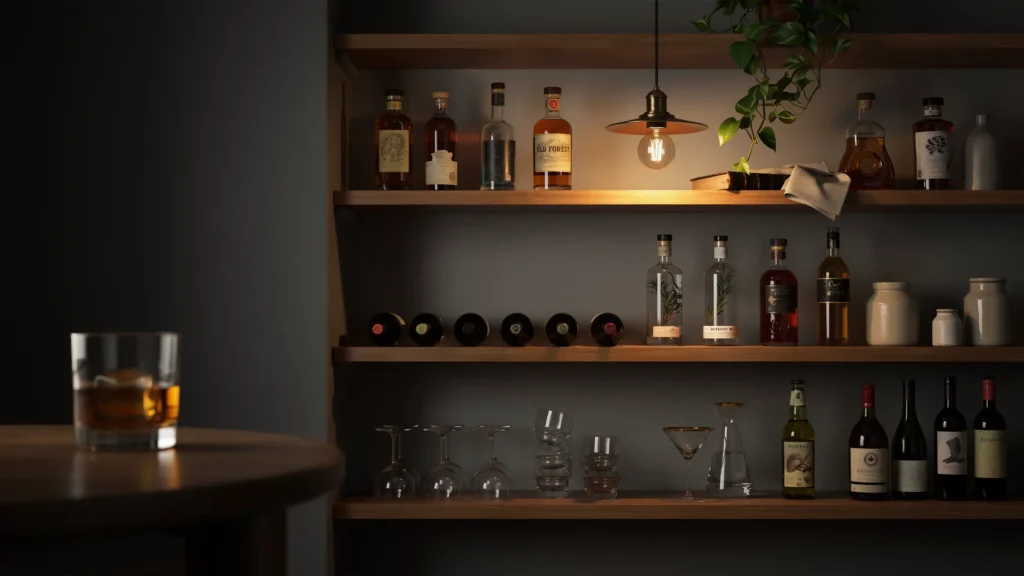
9. Open Shelving With a Statement Pendant
Skip the cabinet doors entirely and let a run of open shelves fill the corner, then hang a single statement pendant light directly above. The lighting does the heavy lifting here, turning a simple shelf setup into a defined, intentional bar area.
10. Compact Corner Wet Bar
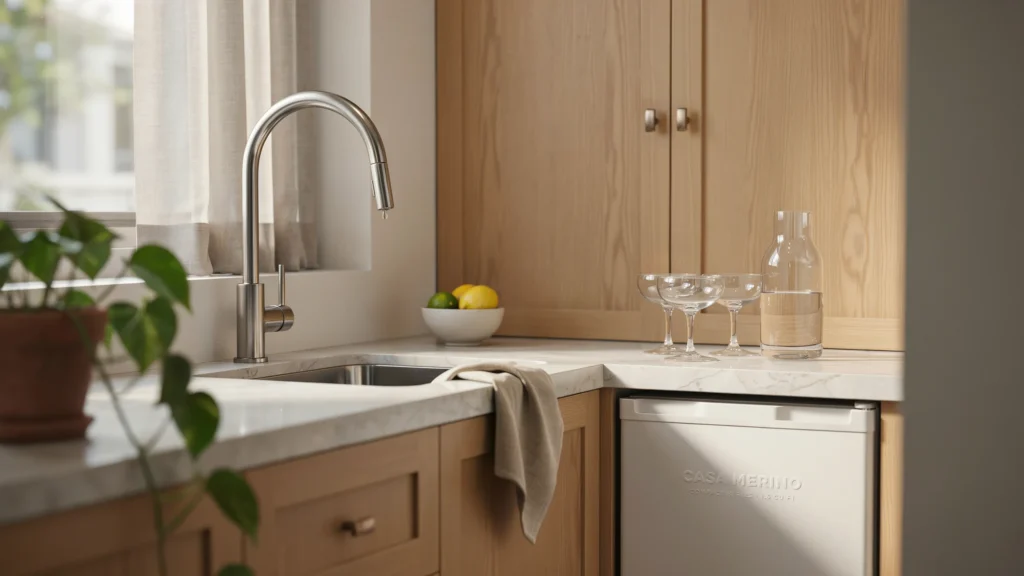
If plumbing access allows, a small prep sink tucked into the corner alongside a mini fridge turns the space into a real working bar instead of just a display shelf. Even a narrow single-basin sink saves constant trips back to the kitchen.
11. Glass-Front Corner Cabinet
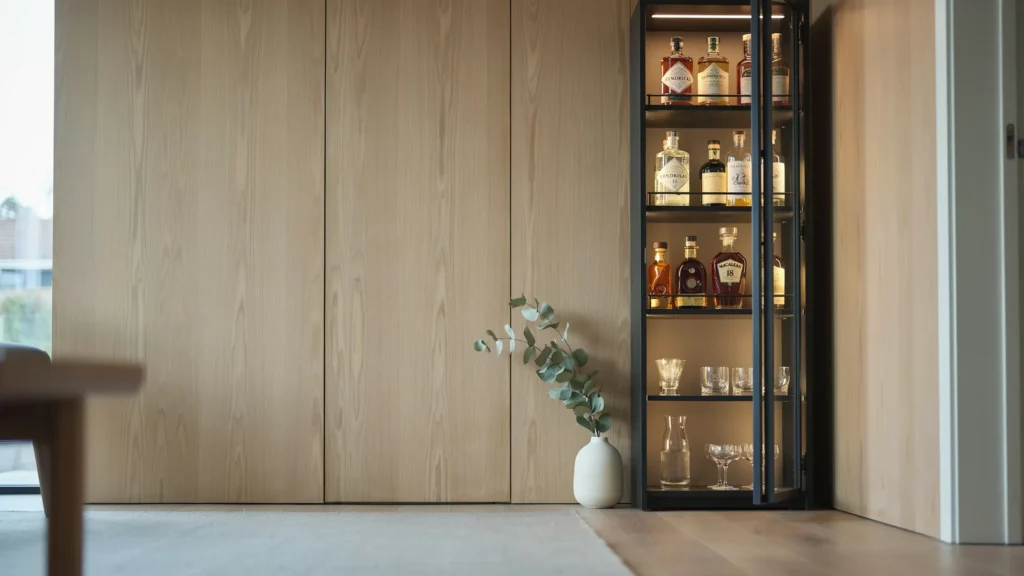
A tall, narrow cabinet with glass doors fitted into the corner keeps everything visible and dust-free at the same time. It’s a good middle ground between fully open shelving and closed storage, especially if you like your collection on display.
12. Corner Nook With Bench Seating
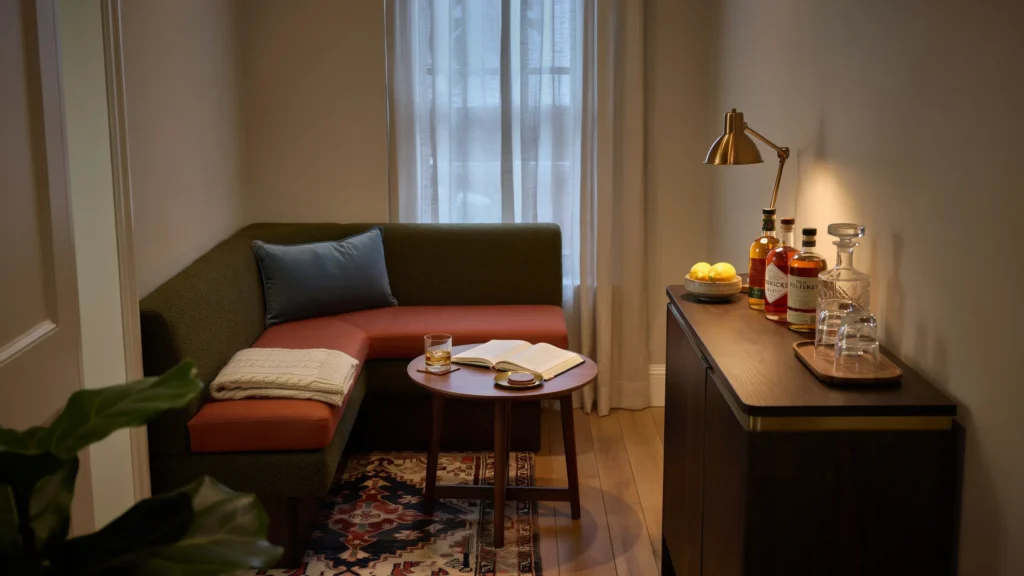
Pair a small corner bar with a built-in bench seat along the adjacent wall, and the whole area becomes a place to linger, not just pour a drink and walk away. A narrow round table in front completes a cozy tasting corner.
13. Two-Tier Corner Cart Station
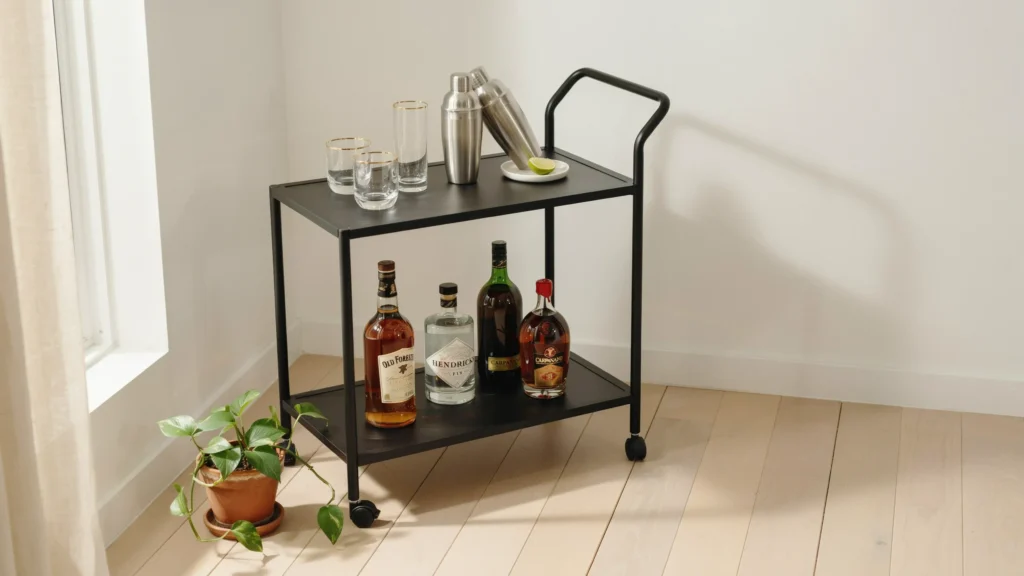
For renters or anyone who doesn’t want anything permanent, a two-tier bar cart angled into the corner gives you nearly the same function as a built-in without touching the walls. It also rolls out easily when you need the corner clear for something else.
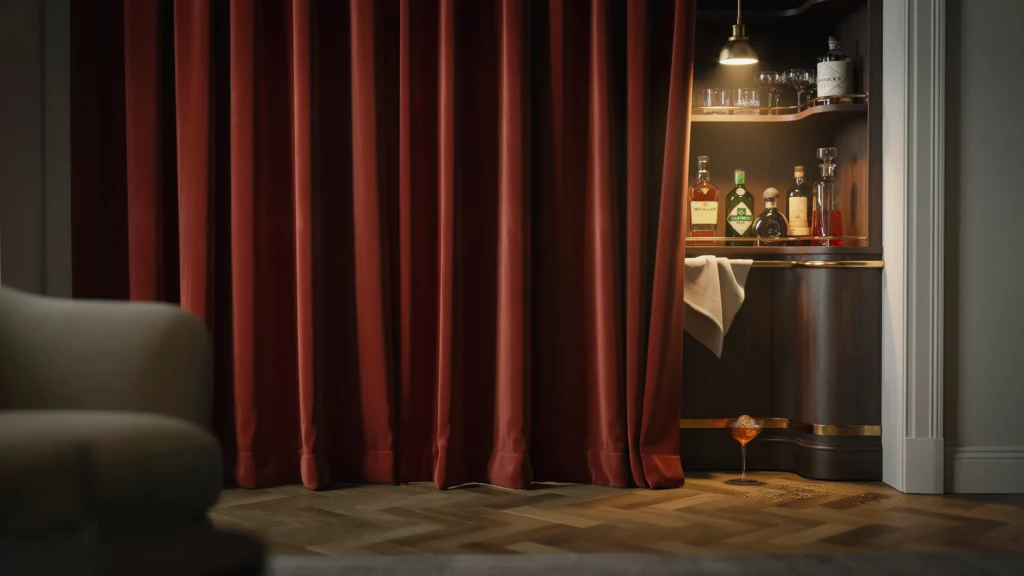
14. Corner Speakeasy Behind a Curtain
Hang a floor-length curtain across the corner opening and you’ve got an instant reveal-and-conceal bar. Pull it back for a party, close it the rest of the time, and the whole setup disappears into the room when you’re not using it.
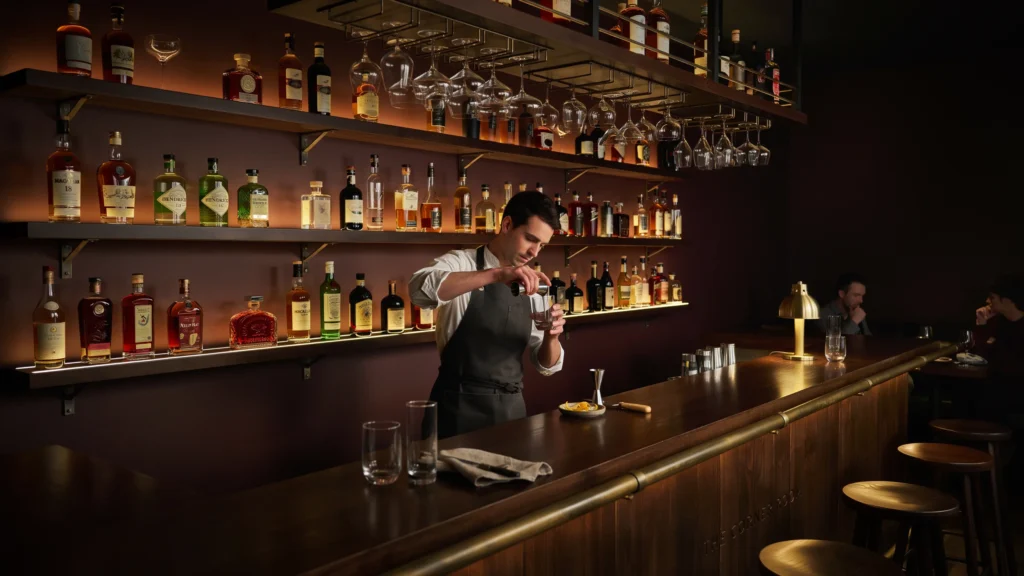
15. Backlit Shelving Corner
LED strip lighting installed behind or beneath each shelf turns a simple corner setup into a genuine focal point after dark. The glow highlights bottle shapes and glass edges in a way that regular overhead lighting never quite manages.
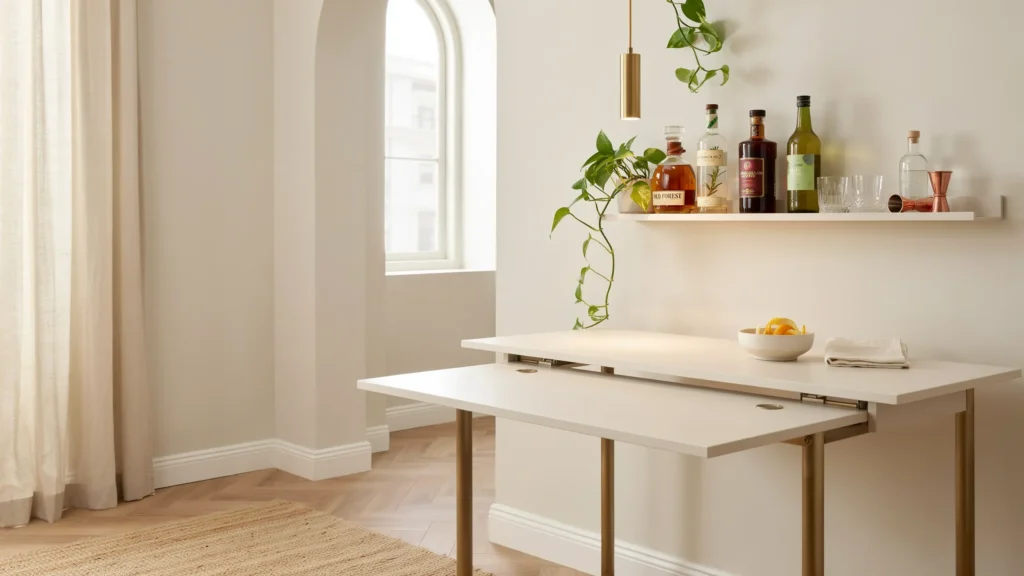
16. Multi-Purpose Corner Desk-Bar Combo
In smaller apartments, a corner unit doesn’t have to be dedicated to drinks alone. A slim desk-height counter with a fold-out leaf can function as a workspace by day and a pour station by evening, with a shallow cabinet underneath for both sets of supplies.
How to Choose the Right Corner Setup for Your Space
Measure the angle before you shop. Not every corner is a true 90 degrees, especially in older homes. A triangular shelf or L-shaped built-in that looks perfect in a photo may not sit flush against your walls, so measure both sides and the angle between them before committing to anything fixed.
Match the style to how you’ll use it. A quick pour station for weeknight cocktails doesn’t need the same setup as a corner meant for hosting groups. Open shelving and a cart suit casual, frequent use, while an L-shaped built-in or wet bar makes more sense if you entertain often and want a real working counter.
Think about lighting early, not last. Corners tend to sit outside the main light source in a room, which is exactly why so many of these ideas lean on pendant lights, backlighting, or mirrored surfaces. Plan the lighting at the same time you plan the layout instead of adding it as an afterthought.
Renters should stick to freestanding and clip-on pieces. Ladder wine racks, bar carts, curtain-concealed setups, and fold-down cabinets mounted with removable brackets all give you the corner-bar look without needing to alter the walls, which matters if you’re not staying long-term.
Don’t ignore the adjacent walls. A corner bar rarely exists in isolation. The wall behind it is prime real estate for a mirror, a piece of art, or a mounted wine rack, and using it well makes the whole nook feel finished instead of like an afterthought squeezed into unused space.
Frequently Asked Questions
How much space do I actually need for a corner home bar? Even a corner as narrow as two feet on each side can hold floating shelves or a ladder wine rack. Built-in counters and wet bars need more room to feel functional, generally at least three feet along each wall, so measure first before committing to anything fixed.
Can I add a corner bar if I’m renting and can’t drill into the walls? Yes. A bar cart, a leaning ladder wine rack, a curtain-concealed nook, or a clip-on floating shelf system all work without permanent hardware, so you can take everything with you when your lease is up.
Do I need plumbing for a corner home bar to be functional? No. Most of the ideas here work perfectly well without a sink, using a small fridge or cooler instead. A sink is a nice upgrade if you entertain often and have the plumbing access, but it’s far from a requirement for a usable setup.
What’s the best way to light a corner bar? Corners usually sit outside a room’s main light source, so dedicated lighting matters more here than almost anywhere else. A single pendant, backlit shelving, or even LED strips tucked under a shelf edge will do more for the space than overhead room lighting ever will.
How do I keep a small corner bar from looking cluttered? Limit what stays on display to what you actually use regularly, and store the rest behind cabinet doors or in a lower shelf out of sight. Grouping bottles by height or color also helps a small, busy corner read as styled rather than crowded.
Is a corner bar a good idea in a small apartment? It’s often the best option for a small apartment specifically, since it uses a spot that’s usually wasted anyway instead of taking space away from seating or walking room elsewhere in the room.