To style an end table, start with a functional base like a lamp, then layer in decorative items using the rule of three. Mix varying heights and textures think books, a small plant, and a candle while leaving breathing room. Tailor your choices to the room and refresh seasonally for a polished look. Whether you’re just starting out or looking to refresh your space, this How to Style End Tables: A Beginner’s Guide in 10 Steps will walk you through everything you need to know.
To style an end table, start with a functional base like a lamp, then layer in decorative items using the rule of three. Mix varying heights and textures think books, a small plant, and a candle while leaving breathing room. Tailor your choices to the room and refresh seasonally for a polished look. Whether you’re just starting out or looking to refresh your space, this How to Style End Tables: A Beginner’s Guide in 10 Steps will walk you through everything you need to know.
Styling an end table sounds simple until you’re staring at a blank surface, unsure what goes where. Too little, and it feels bare. Too much, and it turns into a dumping ground for keys, mail, and half-empty mugs.
The good news? Styling an end table is one of the easiest ways to upgrade a room without spending much money or time. With a few smart choices, you can turn a plain side table into a small showcase of your personality.
This guide walks you through 10 beginner-friendly steps to style end tables like a pro. You’ll learn the essentials every table needs, decorative touches that add flair, design principles for balance, and tips for tailoring your table to any room or season. Let’s get started.
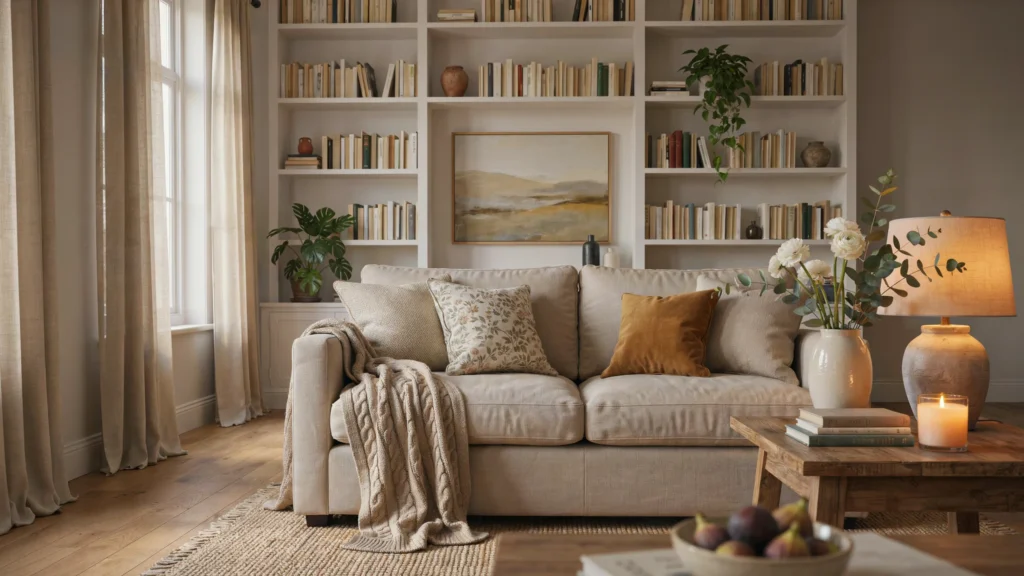
What Is an End Table, and Why Does Styling Matter?
An end table is a small table placed at the end of a sofa, beside a chair, or next to a bed. Its main job is practical: it gives you a spot to set down a drink, a book, or a phone within easy reach.
But an end table does more than hold your coffee. It’s prime real estate for decoration. Because it sits at eye level when you’re seated, anything you place on it draws attention. A well-styled end table ties a room together, adds color, and reflects your taste.
Think of it as a tiny stage. The surface is small, so every item you choose has to earn its spot. That constraint is actually a gift it forces you to be intentional, which is the first rule of good design.
How Do You Choose the Right End Table Before You Even Start Styling?
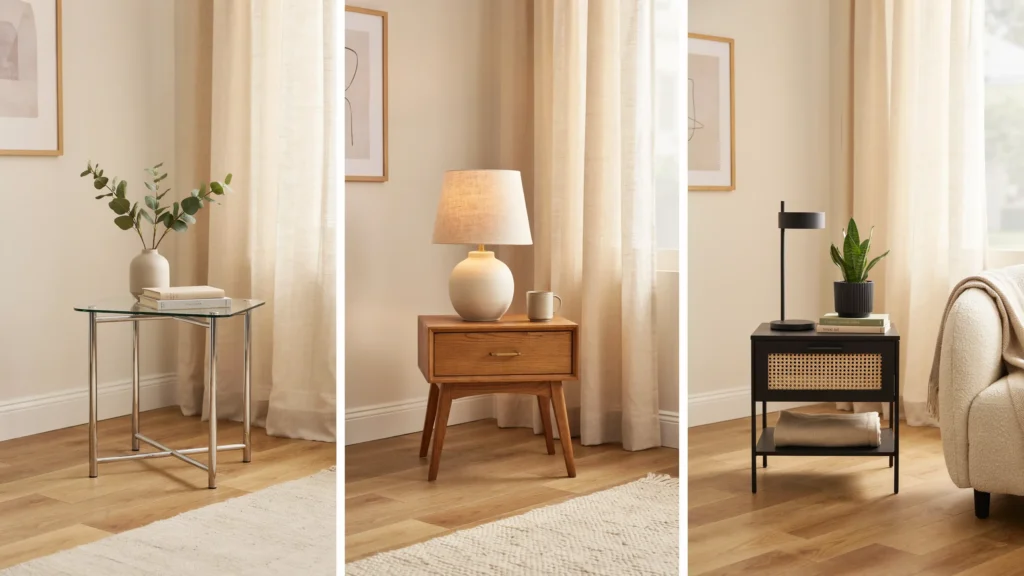
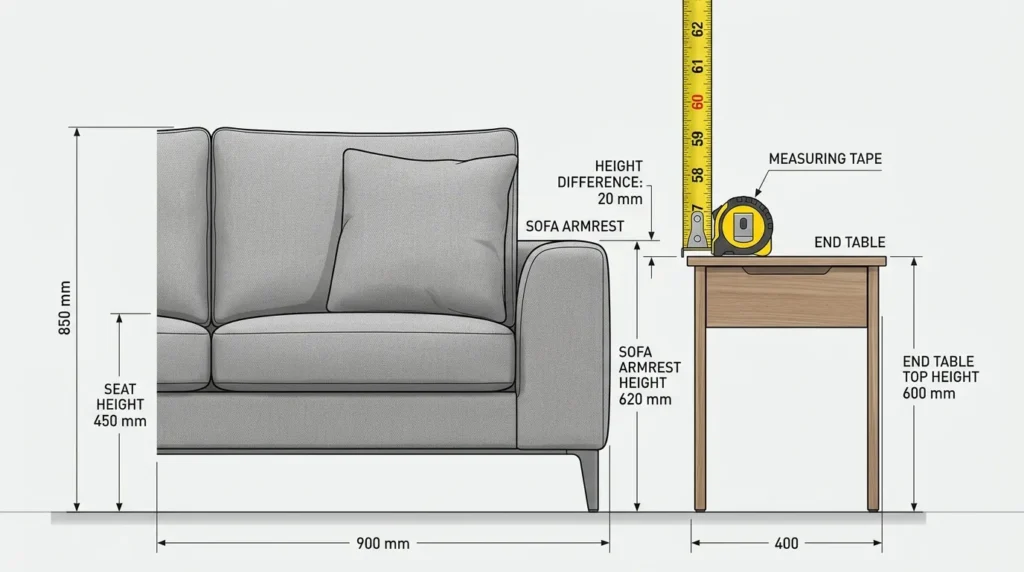
Before any decor gets placed, the table itself needs to earn its spot in the room. Size matters most: measure the space next to your sofa or bed and make sure the table’s height lines up close to your seating’s armrest, and that its footprint doesn’t crowd your walkway. Material and finish should echo the room’s existing furniture rather than fight it; a glass or metal table leans modern and sleek, while a wood table brings warmth and a more traditional feel. Color also plays a bigger role than people expect. A table that contrasts with your flooring or sofa can act as its own design statement, while one that blends in lets your styled decor take center stage instead.
How Do You Keep a Styled End Table Safe Around Kids and Pets?
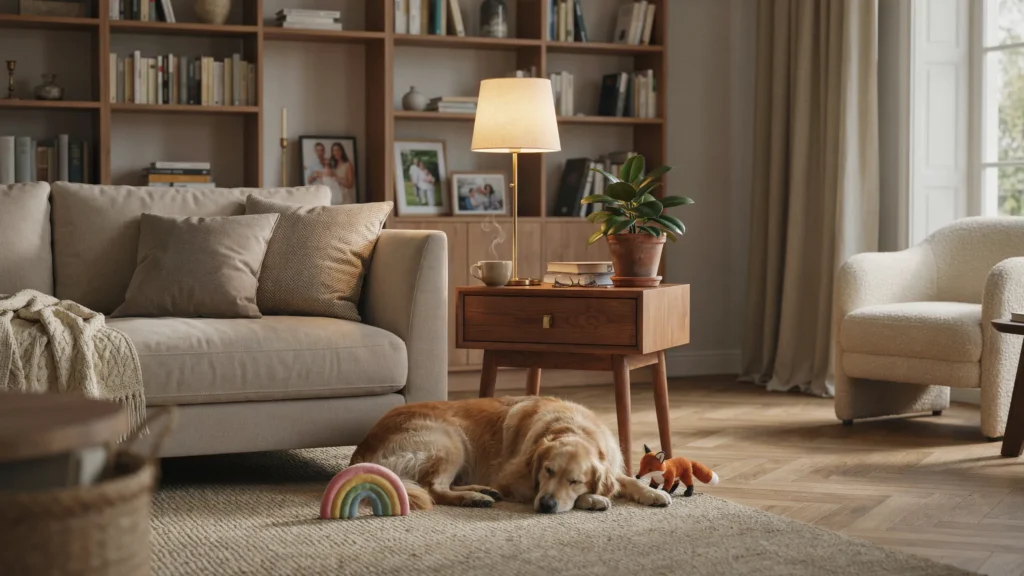
A beautifully styled table can quickly become a hazard if it’s not thought through for your household. Skip anything fragile, sharp-edged, or easily knocked over if you have young kids or an enthusiastic dog or cat nearby, and keep candles unlit or opt for flameless versions in high-traffic homes. Heavier decorative objects belong toward the back or center of the table rather than the edge, where a stray hand or wagging tail is more likely to send them tumbling. If safety is a real concern in your home, lean into a slightly more minimal arrangement; fewer items means fewer things that can break, spill, or become a choking hazard.
Can Reflective Surfaces Improve Your End Table’s Look?
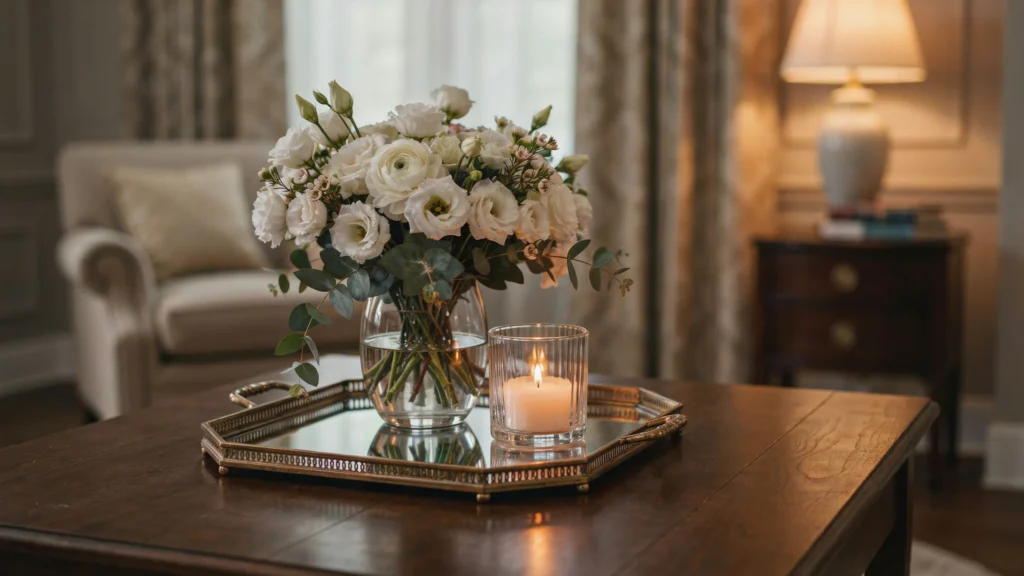
Mirrored and glass finishes do more than look pretty, they actively bounce light around the room, which is especially useful in a space that doesn’t get much natural light. A mirrored tray under your lamp or trinket dish adds a subtle sparkle and visually doubles the presence of whatever sits on top of it. A glass or crystal vase works the same way, catching light from windows or nearby lamps and scattering it softly across the table. If your end table sits in a darker corner, incorporating even one reflective piece can make the whole vignette feel brighter and more polished without adding a single extra light source.
Should Sustainability Factor Into Your End Table Styling?
If eco-conscious choices matter to you, styling an end table is a small but meaningful place to apply them. Look for decor made from natural, renewable materials like reclaimed wood, rattan, or stoneware instead of mass-produced plastic pieces, and consider secondhand or thrifted finds for trays, frames, and vases rather than buying new every time you refresh the look. Real plants over faux ones also reduce plastic waste over the long run, and many varieties double as natural air purifiers, quietly improving the air quality in the room while they sit on your table.
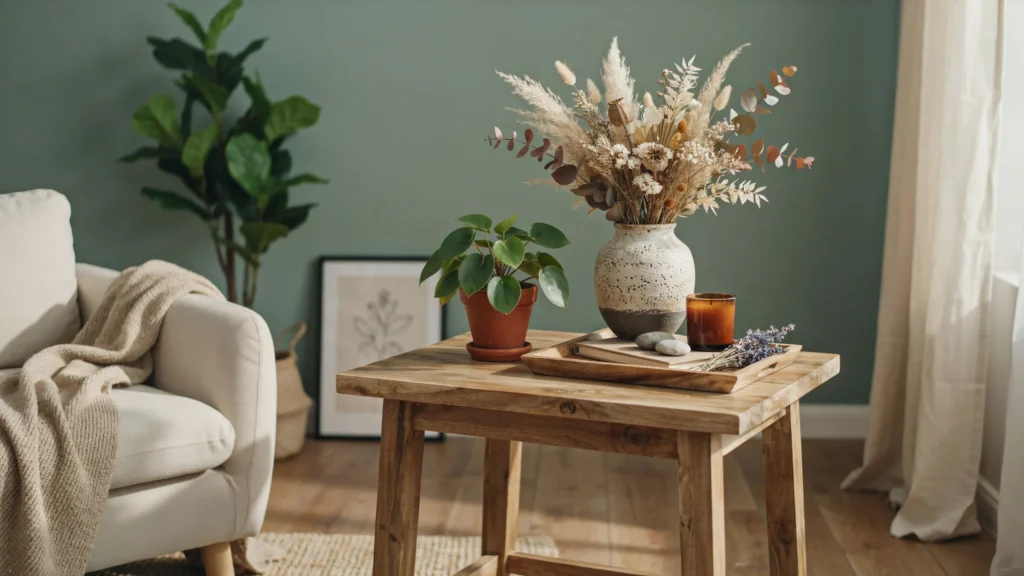
What Are the Essentials Every End Table Needs?
Before you add decorative flair, cover the basics. These three functional items make your end table useful, not just pretty.
Lighting: Lamps as Functional Art
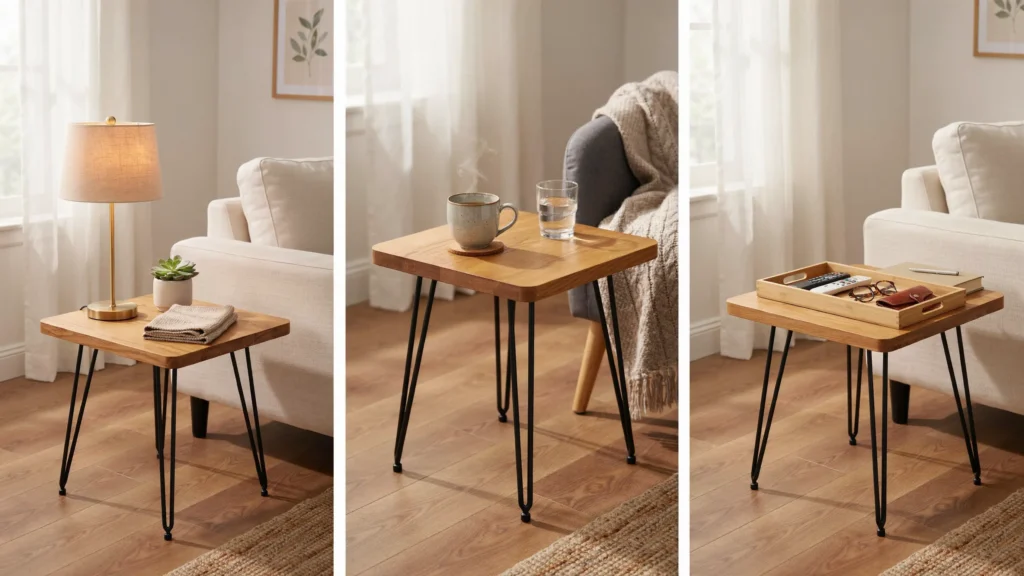
A table lamp is the workhorse of any end table. It provides soft, ambient light for reading or relaxing, and it adds height to your arrangement. Choose a lamp that matches the room’s style a sleek metal base for modern spaces, a ceramic or wooden base for cozier rooms.
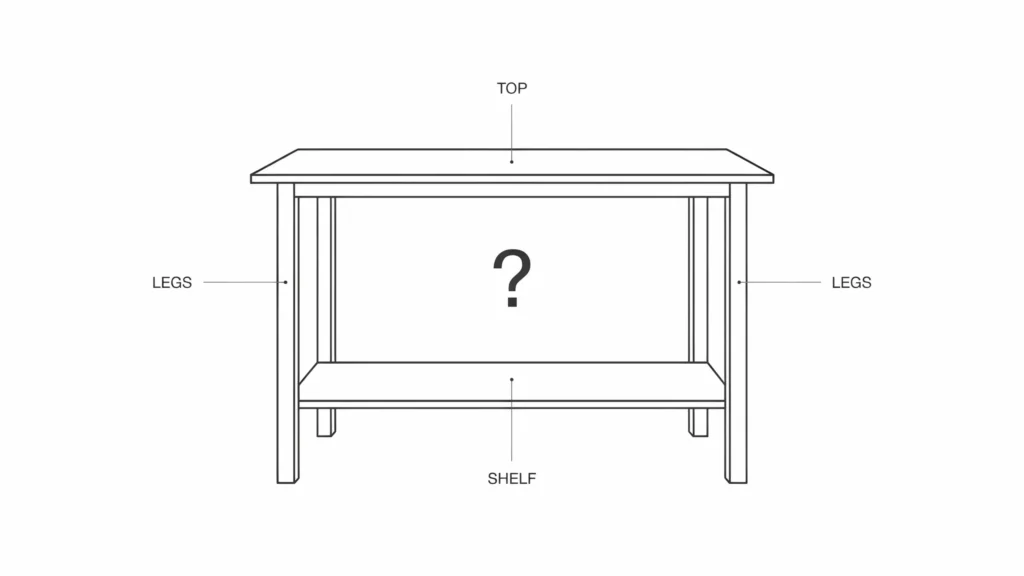
Drinks and Coasters: Practicality Meets Panache
An end table should always have room for a drink. Leave a clear spot, then add a small stack of attractive coasters. Coasters protect the surface from water rings and double as a design accent. Marble, cork, or patterned ceramic options add subtle texture without taking up much space.
Remote Control Organization: Taming the Tech Clutter
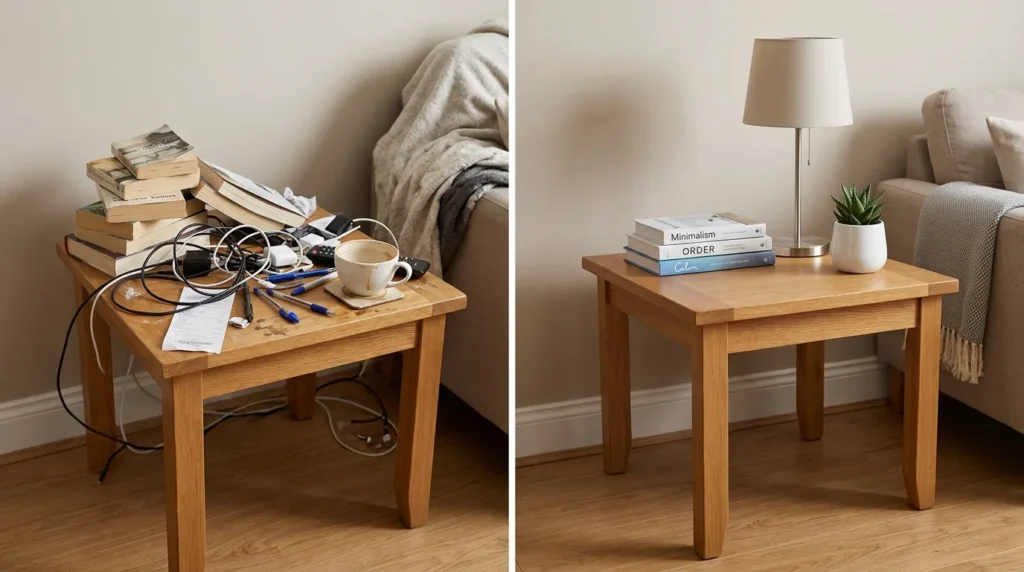
Remotes, chargers, and cords can quickly ruin a clean look. Corral them in a small decorative tray or a lidded box. A tray keeps everything in one spot and looks intentional, while a box hides clutter entirely. Either way, you turn an eyesore into part of the design.
How Do You Add Personality with Decorative Touches?
Once the essentials are in place, it’s time to add character. This is where your end table goes from functional to fabulous.
Books and Magazines: Curated Reads for Visual Interest
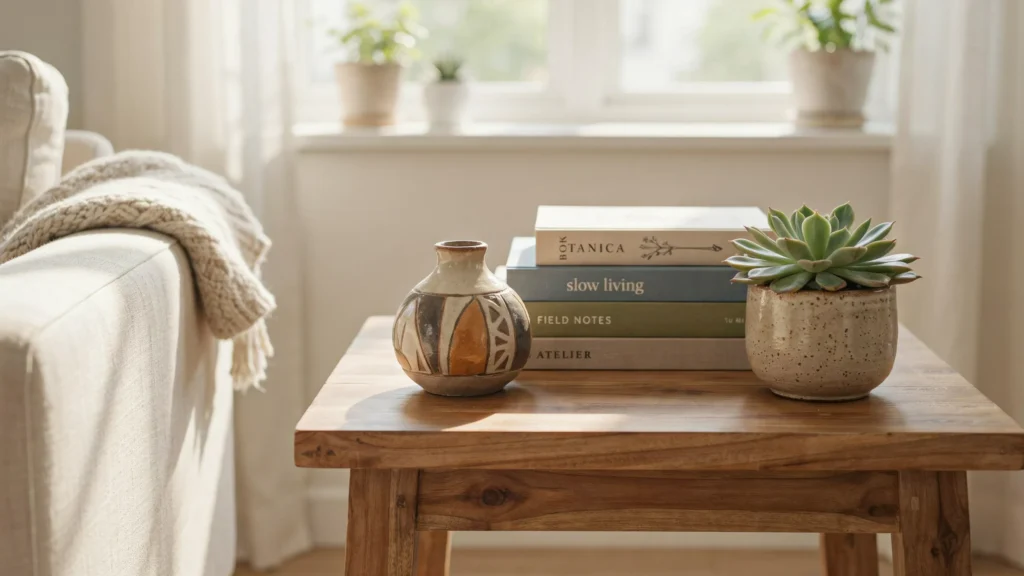
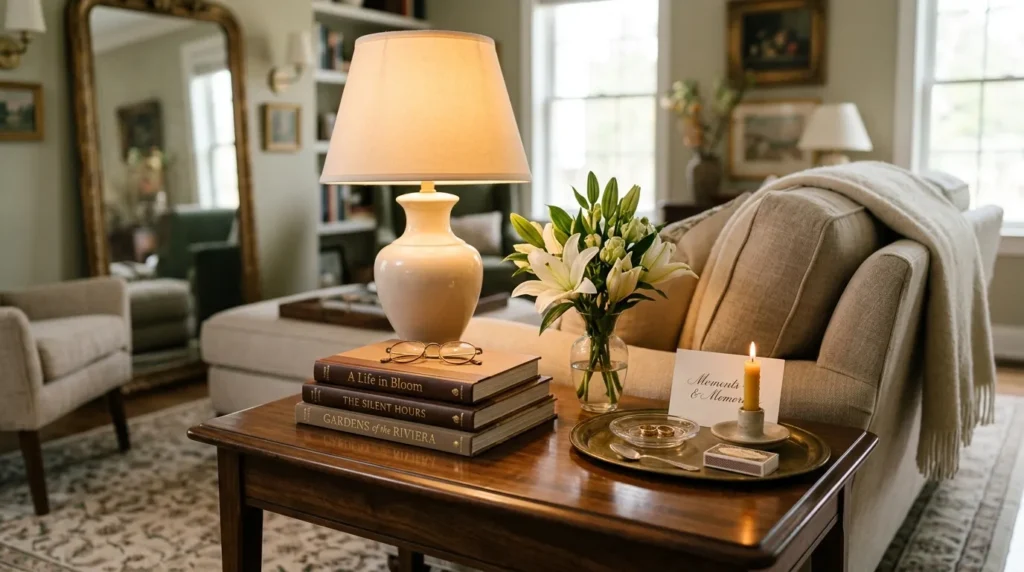
A small stack of books adds height, color, and a sense of who you are. Coffee table books with attractive spines or covers work best. Stack two or three horizontally, then place a small object on top, like a candle or a paperweight. Magazines fanned slightly in a tray also work for a more casual vibe.
Greenery and Florals: Bringing Nature Indoors
Plants bring life to any surface. A small potted succulent, a trailing pothos, or a single stem in a slim vase adds freshness and color. If you struggle to keep plants alive, high-quality faux greenery does the trick without the upkeep. Greenery softens hard edges and connects your space to the outdoors.
Decorative Objects: Sculptural Statements and Personal Mementos
Finish with one or two objects that mean something to you a ceramic bowl, a small sculpture, a framed photo, or a souvenir from a trip. These pieces spark conversation and make the space feel personal. Just don’t overdo it; one striking object beats five forgettable ones.
How Do You Achieve Visual Balance on an End Table?
Balance is what separates a styled table from a cluttered one. These three design principles keep your arrangement looking polished.
The Rule of Three: A Design Principle for Grouping
Designers swear by the rule of three because odd numbers feel more natural and dynamic to the eye than even numbers. Group items in threes say, a lamp, a stack of books, and a small plant. The trio creates a balanced vignette that doesn’t feel too symmetrical or too random.
Varying Heights and Textures: Adding Dimension
A flat, same-height arrangement looks dull. Mix tall items (a lamp), medium items (a vase), and low items (a tray or books). Combine textures too smooth ceramic, rough wood, soft fabric, shiny metal. This variety adds depth and keeps the eye moving across the display.
Negative Space: When Less Is More
Space is not wasted space. Leaving part of the table clear gives your eyes a place to rest and makes each item stand out. Resist the urge to fill every inch. A good target is to keep at least a third of the surface open.
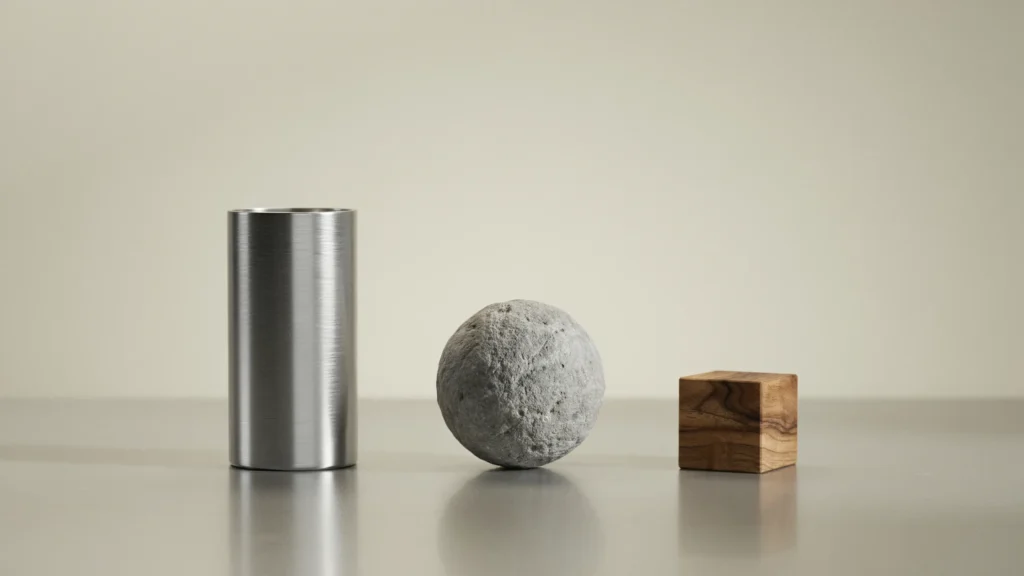
What Style or Theme Should You Choose First?
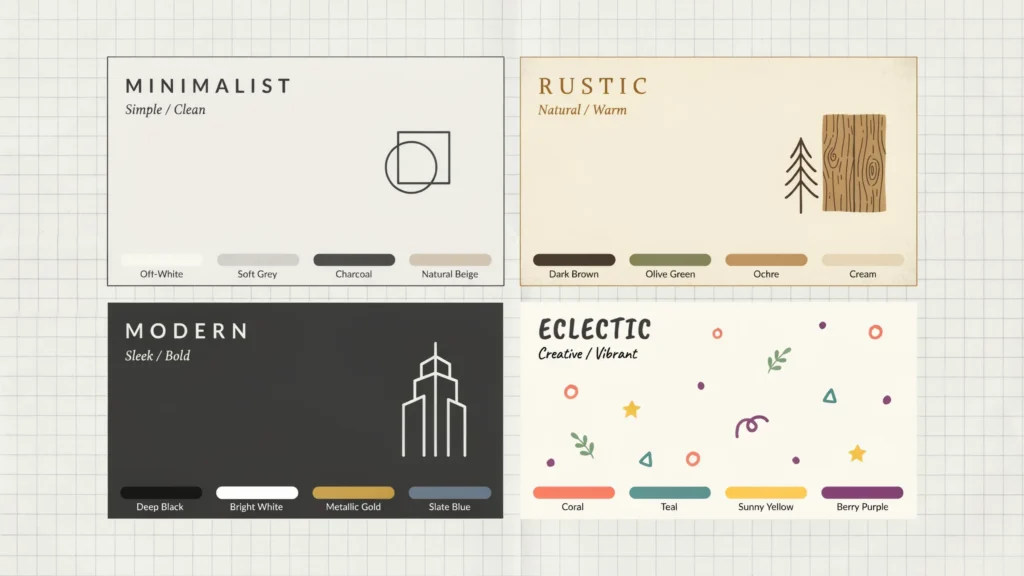
Before you place a single item, decide on a general style direction for your end table. This could be minimalist, rustic, traditional, modern, or eclectic, and it doesn’t need to be complicated; just pick a feeling that matches the rest of your room. Having a theme in mind before you start gathering items keeps you from grabbing random pretty things that don’t actually work together once they’re all on the table. Think of this step as setting the rules for everything that follows: it guides your color choices, your material choices, and even how many items feel right for the space.
How Do You Arrange Items Using the Visual Triangle?
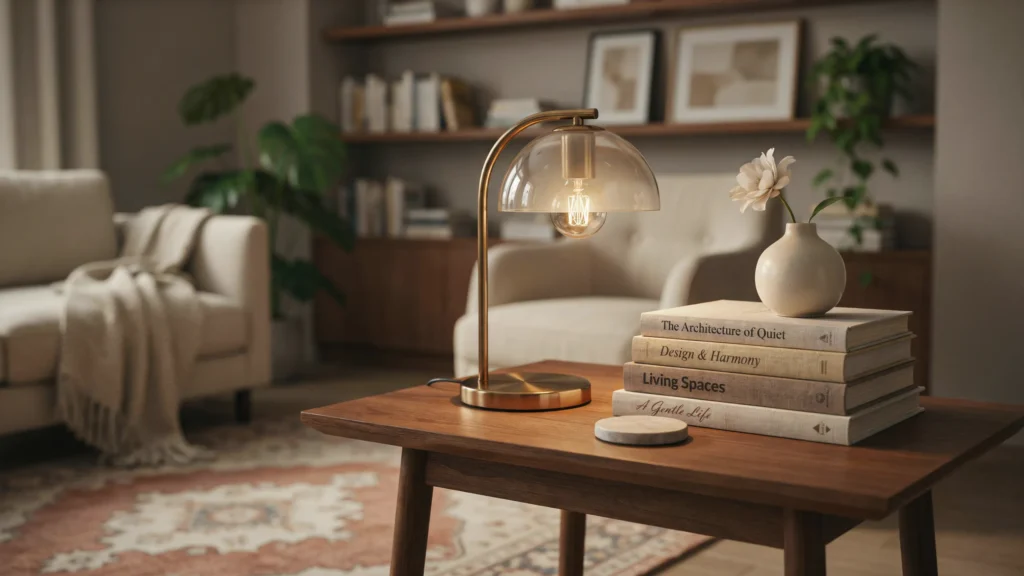
Once you’ve settled on your three to five items, the way you physically arrange them matters just as much as what you choose. Stylists rely on a technique called the visual triangle, where items are placed so their tops form the three points of an imaginary triangle rather than sitting in a flat, even row. A tall lamp might anchor one point, a medium-height stack of books another, and a small candle or trinket dish the third. This uneven, staggered placement is what makes a tabletop feel intentionally styled rather than randomly placed, and it works for shelves, mantels, and dressers just as well as end tables.
Do a Table’s Two Nightstands or End Tables Need to Match?
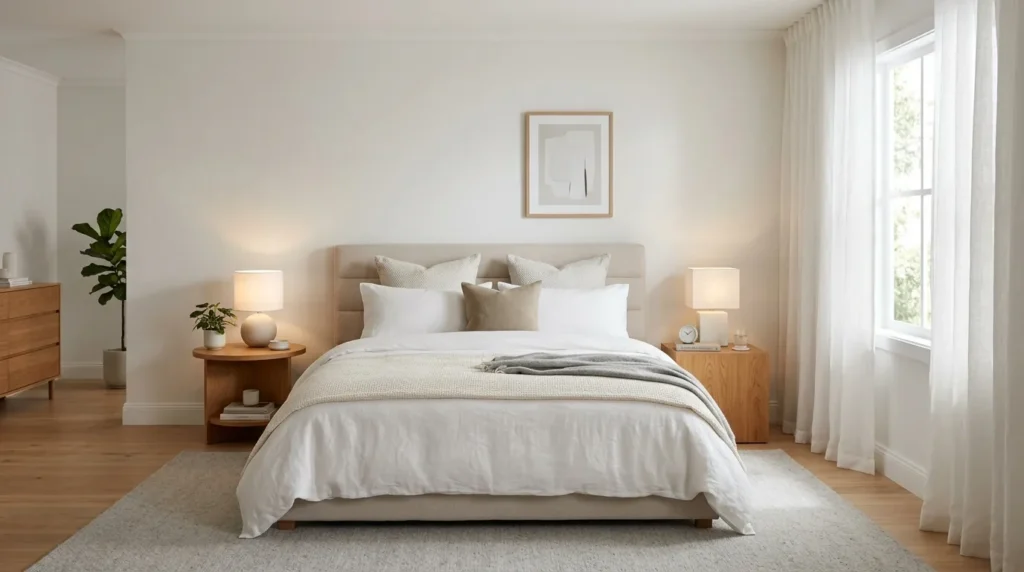
If you have a pair of end tables or nightstands flanking a sofa or bed, they don’t have to be identical. Matching tables create a clean, classic sense of balance and symmetry, which works well in more traditional or formal rooms. But choosing two different tables that share a similar tone, material, or scale can add a more collected, eclectic feel without looking mismatched. If you go the eclectic route, keep at least one element consistent, like wood tone or metal finish, so the pieces still feel like they belong in the same room.
How Far Should an End Table Sit From Your Sofa?
Getting the placement right is just as important as the styling on top. As a general rule, the surface of your end table should sit within about two inches of your sofa’s armrest height, not noticeably taller or shorter. This keeps the table functional; a drink or a book stays within easy reach without you having to lean up or down awkwardly. If you’re shopping for a new table, bring a measurement of your sofa arm’s height with you, or measure your current setup before ordering online so you don’t end up with a table that throws off the whole arrangement.
How Should You Style End Tables in Different Rooms?
The perfect end table styling depends on where it lives. Each room has different needs, so adjust your choices accordingly.
Living Room: The Heart of the Home
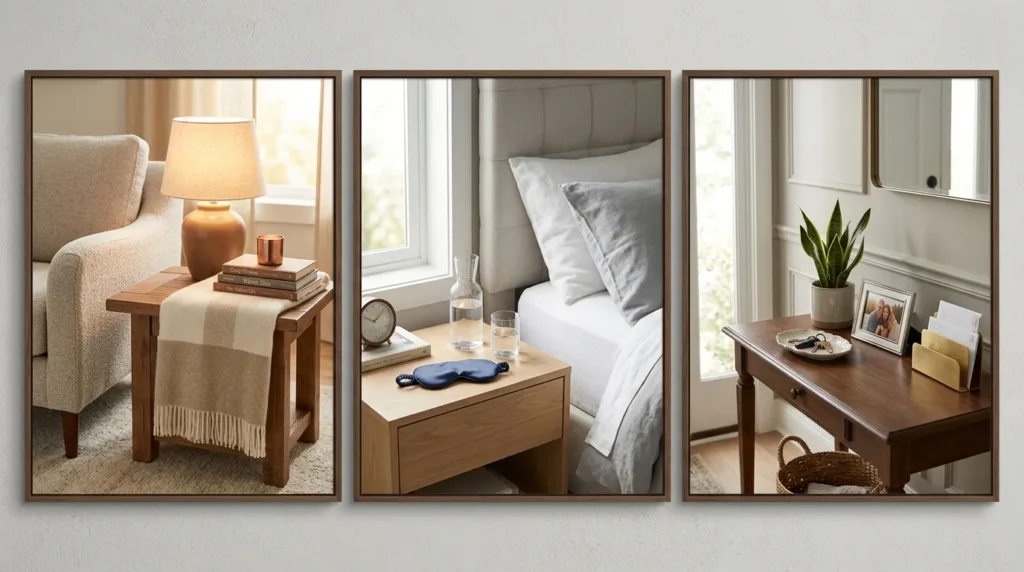
In the living room, balance beauty and function. Include a lamp for reading, a coaster for drinks, and a tray for remotes. Add personality with a book stack and a plant. Since this is a high-traffic spot, keep the surface practical and easy to wipe down.
Bedroom: Beside Your Slumber Sanctuary
A bedside end table should support rest. A soft lamp, a water carafe, a book you’re reading, and a small dish for jewelry or glasses cover the basics. Keep it calm and uncluttered your nightstand sets the tone for sleep, so avoid busy or bright displays.
Entryway or Hallway: A Welcoming First Impression
An entryway table greets you and your guests. A bowl or tray for keys, a small plant or flowers, and a decorative object create a warm welcome. If there’s room, add a mirror above it for last-minute outfit checks and to bounce light around the space.
How Can You Refresh Your End Table by Season?
Swapping a few items each season keeps your space feeling current without a full redecorating project. Small changes make a big difference.
Spring and Summer: Light, Bright, and Airy
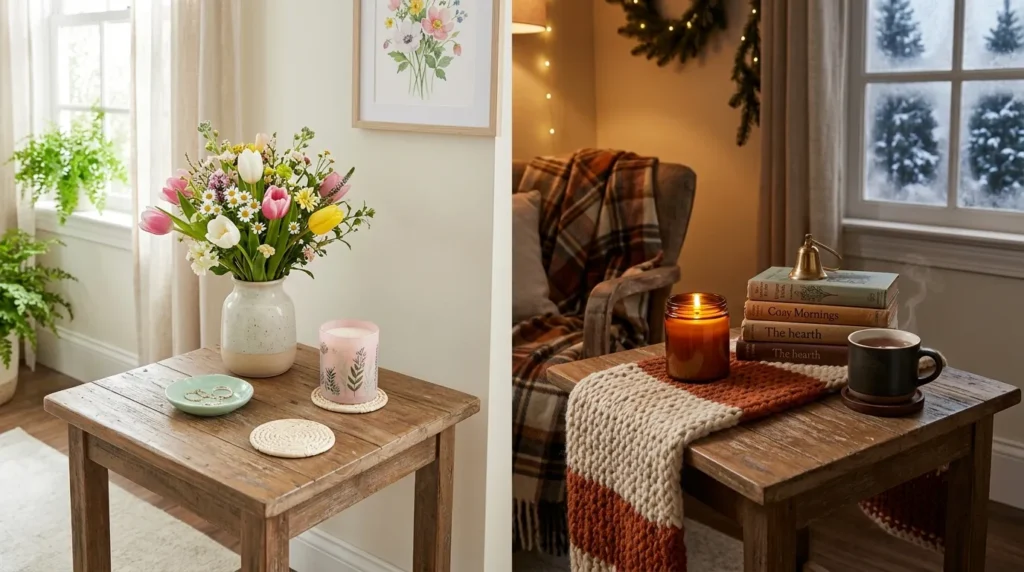
In warmer months, lean into fresh and breezy. Swap in fresh flowers, light-colored books, and pastel or clear glass accents. A bowl of citrus or a small vase of wildflowers instantly signals the season. Keep textures light, like linen or woven materials.
Fall and Winter: Warm, Cozy, and Inviting
When it gets cold, bring in warmth. Add a scented candle, deeper colors like burnt orange or forest green, and richer textures like velvet or knit. A small stack of holiday books or a tiny pinecone display adds seasonal charm without going overboard.
What Common End Table Styling Mistakes Should You Avoid?
Even small missteps can throw off your whole arrangement. Watch out for these three common errors.
Over-Cluttering: The Enemy of Style
The most common mistake is cramming too much onto the surface. A crowded table feels chaotic and loses its purpose. If you can’t set down a cup of coffee without moving something, you’ve added too much. Edit ruthlessly.
Ignoring Scale: Size Matters
A giant lamp on a tiny table looks top-heavy, while a few small trinkets on a large table look lost. Match the size of your items to the size of your table. Your tallest item should feel proportional roughly one to one-and-a-half times the table’s height for a lamp.
Lack of Personalization: Making It Yours
A table styled straight from a catalog can feel cold and generic. Add at least one item that reflects you a photo, a treasured find, or a handmade piece. Personal touches turn a styled table into your styled table.
How Can You Give an End Table a Budget-Friendly Makeover?
You don’t need a new table to get a fresh look. A few simple DIY updates can transform a tired piece for very little money.
Paint and Hardware Updates
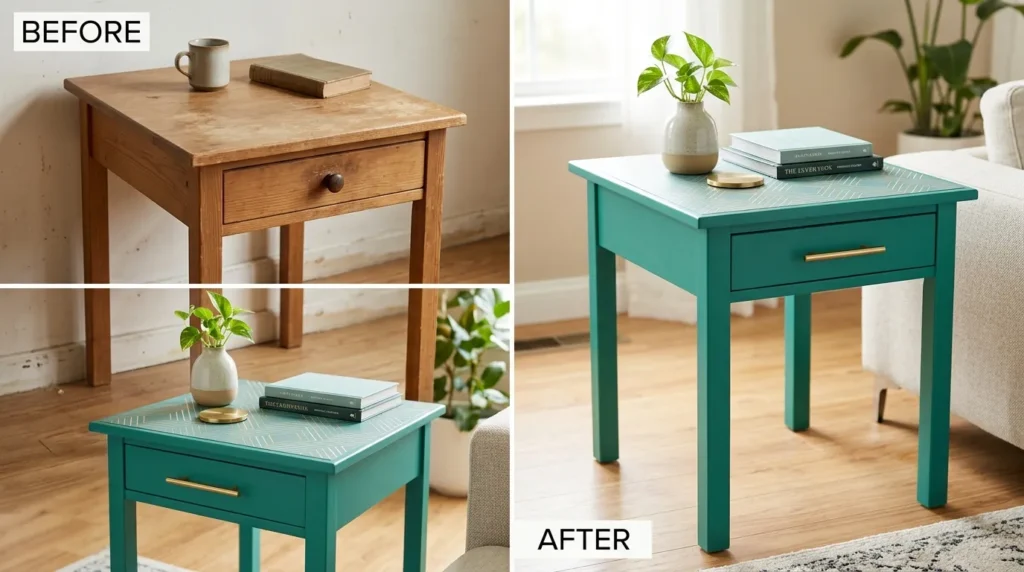
A coat of paint is the cheapest way to revive an old table. Sand it lightly, prime it, and apply two coats in a color that fits your room. Then swap out dated knobs or drawer pulls for new hardware. These two changes alone can make a thrift-store find look brand new.
Adding a Unique Top
Give the tabletop a facelift with peel-and-stick materials. Marble contact paper mimics the look of stone for a few dollars, while wood-grain or patterned film offers other styles. For a more durable option, a cut piece of tile or a remnant of real stone can sit right on top. These updates protect the surface and add instant character.
Your End Table, Your Style Statement
Styling an end table is one of the smallest projects with one of the biggest payoffs. Start with the functional essentials, layer in personal decorative touches, and use the rule of three to keep everything balanced. Then tailor your choices to the room, refresh with the seasons, and avoid the clutter trap.
The best part is that nothing here is permanent. If an arrangement doesn’t feel right, move things around until it clicks. Treat your end table as a small canvas; you can update your mood or the season changes anytime.
Ready to begin? Pick one end table in your home, clear it off completely, and rebuild it using the steps above. You might be surprised how much a single styled surface can lift an entire room.
Frequently Asked Questions
How many items should I put on an end table?
Aim for three to five items total, depending on the table’s size. Group them using the rule of three and leave at least a third of the surface open. If the table starts to feel crowded or you can’t set a drink down, remove something.
What is the most important item on an end table?
A lamp is usually the most important item. It adds essential lighting, brings height to your arrangement, and anchors the rest of your decor. If a lamp doesn’t fit, a tall vase or a stack of books can serve as your anchor instead.
How much does it cost to style an end table?
You can style an end table for free using items you already own, like books, photos, and small plants. If you’re buying new pieces, a basic setup with a lamp, coasters, a tray, and a plant typically costs between $50 and $150.
How do I stop my end table from looking cluttered?
Stick to a few well-chosen items, leave plenty of negative space, and contain small objects like remotes in a tray or box. Edit your display regularly and remove anything that doesn’t serve a purpose or add beauty.
Can I style an end table on a tight budget?
Absolutely. Shop your own home first, then check thrift stores and dollar stores for trays, vases, and frames. A coat of paint, new hardware, or marble contact paper can refresh the table itself for under $30.
Styling an end table sounds simple until you’re staring at a blank surface, unsure what goes where. Too little, and it feels bare. Too much, and it turns into a dumping ground for keys, mail, and half-empty mugs.
The good news? Styling an end table is one of the easiest ways to upgrade a room without spending much money or time. With a few smart choices, you can turn a plain side table into a small showcase of your personality.
This guide walks you through 10 beginner-friendly steps to style end tables like a pro. You’ll learn the essentials every table needs, decorative touches that add flair, design principles for balance, and tips for tailoring your table to any room or season. Let’s get started.
What Is an End Table, and Why Does Styling Matter?
An end table is a small table placed at the end of a sofa, beside a chair, or next to a bed. Its main job is practical: it gives you a spot to set down a drink, a book, or a phone within easy reach.
But an end table does more than hold your coffee. It’s prime real estate for decoration. Because it sits at eye level when you’re seated, anything you place on it draws attention. A well-styled end table ties a room together, adds color, and reflects your taste.
Think of it as a tiny stage. The surface is small, so every item you choose has to earn its spot. That constraint is actually a gift it forces you to be intentional, which is the first rule of good design.
How Do You Choose the Right End Table Before You Even Start Styling?
Before any decor gets placed, the table itself needs to earn its spot in the room. Size matters most: measure the space next to your sofa or bed and make sure the table’s height lines up close to your seating’s armrest, and that its footprint doesn’t crowd your walkway. Material and finish should echo the room’s existing furniture rather than fight it; a glass or metal table leans modern and sleek, while a wood table brings warmth and a more traditional feel. Color also plays a bigger role than people expect. A table that contrasts with your flooring or sofa can act as its own design statement, while one that blends in lets your styled decor take center stage instead.
How Do You Keep a Styled End Table Safe Around Kids and Pets?
A beautifully styled table can quickly become a hazard if it’s not thought through for your household. Skip anything fragile, sharp-edged, or easily knocked over if you have young kids or an enthusiastic dog or cat nearby, and keep candles unlit or opt for flameless versions in high-traffic homes. Heavier decorative objects belong toward the back or center of the table rather than the edge, where a stray hand or wagging tail is more likely to send them tumbling. If safety is a real concern in your home, lean into a slightly more minimal arrangement; fewer items means fewer things that can break, spill, or become a choking hazard.
Can Reflective Surfaces Improve Your End Table’s Look?
Mirrored and glass finishes do more than look pretty, they actively bounce light around the room, which is especially useful in a space that doesn’t get much natural light. A mirrored tray under your lamp or trinket dish adds a subtle sparkle and visually doubles the presence of whatever sits on top of it. A glass or crystal vase works the same way, catching light from windows or nearby lamps and scattering it softly across the table. If your end table sits in a darker corner, incorporating even one reflective piece can make the whole vignette feel brighter and more polished without adding a single extra light source.
Should Sustainability Factor Into Your End Table Styling?
If eco-conscious choices matter to you, styling an end table is a small but meaningful place to apply them. Look for decor made from natural, renewable materials like reclaimed wood, rattan, or stoneware instead of mass-produced plastic pieces, and consider secondhand or thrifted finds for trays, frames, and vases rather than buying new every time you refresh the look. Real plants over faux ones also reduce plastic waste over the long run, and many varieties double as natural air purifiers, quietly improving the air quality in the room while they sit on your table.
What Are the Essentials Every End Table Needs?
Before you add decorative flair, cover the basics. These three functional items make your end table useful, not just pretty.
Lighting: Lamps as Functional Art
A table lamp is the workhorse of any end table. It provides soft, ambient light for reading or relaxing, and it adds height to your arrangement. Choose a lamp that matches the room’s style a sleek metal base for modern spaces, a ceramic or wooden base for cozier rooms.
Drinks and Coasters: Practicality Meets Panache
An end table should always have room for a drink. Leave a clear spot, then add a small stack of attractive coasters. Coasters protect the surface from water rings and double as a design accent. Marble, cork, or patterned ceramic options add subtle texture without taking up much space.
Remote Control Organization: Taming the Tech Clutter
Remotes, chargers, and cords can quickly ruin a clean look. Corral them in a small decorative tray or a lidded box. A tray keeps everything in one spot and looks intentional, while a box hides clutter entirely. Either way, you turn an eyesore into part of the design.
How Do You Add Personality with Decorative Touches?
Once the essentials are in place, it’s time to add character. This is where your end table goes from functional to fabulous.
Books and Magazines: Curated Reads for Visual Interest
A small stack of books adds height, color, and a sense of who you are. Coffee table books with attractive spines or covers work best. Stack two or three horizontally, then place a small object on top, like a candle or a paperweight. Magazines fanned slightly in a tray also work for a more casual vibe.
Greenery and Florals: Bringing Nature Indoors
Plants bring life to any surface. A small potted succulent, a trailing pothos, or a single stem in a slim vase adds freshness and color. If you struggle to keep plants alive, high-quality faux greenery does the trick without the upkeep. Greenery softens hard edges and connects your space to the outdoors.
Decorative Objects: Sculptural Statements and Personal Mementos
Finish with one or two objects that mean something to you a ceramic bowl, a small sculpture, a framed photo, or a souvenir from a trip. These pieces spark conversation and make the space feel personal. Just don’t overdo it; one striking object beats five forgettable ones.
How Do You Achieve Visual Balance on an End Table?
Balance is what separates a styled table from a cluttered one. These three design principles keep your arrangement looking polished.
The Rule of Three: A Design Principle for Grouping
Designers swear by the rule of three because odd numbers feel more natural and dynamic to the eye than even numbers. Group items in threes say, a lamp, a stack of books, and a small plant. The trio creates a balanced vignette that doesn’t feel too symmetrical or too random.
Varying Heights and Textures: Adding Dimension
A flat, same-height arrangement looks dull. Mix tall items (a lamp), medium items (a vase), and low items (a tray or books). Combine textures too smooth ceramic, rough wood, soft fabric, shiny metal. This variety adds depth and keeps the eye moving across the display.
Negative Space: When Less Is More
Space is not wasted space. Leaving part of the table clear gives your eyes a place to rest and makes each item stand out. Resist the urge to fill every inch. A good target is to keep at least a third of the surface open.
What Style or Theme Should You Choose First?
Before you place a single item, decide on a general style direction for your end table. This could be minimalist, rustic, traditional, modern, or eclectic, and it doesn’t need to be complicated; just pick a feeling that matches the rest of your room. Having a theme in mind before you start gathering items keeps you from grabbing random pretty things that don’t actually work together once they’re all on the table. Think of this step as setting the rules for everything that follows: it guides your color choices, your material choices, and even how many items feel right for the space.
How Do You Arrange Items Using the Visual Triangle?
Once you’ve settled on your three to five items, the way you physically arrange them matters just as much as what you choose. Stylists rely on a technique called the visual triangle, where items are placed so their tops form the three points of an imaginary triangle rather than sitting in a flat, even row. A tall lamp might anchor one point, a medium-height stack of books another, and a small candle or trinket dish the third. This uneven, staggered placement is what makes a tabletop feel intentionally styled rather than randomly placed, and it works for shelves, mantels, and dressers just as well as end tables.
Do a Table’s Two Nightstands or End Tables Need to Match?
If you have a pair of end tables or nightstands flanking a sofa or bed, they don’t have to be identical. Matching tables create a clean, classic sense of balance and symmetry, which works well in more traditional or formal rooms. But choosing two different tables that share a similar tone, material, or scale can add a more collected, eclectic feel without looking mismatched. If you go the eclectic route, keep at least one element consistent, like wood tone or metal finish, so the pieces still feel like they belong in the same room.
How Far Should an End Table Sit From Your Sofa?
Getting the placement right is just as important as the styling on top. As a general rule, the surface of your end table should sit within about two inches of your sofa’s armrest height, not noticeably taller or shorter. This keeps the table functional; a drink or a book stays within easy reach without you having to lean up or down awkwardly. If you’re shopping for a new table, bring a measurement of your sofa arm’s height with you, or measure your current setup before ordering online so you don’t end up with a table that throws off the whole arrangement.
How Should You Style End Tables in Different Rooms?
The perfect end table styling depends on where it lives. Each room has different needs, so adjust your choices accordingly.
Living Room: The Heart of the Home
In the living room, balance beauty and function. Include a lamp for reading, a coaster for drinks, and a tray for remotes. Add personality with a book stack and a plant. Since this is a high-traffic spot, keep the surface practical and easy to wipe down.
Bedroom: Beside Your Slumber Sanctuary
A bedside end table should support rest. A soft lamp, a water carafe, a book you’re reading, and a small dish for jewelry or glasses cover the basics. Keep it calm and uncluttered your nightstand sets the tone for sleep, so avoid busy or bright displays.
Entryway or Hallway: A Welcoming First Impression
An entryway table greets you and your guests. A bowl or tray for keys, a small plant or flowers, and a decorative object create a warm welcome. If there’s room, add a mirror above it for last-minute outfit checks and to bounce light around the space.
How Can You Refresh Your End Table by Season?
Swapping a few items each season keeps your space feeling current without a full redecorating project. Small changes make a big difference.
Spring and Summer: Light, Bright, and Airy
In warmer months, lean into fresh and breezy. Swap in fresh flowers, light-colored books, and pastel or clear glass accents. A bowl of citrus or a small vase of wildflowers instantly signals the season. Keep textures light, like linen or woven materials.
Fall and Winter: Warm, Cozy, and Inviting
When it gets cold, bring in warmth. Add a scented candle, deeper colors like burnt orange or forest green, and richer textures like velvet or knit. A small stack of holiday books or a tiny pinecone display adds seasonal charm without going overboard.
What Common End Table Styling Mistakes Should You Avoid?
Even small missteps can throw off your whole arrangement. Watch out for these three common errors.
Over-Cluttering: The Enemy of Style
The most common mistake is cramming too much onto the surface. A crowded table feels chaotic and loses its purpose. If you can’t set down a cup of coffee without moving something, you’ve added too much. Edit ruthlessly.
Ignoring Scale: Size Matters
A giant lamp on a tiny table looks top-heavy, while a few small trinkets on a large table look lost. Match the size of your items to the size of your table. Your tallest item should feel proportional roughly one to one-and-a-half times the table’s height for a lamp.
Lack of Personalization: Making It Yours
A table styled straight from a catalog can feel cold and generic. Add at least one item that reflects you a photo, a treasured find, or a handmade piece. Personal touches turn a styled table into your styled table.
How Can You Give an End Table a Budget-Friendly Makeover?
You don’t need a new table to get a fresh look. A few simple DIY updates can transform a tired piece for very little money.
Paint and Hardware Updates
A coat of paint is the cheapest way to revive an old table. Sand it lightly, prime it, and apply two coats in a color that fits your room. Then swap out dated knobs or drawer pulls for new hardware. These two changes alone can make a thrift-store find look brand new.
Adding a Unique Top
Give the tabletop a facelift with peel-and-stick materials. Marble contact paper mimics the look of stone for a few dollars, while wood-grain or patterned film offers other styles. For a more durable option, a cut piece of tile or a remnant of real stone can sit right on top. These updates protect the surface and add instant character.
Your End Table, Your Style Statement
Styling an end table is one of the smallest projects with one of the biggest payoffs. Start with the functional essentials, layer in personal decorative touches, and use the rule of three to keep everything balanced. Then tailor your choices to the room, refresh with the seasons, and avoid the clutter trap.
The best part is that nothing here is permanent. If an arrangement doesn’t feel right, move things around until it clicks. Treat your end table as a small canvas; you can update your mood or the season changes anytime.
Ready to begin? Pick one end table in your home, clear it off completely, and rebuild it using the steps above. You might be surprised how much a single styled surface can lift an entire room.
Frequently Asked Questions
How many items should I put on an end table?
Aim for three to five items total, depending on the table’s size. Group them using the rule of three and leave at least a third of the surface open. If the table starts to feel crowded or you can’t set a drink down, remove something.
What is the most important item on an end table?
A lamp is usually the most important item. It adds essential lighting, brings height to your arrangement, and anchors the rest of your decor. If a lamp doesn’t fit, a tall vase or a stack of books can serve as your anchor instead.
How much does it cost to style an end table?
You can style an end table for free using items you already own, like books, photos, and small plants. If you’re buying new pieces, a basic setup with a lamp, coasters, a tray, and a plant typically costs between $50 and $150.
How do I stop my end table from looking cluttered?
Stick to a few well-chosen items, leave plenty of negative space, and contain small objects like remotes in a tray or box. Edit your display regularly and remove anything that doesn’t serve a purpose or add beauty.
Can I style an end table on a tight budget?
Absolutely. Shop your own home first, then check thrift stores and dollar stores for trays, vases, and frames. A coat of paint, new hardware, or marble contact paper can refresh the table itself for under $30.