
Trying to decorate for the Fourth of July without spending a fortune on store-bought bunting that only gets used once a year? A DIY garland is one of the easiest, most affordable ways to bring festive red, white, and blue energy to a backyard party, porch, or mantel, and most versions can be made in under an hour using materials you may already have on hand. Garlands are also endlessly customizable, meaning you can match the scale and style of your decor to a casual backyard barbecue or a more polished evening gathering with equal ease.
In this guide, you’ll find 18 Festive DIY Garland Ideas for a Fourth of July Celebration eighteen festive DIY garland ideas for a Fourth of July celebration, each with the materials needed, a quick construction overview, and a unique image inspiration prompt so you can picture the finished result. Whether you’re a confident crafter or tackling your first DIY project, there’s a garland style here suited to your skill level, timeline, and budget.
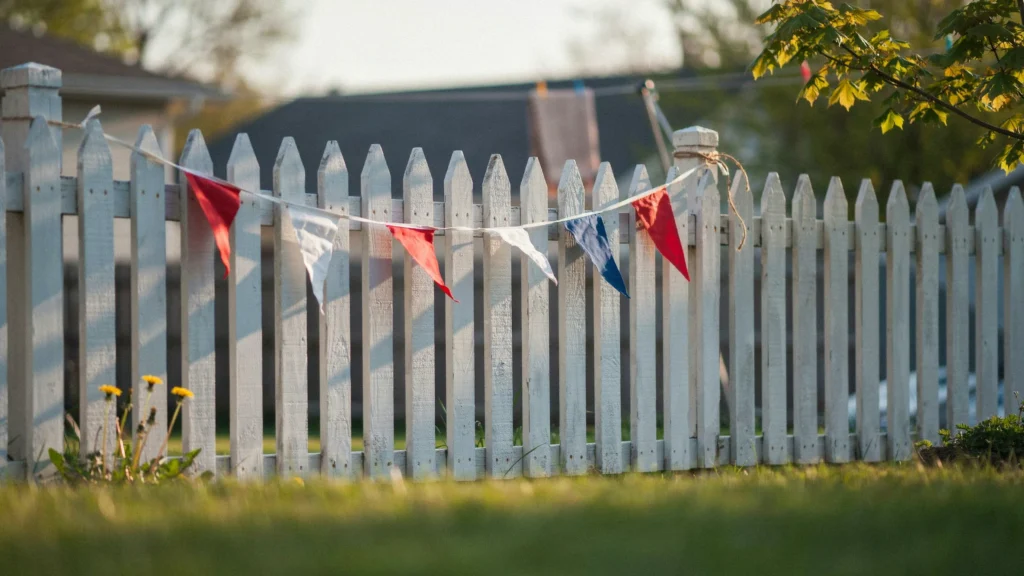
Garland Basics Before You Start
Before diving into specific designs, it helps to understand a few foundational choices that apply across almost every garland style on this list, since getting these right makes the difference between a garland that looks polished and one that looks thrown together.
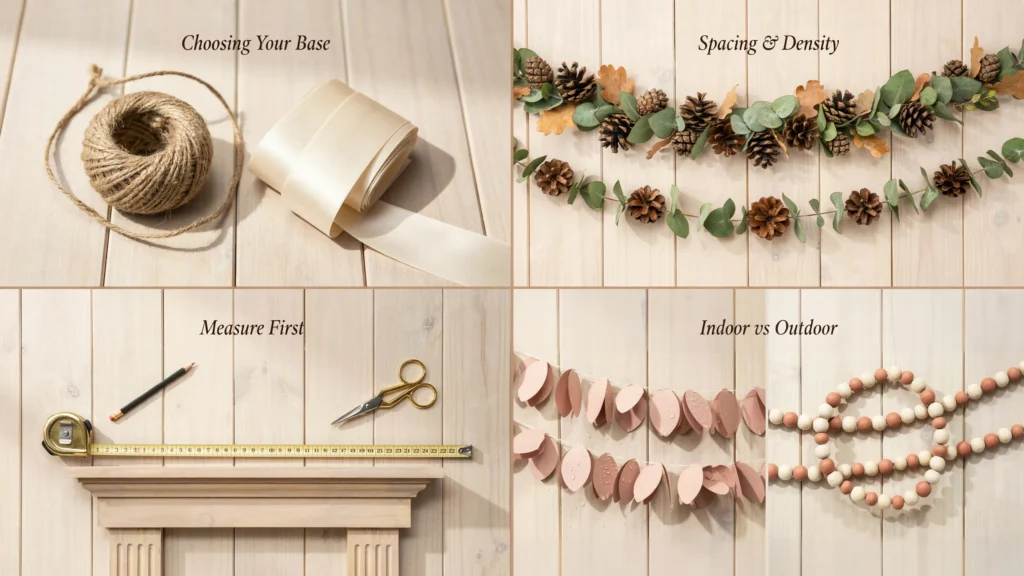
Choosing Your Base Cord or Twine Most garlands are built by threading or tying elements onto a length of jute twine, ribbon, or string lights. Jute twine gives a more rustic, natural look, while a satin ribbon base reads as more polished and formal.
Spacing and Density A garland with elements spaced closely together reads as fuller and more festive, while wider spacing creates a more minimal, airy look. Decide on your desired density before cutting materials, since it directly affects how much material you’ll need.
Measuring Your Space First Always measure the area you plan to hang the garland, whether it’s a mantel, porch railing, or backyard fence, before starting construction, and add roughly 20 percent extra length to account for natural draping and swag between hanging points.
Indoor vs Outdoor Durability If your garland will hang outside, choose weather-resistant materials like painted wood, weatherproof fabric, or plastic elements rather than delicate paper or unsealed cardstock, which can quickly be damaged by humidity, sun, or rain.
18 Festive DIY Garland Ideas for a Fourth of July Celebration
1. Classic Pom-Pom Garland
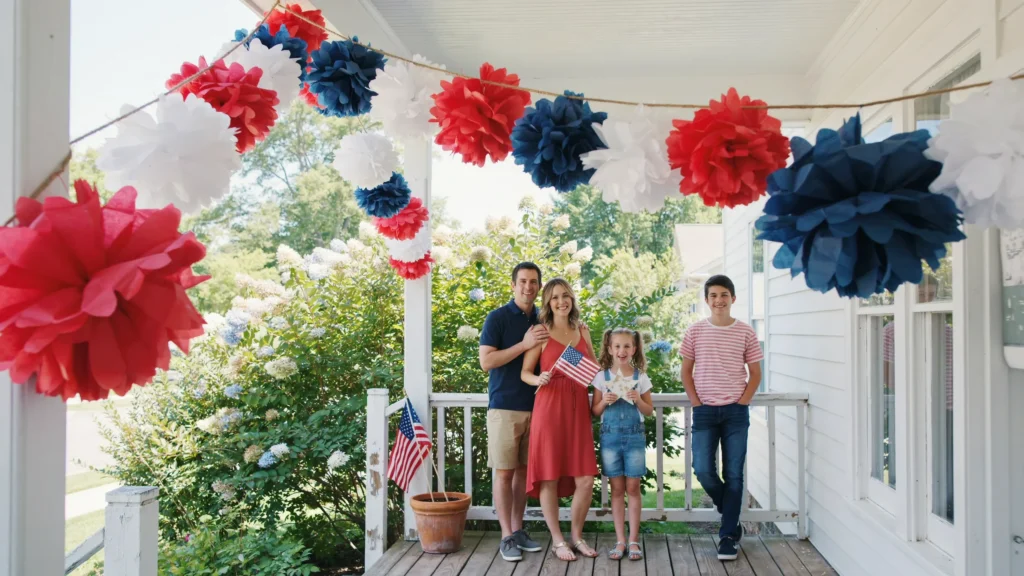
A garland made of red, white, and blue tissue paper pom-poms in varying sizes is one of the most iconic and beginner-friendly patriotic garland styles. Simply tie finished pom-poms at even intervals along a length of twine or ribbon, alternating colors for a classic pattern or clustering same-color pom-poms for a bolder, more graphic look. A single pom-pom takes only a few minutes to fluff and shape once folded, making this one of the fastest garlands to scale up for a longer stretch of fence or railing.
2. Fabric Bunting Triangle Garland
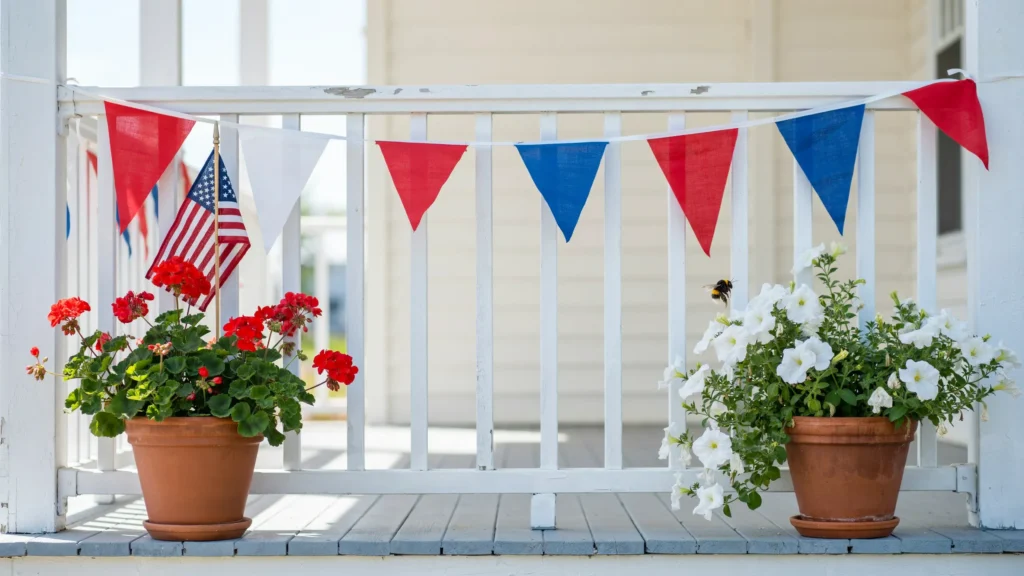
Triangular fabric bunting, sewn or fused from red, white, and blue cotton fabric scraps, creates a classic, slightly more formal patriotic garland that’s reusable year after year if stored properly. This style works particularly well strung along a porch railing or mantel for a traditional Americana look.
3. Paper Star Garland
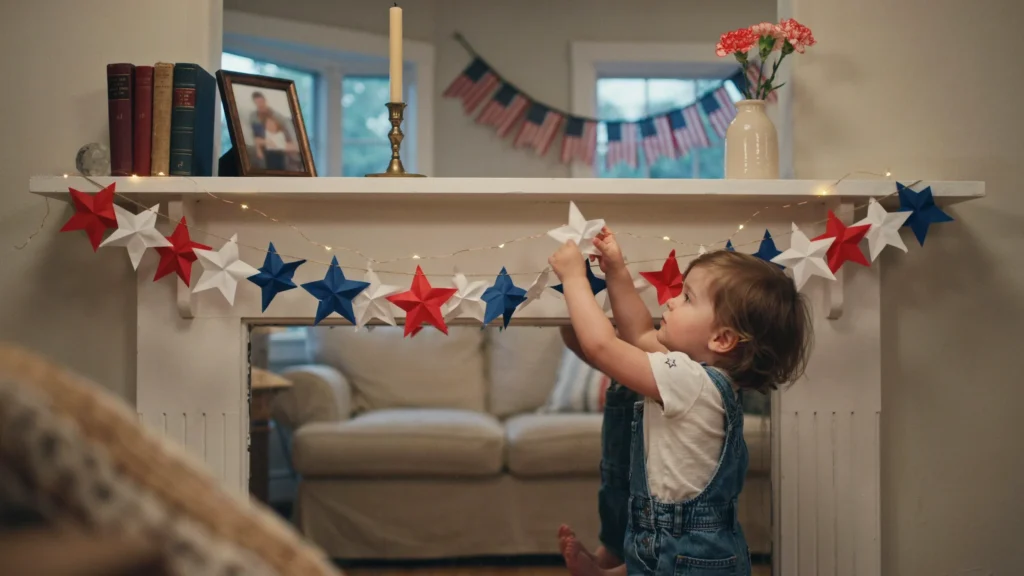
Simple five-pointed stars cut from red, white, and blue cardstock and strung together with a needle and thread create a lightweight, graphic garland that’s especially easy for kids to help assemble. This design works best for indoor display or a covered outdoor space, since paper is more vulnerable to weather.
4. Painted Wood Bead Garland
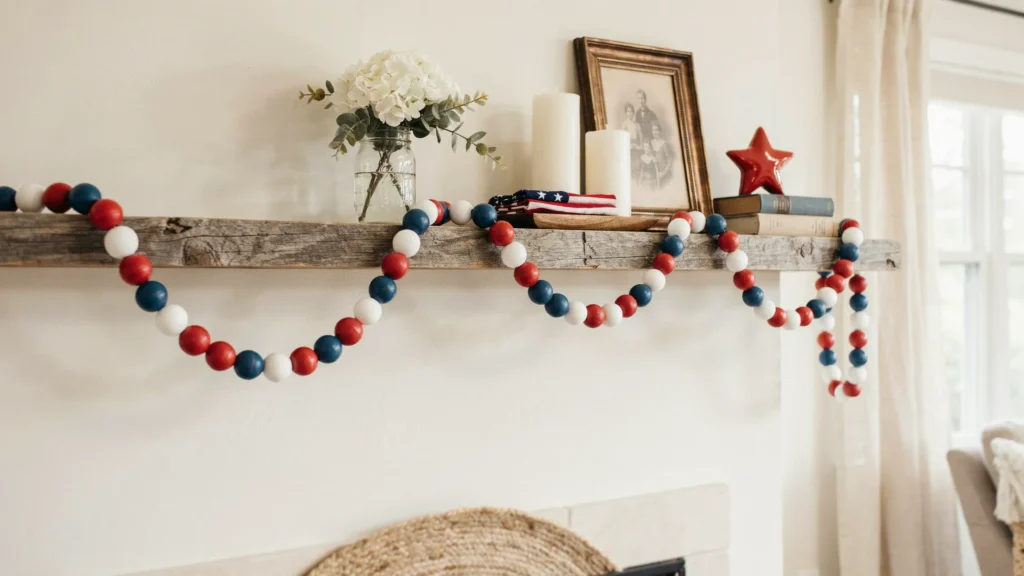
Wooden craft beads painted in red, white, and blue and strung onto jute twine create a rustic, farmhouse-style garland with real dimension and weight. Sealing the painted beads with a clear outdoor varnish makes this style durable enough for extended outdoor display throughout the summer season, and the beads themselves can be reused in a different color pattern for other holidays once painted.
5. Ribbon Streamer Garland
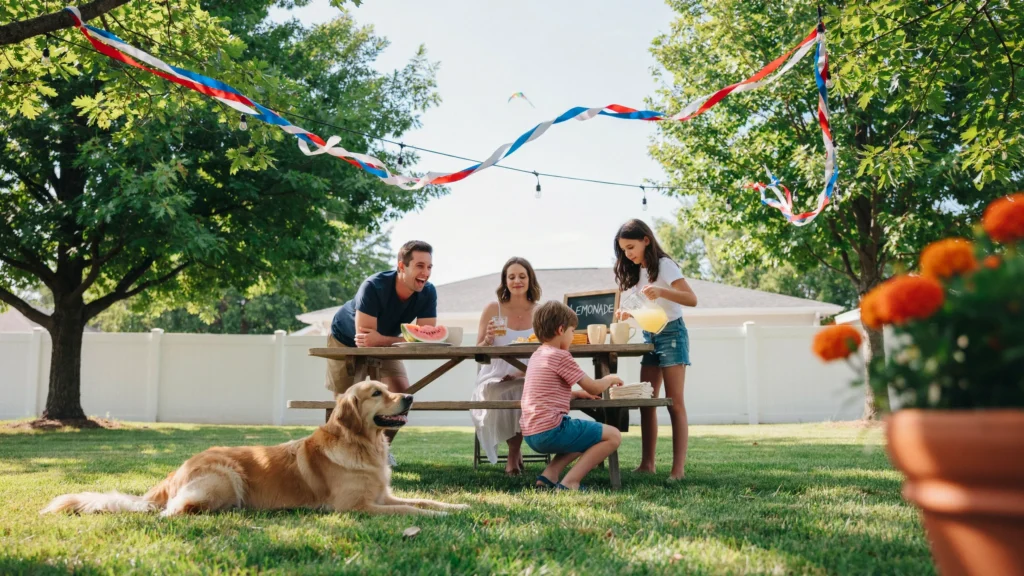
A garland made from varying lengths of red, white, and blue satin or grosgrain ribbon, tied along a horizontal cord, creates movement and texture, especially when hung somewhere with a light breeze, like a porch or open backyard space. This is one of the fastest garlands to assemble, requiring no cutting precision beyond rough length.
6. Dried Flower and Wildflower Garland
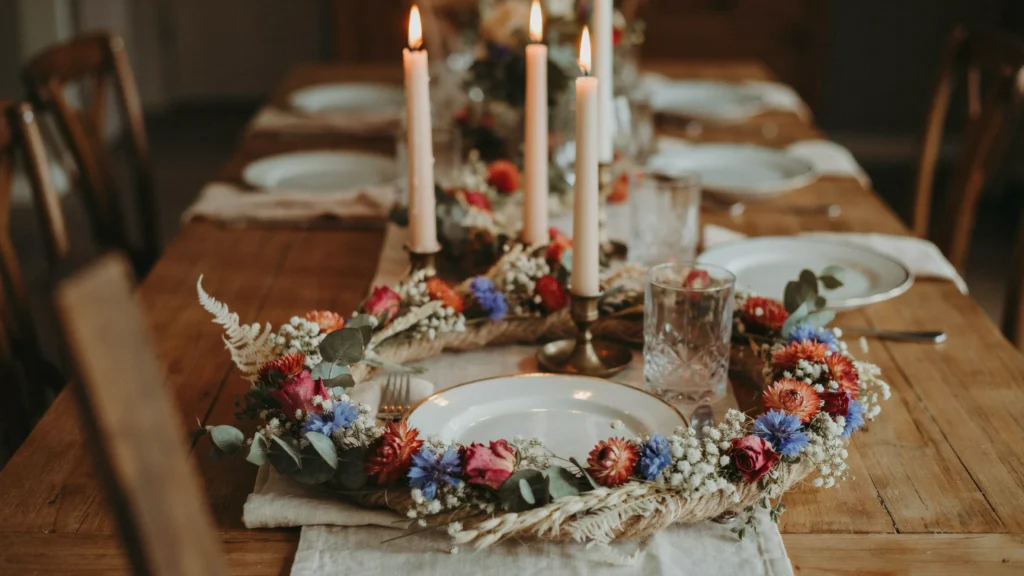
For a softer, more natural take on patriotic styling, a garland woven from dried red and white flowers alongside blue delphinium or cornflower brings an elegant, less overtly crafty look to a Fourth of July table or mantel. This style suits a more polished evening gathering better than a casual backyard barbecue.
7. Balloon Garland Arch
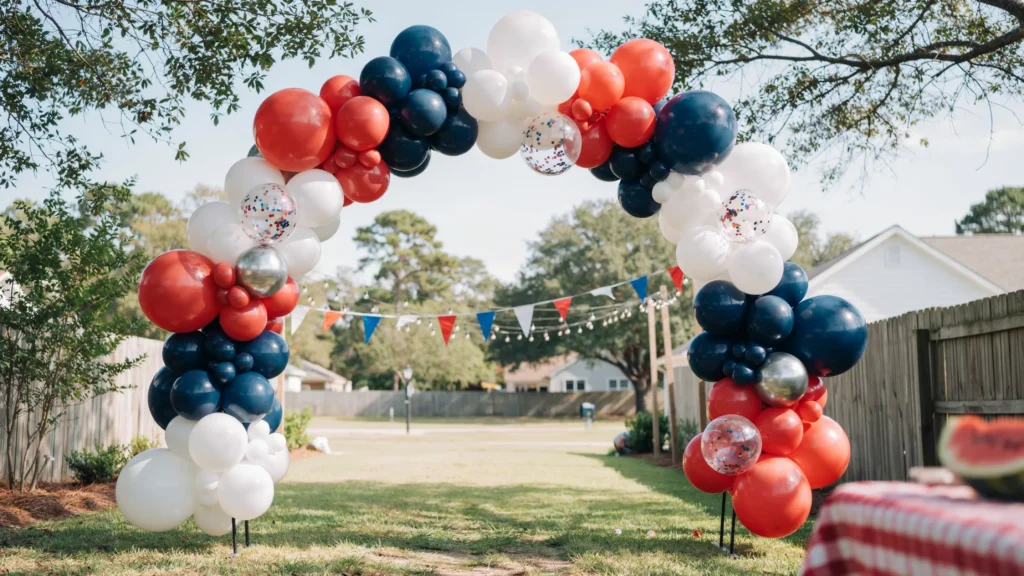
An organic-style balloon garland, using varying sizes of red, white, and blue balloons attached to a strip or netting, creates a dramatic, party-ready backdrop popular for backyard celebrations and photo areas. This style requires a balloon pump and slightly more assembly time than most other garlands on this list but delivers significant visual impact.
8. Painted Mason Jar Twinkle Light Garland
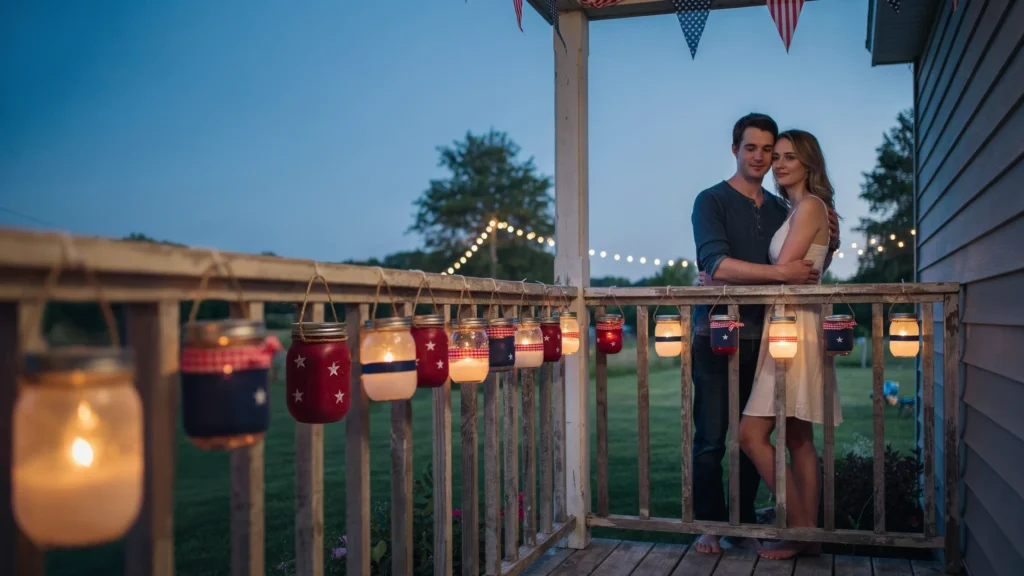
A string of mason jars, each painted or wrapped in red, white, or blue and fitted with a small battery-operated fairy light, creates a warm, glowing garland perfect for an evening Fourth of July gathering. Hanging these along a fence or porch railing at varying heights adds visual interest after sunset.
9. Felt Star Garland
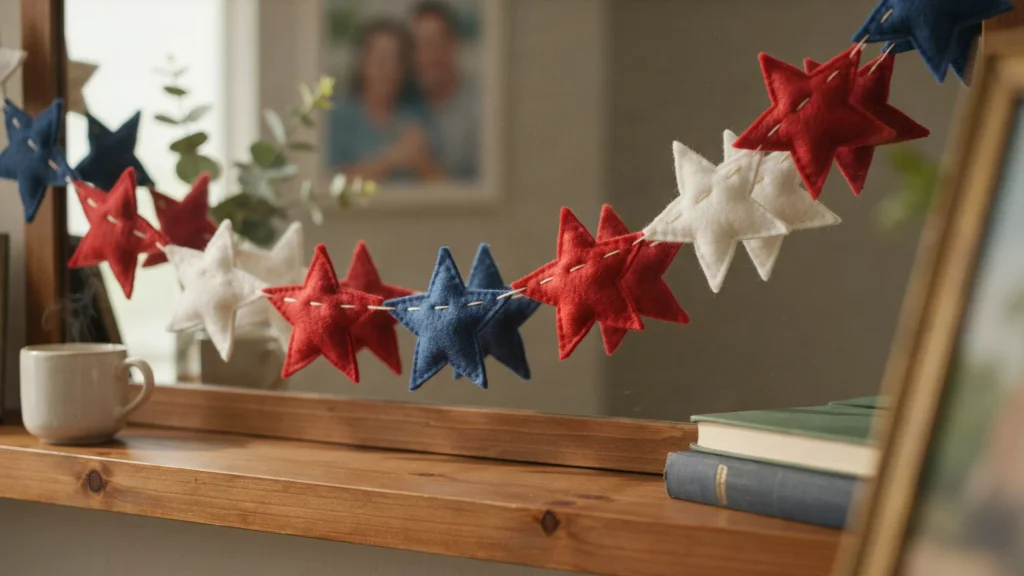
Felt stars, cut in red, white, and blue and strung together with a simple running stitch, create a soft, tactile garland that’s durable enough for repeated use across multiple summers. Felt also doesn’t fray the way paper or loosely woven fabric can, making it a low-maintenance choice for families who decorate for the Fourth of July annually.
10. Painted Popsicle Stick Flag Garland
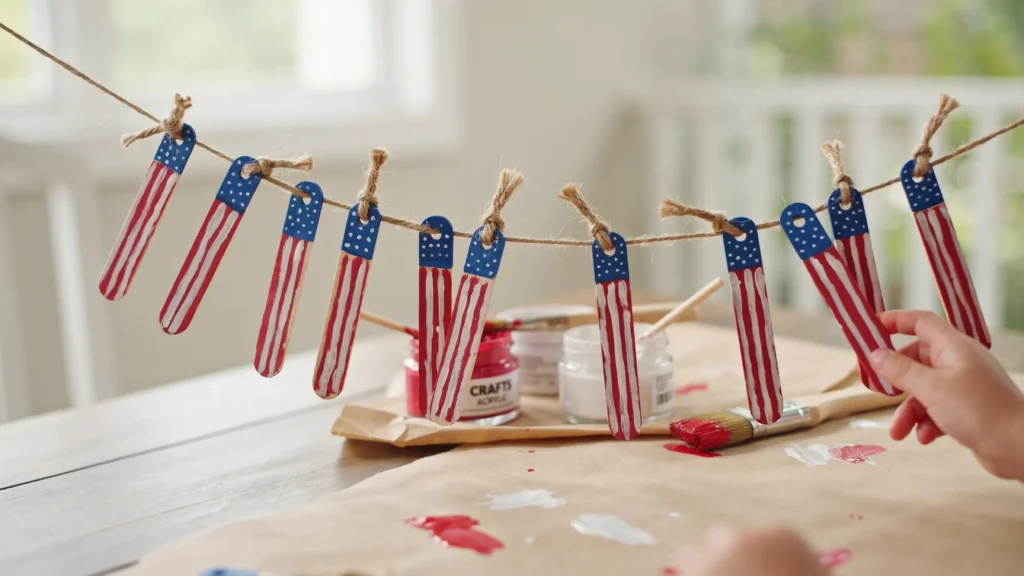
Wooden popsicle sticks or paint stirrers, painted with simple red and white stripes and a blue corner, strung together along twine, create a playful, DIY American flag-inspired garland that’s especially fun for kids to help paint and assemble. This project doubles as a craft activity for the days leading up to the celebration.
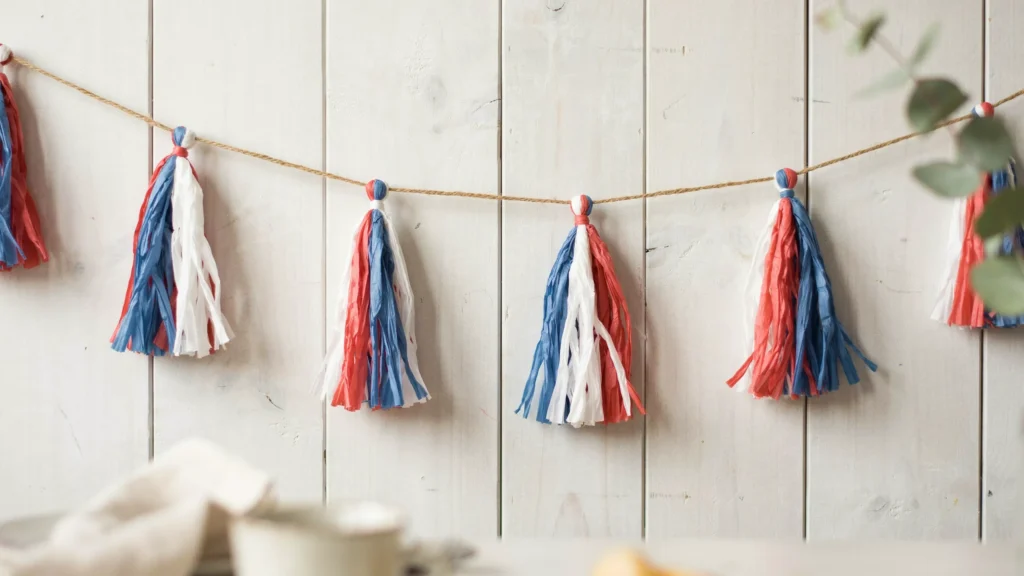
11. Raffia Tassel Garland
Natural raffia dyed or wrapped in red, white, and blue sections, tied into tassels along a length of twine, creates a textured, boho-leaning garland that photographs beautifully against a neutral backdrop. This style suits an outdoor party with a more relaxed, natural aesthetic rather than a traditional Americana theme.
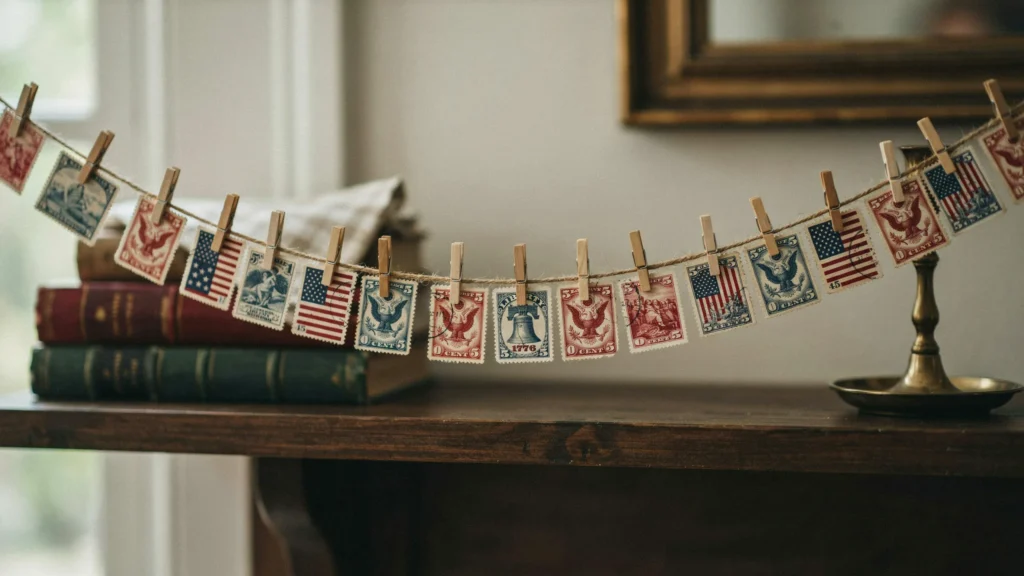
12. Vintage Postage Stamp Garland
For a more nostalgic, Americana-inspired look, a garland made from vintage or reproduction postage stamps featuring American flags, eagles, or patriotic imagery, glued or clipped along twine, brings understated character to an indoor display. This style works especially well for a smaller mantel or bookshelf accent rather than large outdoor spaces.
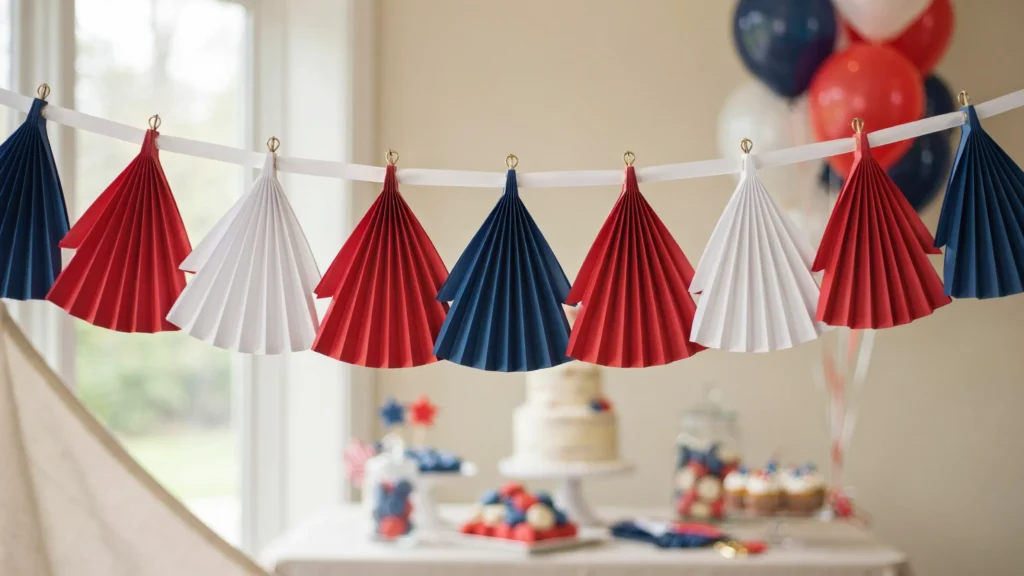
13. Paper Fan Garland
Small paper fans, folded accordion-style from red, white, and blue cardstock and strung along a horizontal ribbon, create a dimensional, eye-catching garland popular for party backdrops and dessert tables. This style requires slightly more folding precision than other paper options but delivers a more polished, three-dimensional result.
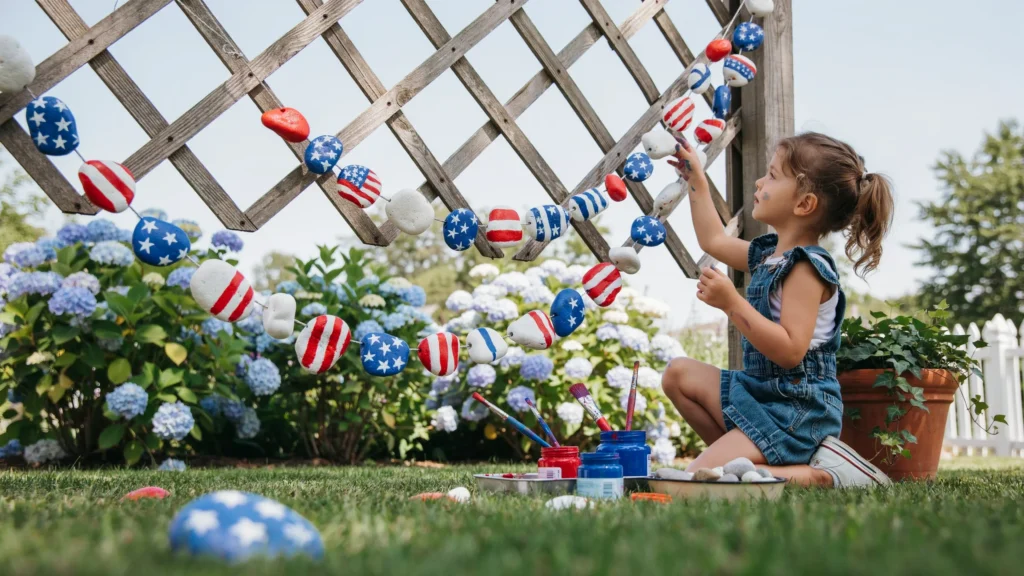
14. Painted Rock or Pebble Garland
Small flat stones or river pebbles, painted in patriotic colors and strung together with a drilled hole and wire, create an unexpected, durable garland well suited to outdoor use throughout the entire summer season without weather concerns. This project also works well as a nature-based craft activity for kids.
15. Cotton Ball Cloud and Star Garland
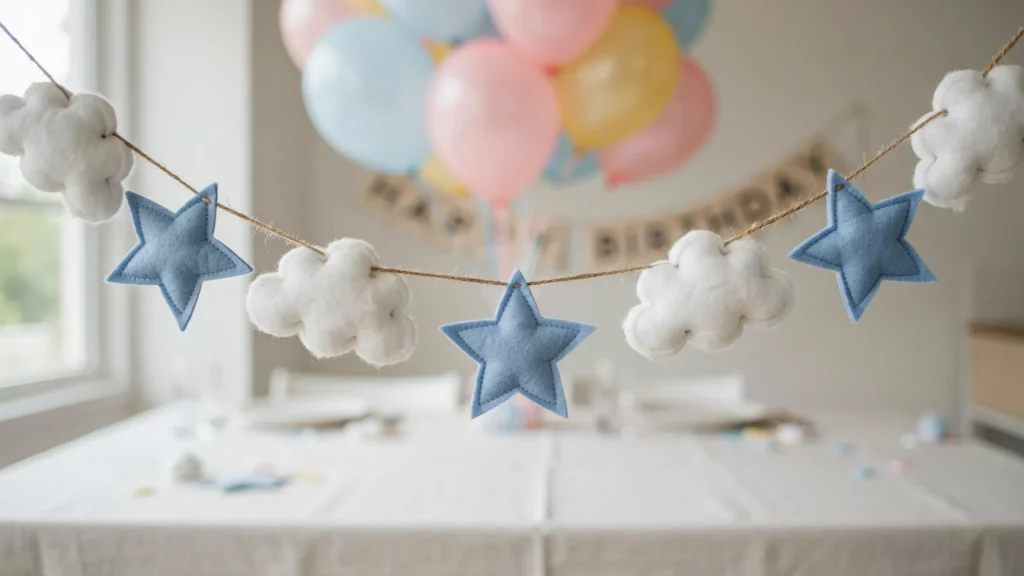
Cotton balls fluffed and glued alongside small blue felt stars along a length of twine create a soft, whimsical garland reminiscent of a summer sky, offering a more playful, less literal take on patriotic decor. This style works especially well for a child’s birthday party held around the Fourth of July holiday.
16. Denim and Red Bandana Garland
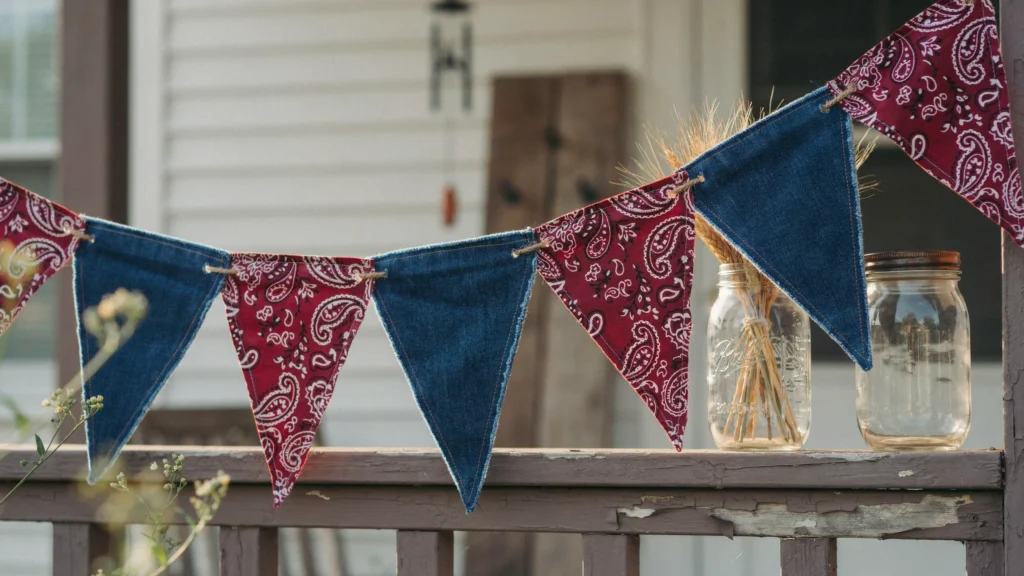
Small triangular flags cut from recycled denim and red bandana fabric, alternated along a length of twine, create a rustic, Americana-inspired garland with genuine textural interest. This is also an excellent way to repurpose old jeans or fabric scraps rather than purchasing new material.
17. Sparkler Bundle Garland
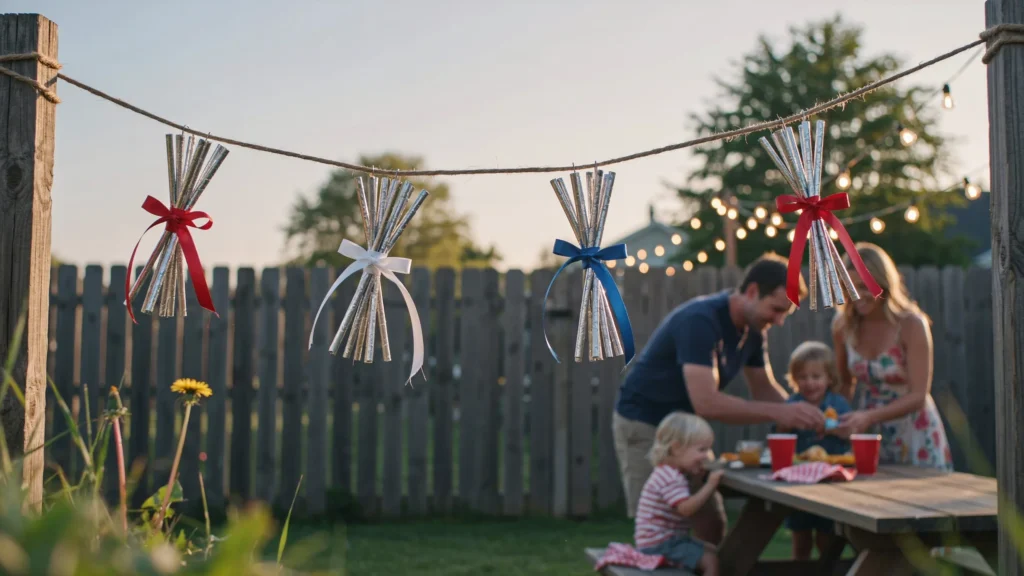
Unlit sparklers, tied into small bundles with red, white, and blue ribbon and hung at intervals along twine, create a decorative garland that doubles as a functional sparkler dispenser for evening celebrations. This dual-purpose approach is especially practical for larger backyard gatherings where guests will want easy access to sparklers after dark.
18. Watercolor Painted Canvas Bunting
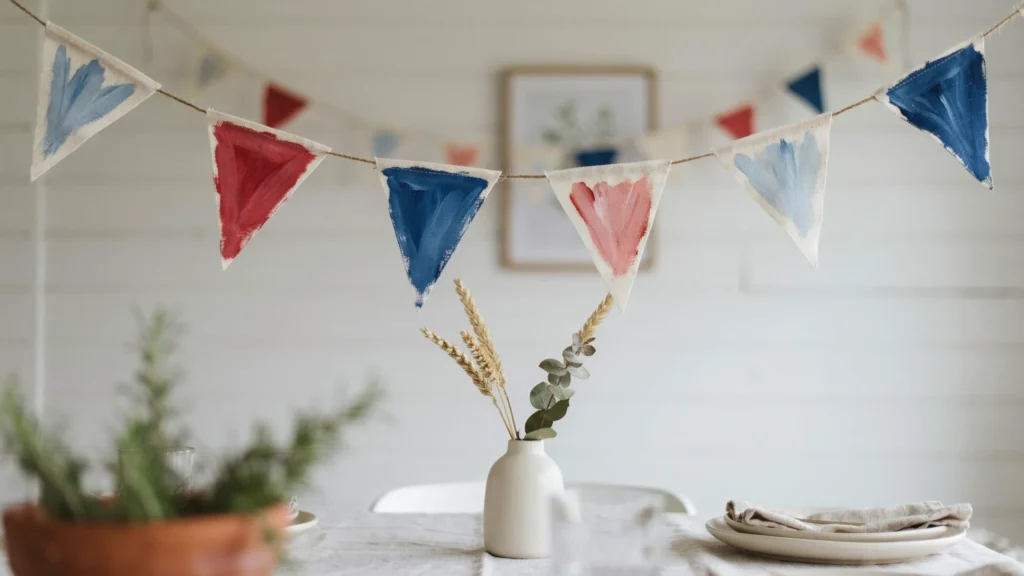
Small canvas or muslin fabric triangles, hand-painted with a loose watercolor wash in red, white, and blue, strung along twine, create an artistic, elevated take on traditional bunting. This style suits a more design-forward Fourth of July gathering where guests will appreciate the handmade, artisanal quality of the decor.
Materials and Time Estimates by Garland Type
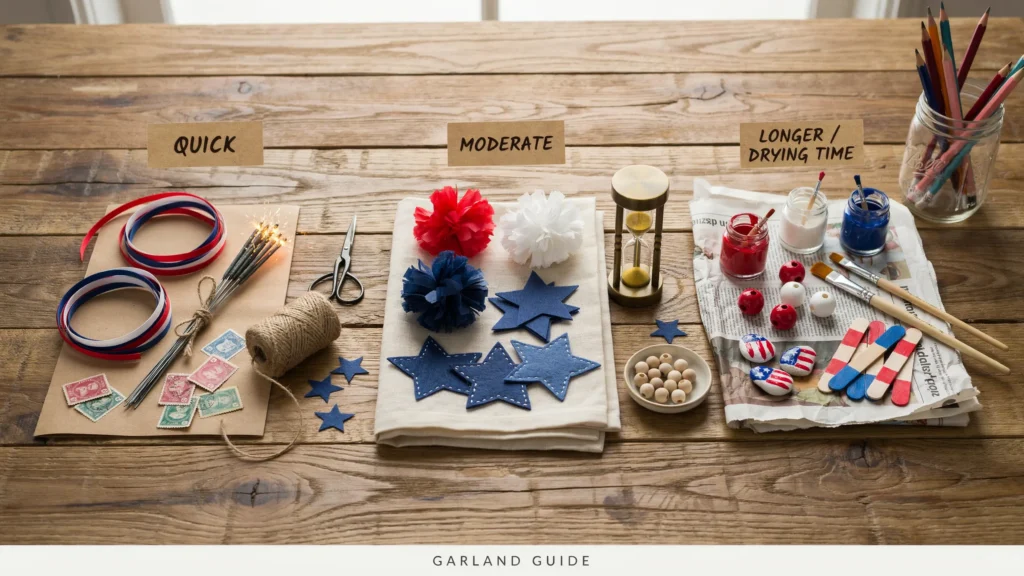
Garland projects vary significantly in both cost and time investment, so matching your choice to your available prep time matters as much as matching it to your desired style. Quick projects under 30 minutes include the ribbon streamer garland, sparkler bundle garland, and vintage postage stamp garland, all of which require minimal cutting or assembly. Moderate projects taking one to two hours include the pom-pom garland, paper star garland, and felt star garland, which involve more repetitive individual element creation. Longer projects requiring painting or drying time include the painted wood bead garland, painted popsicle stick garland, and painted rock garland, since these need time for paint to fully dry, often best started a day or two before the celebration. Budgeting your project around these time categories, rather than starting a longer project the morning of the party, helps avoid a last-minute scramble.
Common DIY Garland Mistakes
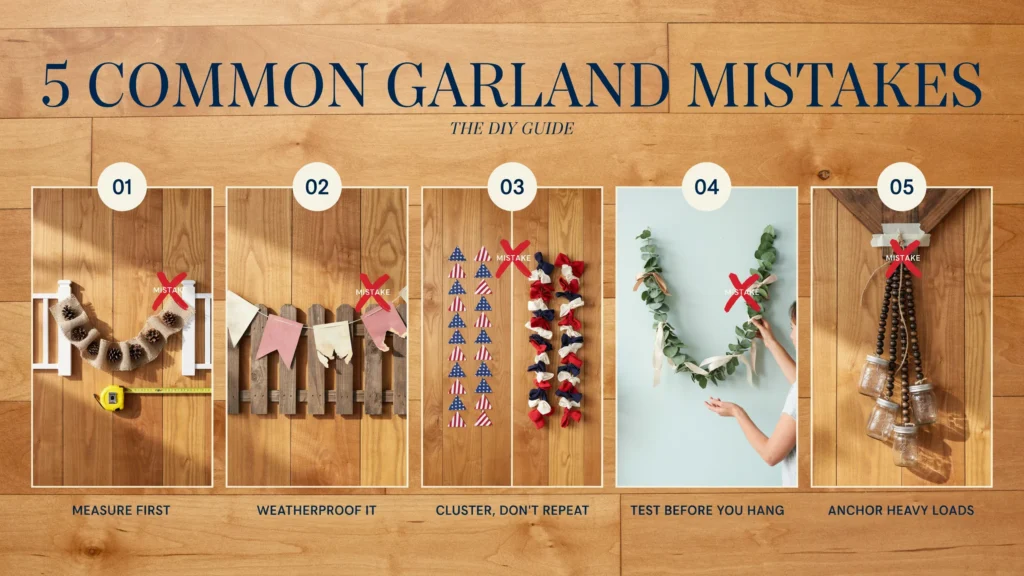
Not measuring the hanging space first. Running out of garland mid-installation, or ending up with an awkward amount of excess, is one of the most common and easily avoidable mistakes. Always measure first and add extra length for natural draping.
Choosing materials that won’t hold up outdoors. Unsealed paper or cardstock can wilt or fade quickly in direct sun and humidity. If your garland needs to survive an outdoor party, favor sealed, painted, or fabric materials over raw paper.
Overcrowding the color pattern. Alternating red, white, and blue too rigidly in a strict repeating pattern can look mechanical rather than festive. Varying the rhythm slightly, or clustering colors in small groups, often creates a more natural, visually interesting result.
Skipping a test hang before the party. Hanging your finished garland briefly before the event, rather than for the first time on party day, helps catch any sagging, uneven spacing, or attachment issues while there’s still time to fix them.
Using materials too heavy for the hanging method. A garland with dense elements like painted wood beads or mason jars needs a sturdy cord and secure anchor points. Using thin twine or weak tape for a heavy garland often results in sagging or detachment partway through the event.
Frequently Asked Questions
What’s the easiest DIY garland to make for the Fourth of July? A ribbon streamer garland is generally the fastest and most beginner-friendly option, since it only requires cutting ribbon to length and tying it along a base cord, with no precision cutting, sewing, or painting required.
How do I make a garland that will last through an outdoor party? Choose weather-resistant materials like sealed painted wood, fabric, or plastic elements rather than raw paper or cardstock, and use a sturdy base cord like jute twine that can handle both the weight of your materials and any wind or movement outdoors.
Can kids help make Fourth of July garlands? Yes, several garland styles on this list, including the pom-pom garland, painted popsicle stick garland, and cotton ball cloud garland, are specifically well suited to being a kid-friendly craft activity in the days leading up to the celebration.
How much garland material do I need for a mantel or porch railing? Measure the length of your hanging space, then add roughly 20 percent extra to account for natural draping and swag between anchor points, which typically prevents the garland from looking stretched too tight or falling short.
What can I use instead of buying new fabric for a garland? Repurposed materials like old denim, bandanas, or fabric scraps work well for garland projects and are a budget-friendly, low-waste alternative to purchasing new fabric specifically for a one-day celebration.
How far in advance should I make my Fourth of July garland? Garlands involving painted elements, like wood beads or popsicle sticks, are best started at least one to two days in advance to allow full drying time, while simpler no-paint garlands, like ribbon streamers or paper stars, can typically be completed the day before or even the morning of the celebration.
Can these garlands be reused for other patriotic holidays? Yes, most red, white, and blue garlands on this list work equally well for Memorial Day, Labor Day, Veterans Day, or Flag Day, making them a worthwhile investment of time beyond just a single Fourth of July celebration.
How do I store a garland so it lasts for next year? Once the celebration ends, gently coil or fold the garland and store it in a sealed plastic bin away from direct sunlight and moisture, which prevents fading, mildew, and pest damage between uses. Durable materials like painted wood, felt, and fabric bunting tend to hold up best across multiple years of storage and reuse.


