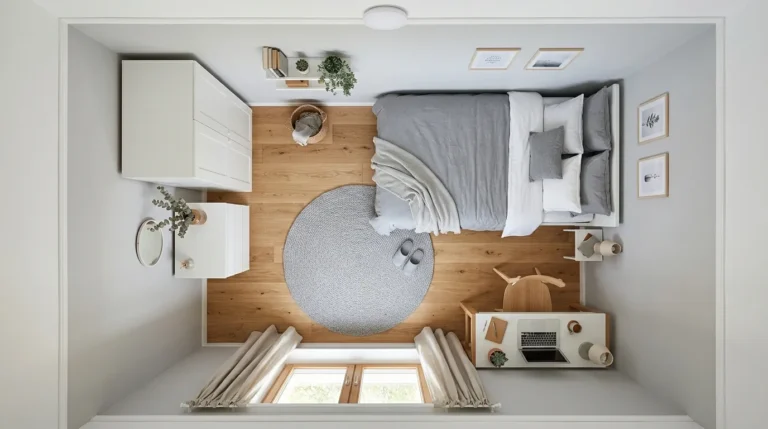
Small bedrooms don’t have to feel cramped. By using strategic furniture layouts like floating arrangements, vertical storage, and corner-conquering designs you can maximize every square foot. This guide, 5 Smart Furniture Layouts for Tiny Bedrooms, covers five proven layout strategies, plus tips on lighting, color, and decor to help any tiny bedroom feel spacious and functional.
A tiny bedroom can feel like a puzzle with too many pieces. The bed takes up most of the floor, there’s nowhere to put the dresser, and somehow the room still feels cluttered even after a thorough clean. Sound familiar?
The good news: the problem usually isn’t the size of the room. It’s the layout. Most people default to pushing furniture against the walls and calling it a day but that approach can actually make a small room feel smaller. Smart furniture layouts, on the other hand, use space intentionally. They create visual breathing room, improve flow, and let every piece serve a purpose.
This guide covers five furniture layouts specifically designed for tiny bedrooms, along with practical tips on lighting, color, and personalization. Whether you’re working with a 100-square-foot studio alcove or a compact guest room, these strategies will help you make the most of what you’ve got.
Understanding Your Space: Pre-Planning Essentials
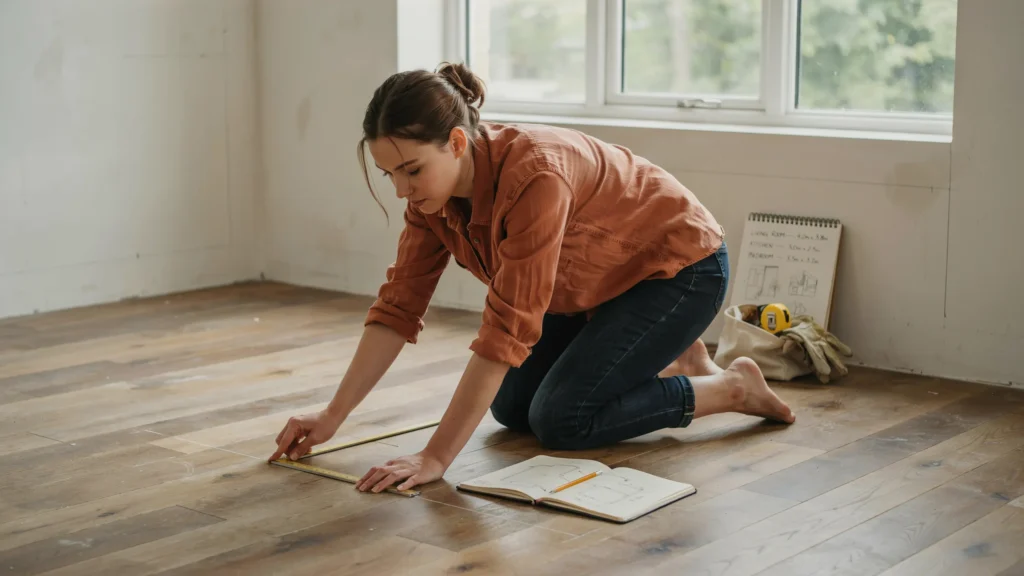
Before moving a single piece of furniture, spend time understanding the room itself. Grab a tape measure and note the dimensions of the space length, width, ceiling height, door swing, and window placement. Then measure every piece of furniture you plan to keep.
Next, identify the focal point. In most bedrooms, that’s the bed. Everything else should be arranged to support it without competing for attention.
Take note of where natural light enters the room. Windows are one of the most powerful tools for making a small space feel open, so you’ll want your layout to work with them, not against them.
Finally, declutter before you redesign. No layout no matter how clever can compensate for excess stuff. Start with a clear slate, then build up thoughtfully.
Layout 1: The “Floating” Furniture Arrangement
What does floating furniture mean in a small bedroom?
Floating furniture means pulling pieces away from the walls even just a few inches rather than lining everything up around the perimeter. It sounds counterintuitive, but it works.
When furniture hugs the walls, the center of the room becomes a dead zone: an open floor with no defined purpose. Floating pieces inward creates visual zones (sleep zone, reading zone, work zone) and gives the eye something to anchor to from different angles.
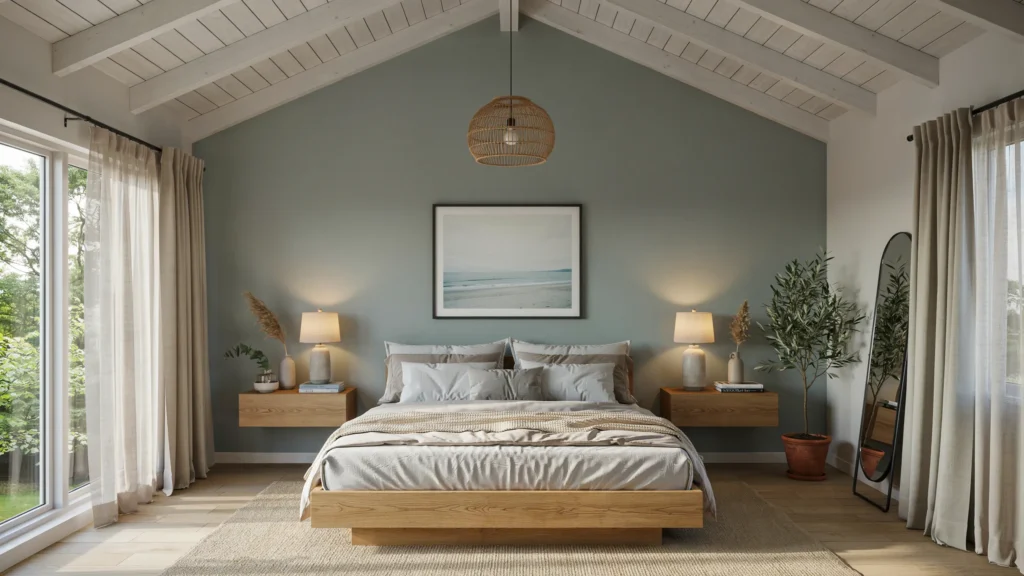
For this layout, choose smaller-scale furniture. A queen bed might dominate the room; a full or platform bed with a low profile will give you more visual freedom. Pair it with a slim nightstand or a wall-mounted light to keep the floor clear.
Multi-functional pieces shine here. An ottoman at the foot of the bed that doubles as storage, or a bench with hidden compartments, adds function without adding visual bulk.
Layout 2: Vertical Dominance Going Up, Not Out
How can vertical space solve storage problems in a tiny bedroom?
Floor space is limited. Wall space usually isn’t. Shifting your storage strategy from horizontal to vertical is one of the most effective moves you can make in a small bedroom.
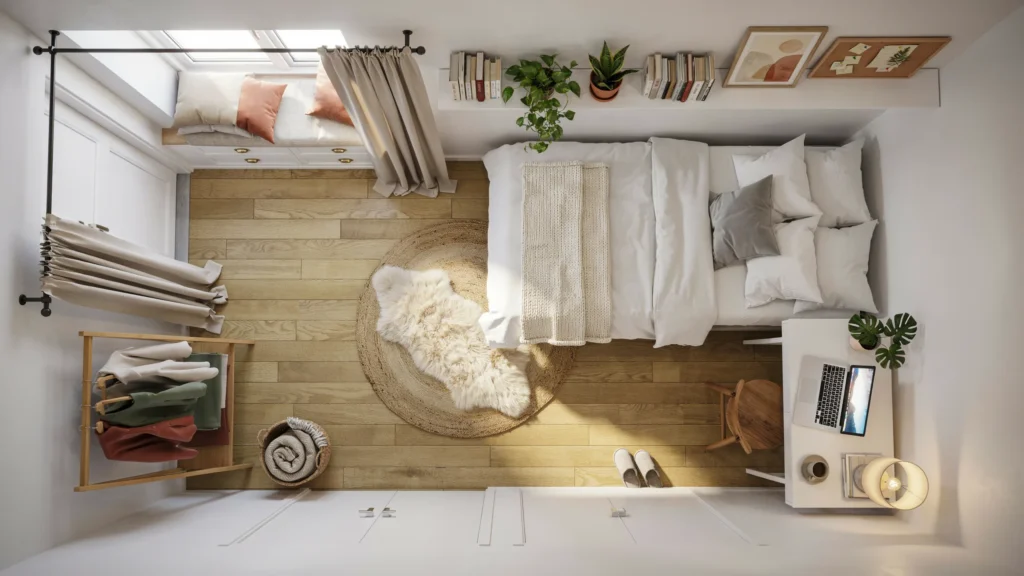
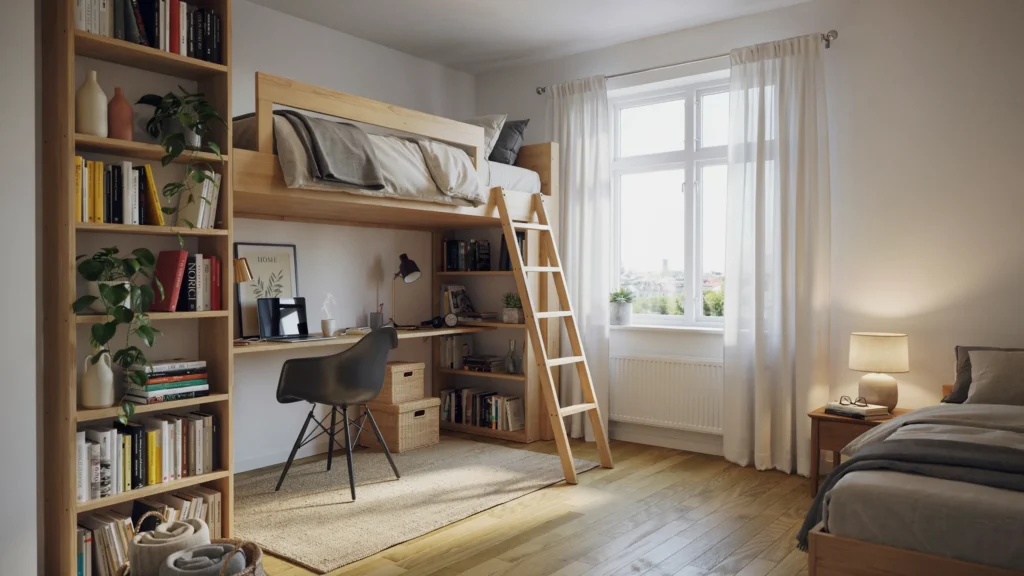
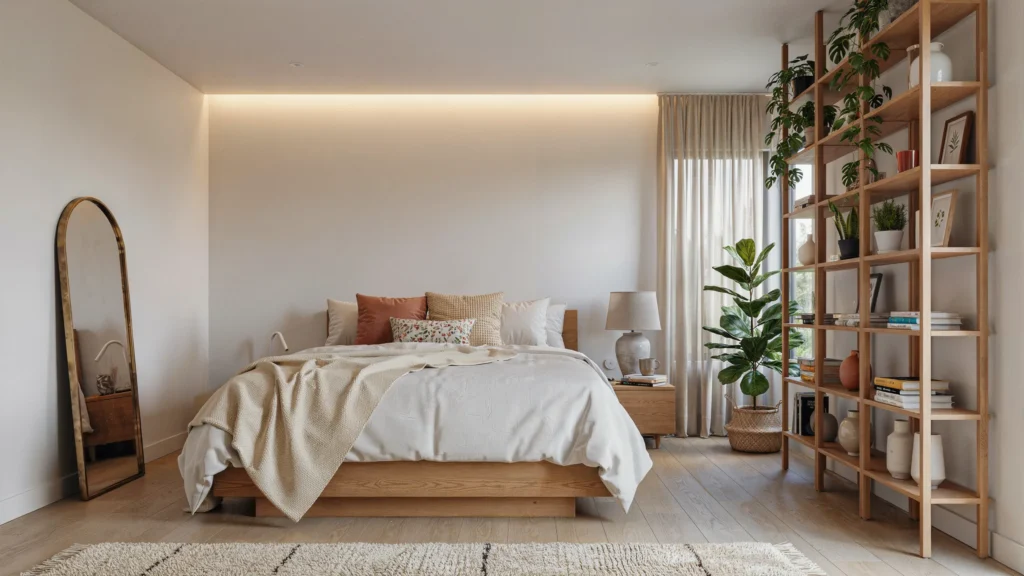
Install floor-to-ceiling shelving units to store books, baskets, and decorative items. Wall-mounted desks fold flat when not in use, freeing up floor space during the day. Pegboards and wall-mounted organizers handle everyday items keys, headphones, small accessories without requiring a dedicated surface.
For extreme space-saving, consider a loft bed. Loft beds elevate the sleeping area so the space underneath can serve as a workspace, reading nook, or even a small closet. In a bedroom with high ceilings, this is a game-changer.
Mirrors and wall art also contribute here. A large mirror positioned across from a window reflects natural light and gives the illusion of depth, making the room feel wider than it actually is.
Layout 3: Multi-Functional Furniture Marvels
What are the best multi-functional furniture pieces for a small bedroom?
Multi-functional furniture is the cornerstone of small-space living. The goal is simple: every piece should do at least two jobs.
Here are some of the most effective options for tiny bedrooms:
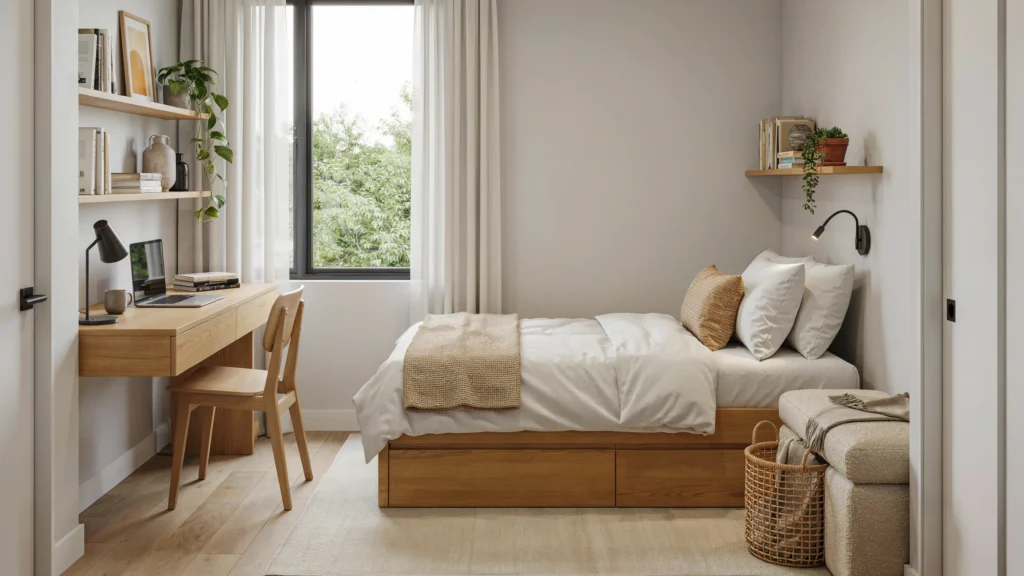
- Beds with built-in storage: Drawers underneath or a hydraulic lift-up base provide significant storage without taking up additional floor space.
- Sofa beds and daybeds: Ideal for rooms that double as guest spaces. A well-designed daybed functions as a sofa during the day and a bed at night.
- Ottoman storage: A storage ottoman at the foot of the bed replaces the need for a separate blanket chest.
- Nesting tables: These slot together when not in use and pull apart when you need extra surface area.
- Convertible desks: Some dining tables collapse into compact wall units; others flip open into a workspace. These are especially useful in studio bedrooms that serve multiple functions.
When shopping for multi-functional pieces, prioritize build quality. Convertible furniture that’s poorly constructed will feel flimsy and frustrating. Look for solid wood frames, smooth mechanisms, and neutral finishes that blend with the rest of the room.
Should a Guest Bedroom Use a Daybed with a Trundle?
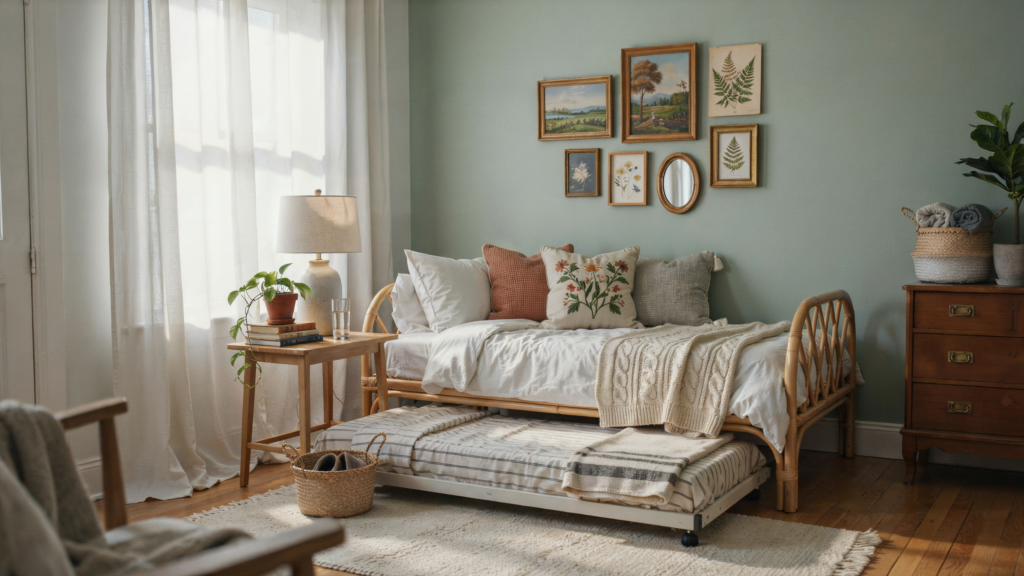
If your small bedroom doubles as a guest room, a daybed with a trundle underneath is one of the most flexible layout solutions available. Pushed against the longest wall, a daybed functions as a sofa or reading spot day-to-day, while the trundle stays tucked out of sight until guests arrive, then pulls out to offer a second full sleeping surface. This setup works especially well when you’re hosting guests who’d rather not share a bed, since it gives each person their own separate spot without needing two full bed frames. When it’s not set up for sleeping, a pair of small storage ottomans nearby can hold extra linens, skipping the need for a full dresser in a room that isn’t used daily.
Can a Desk Double as a Nightstand in a Small Bedroom?
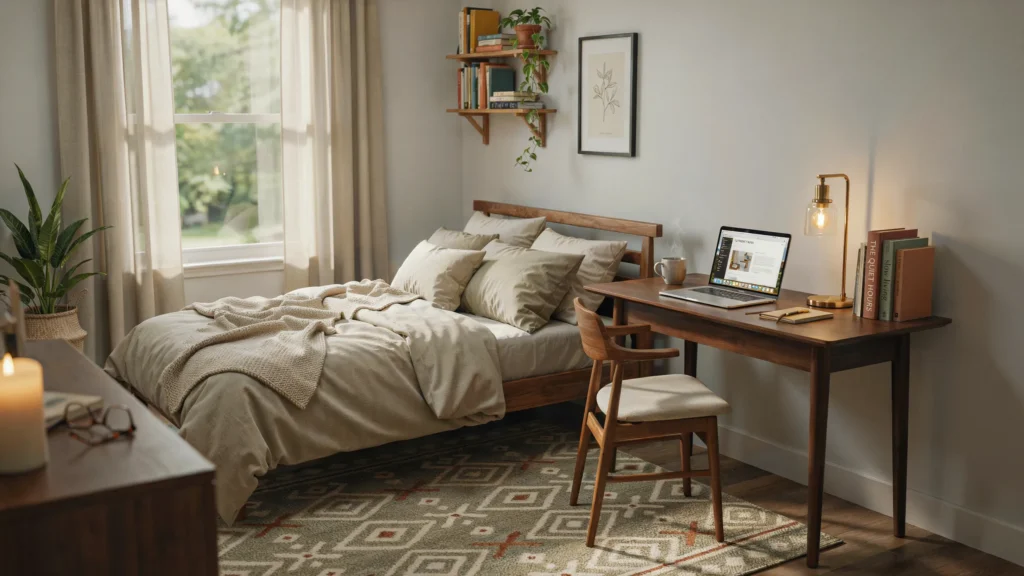
When a small bedroom needs to serve double duty as a workspace, replacing one nightstand with a slim writing desk is a clever way to combine both functions without adding extra furniture. The desk surface holds a lamp and a few essentials at night, then clears off during the day to become a spot for a laptop or paperwork. This works best when the desk sits at a similar height to a standard nightstand, so it doesn’t feel visually mismatched next to the bed. It’s a particularly useful trick for a guest room that occasionally functions as a home office, since it avoids cramming in a full desk setup that would otherwise eat into the room’s already limited floor space.
How Do You Fit a Dressing Area Into a Small Bedroom?
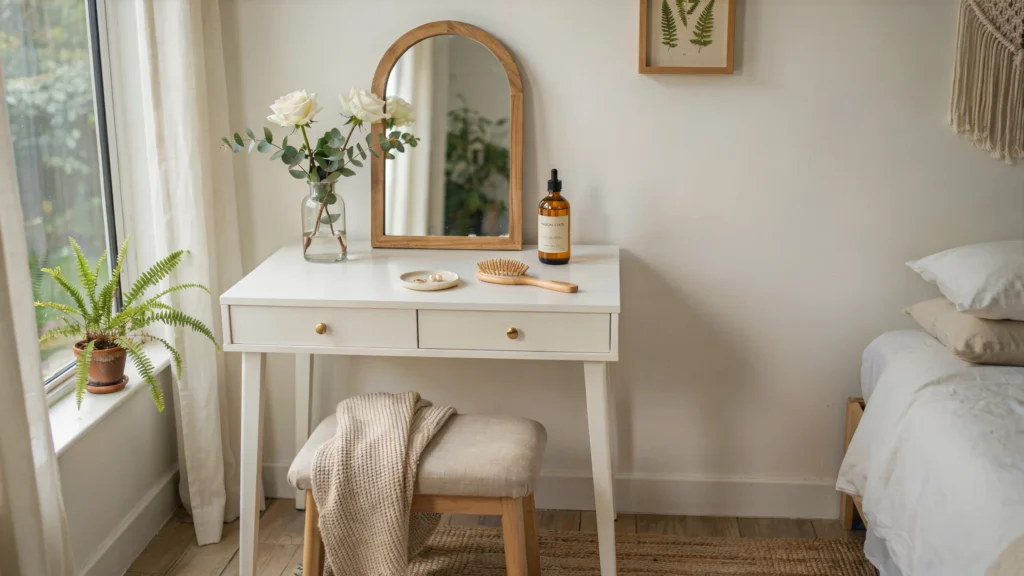
Even the tightest bedroom can accommodate a small dedicated spot for getting ready if you keep the furniture compact. A slim vanity with an attached mirror tucks neatly into a corner or the dead space beside a window, and pairing it with a small stool or a foldable chair means the area doesn’t demand permanent floor space. Choose a vanity with a drawer or two to hide small items like jewelry or makeup, and lean toward light finishes so the piece doesn’t visually compete with the rest of the room. The mirror doubles as a light-bouncing tool too, helping the whole room feel a bit more open in the process.
What Are the Best Small-Bedroom Furniture Options for Kids?
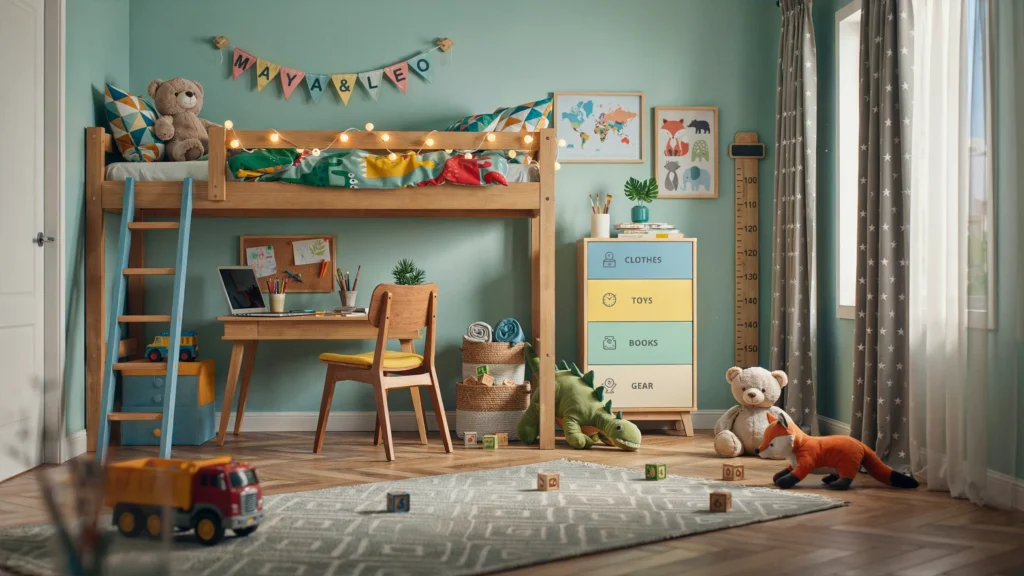
Children’s bedrooms in small homes face an extra challenge, since kids need room for play and study on top of sleeping. Bunk beds or modular stacking beds solve this by combining sleeping space vertically, freeing up the floor below for toys, a small desk, or open play space. Many modular options come with built-in drawers, shelving, or even a fold-down desk integrated into the frame, letting one piece of furniture cover sleeping, storage, and study needs within a single footprint. This approach is especially useful for shared kids’ rooms, where two children need separate beds but the room can’t accommodate two full-size furniture sets side by side.
How Much Walking Space Should You Leave Around the Bed?
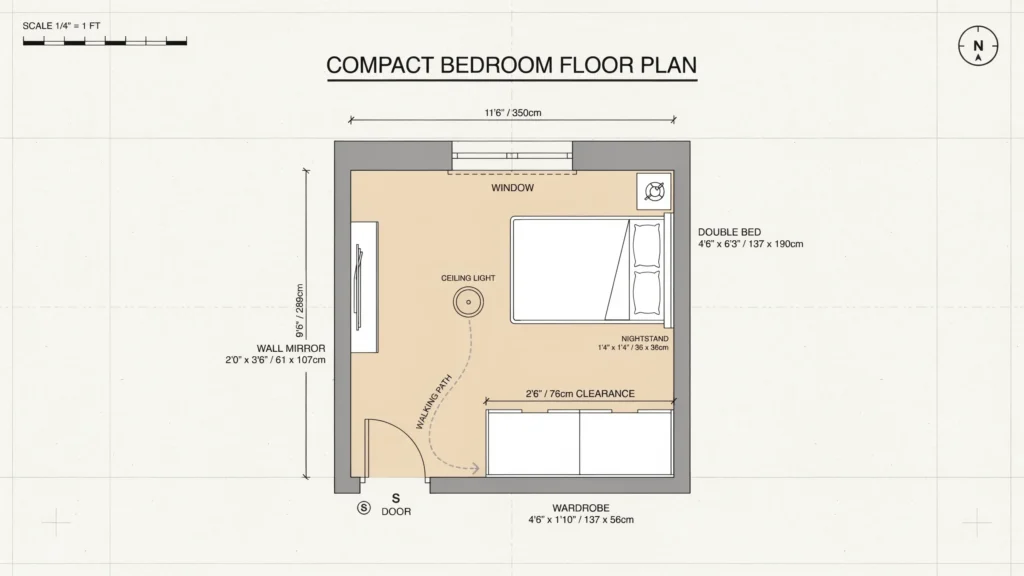
Layout decisions come down to more than just where furniture looks good, they also need to leave enough room to actually move through the space comfortably. As a general rule, aim to leave at least 60 to 70 centimeters, or roughly two feet, of clear floor space around the sides of the bed you regularly walk past. Avoid placing furniture close enough to the door that it disrupts the swing or blocks entry, since a cramped doorway makes even a well-decorated room feel smaller than it is. If your room is tight enough that hitting this measurement on all sides isn’t possible, prioritize keeping at least one clear walking path from the door to the bed and from the bed to the closet.
Layout 4: The Corner Conqueror
How do you make the most of corner spaces in a small bedroom?
Corners are the most neglected real estate in any room. Most people leave them empty or use them as a dumping ground. With the right furniture, they become some of the most functional areas in the space.
A corner desk is one of the best investments for a small bedroom that needs to accommodate work or study. The L-shaped surface wraps around the corner and provides significantly more workspace than a standard desk, while using space that would otherwise go to waste.
Corner shelving units follow the same logic. Triangular or L-shaped floating shelves can display plants, books, or small accessories without taking up floor space.
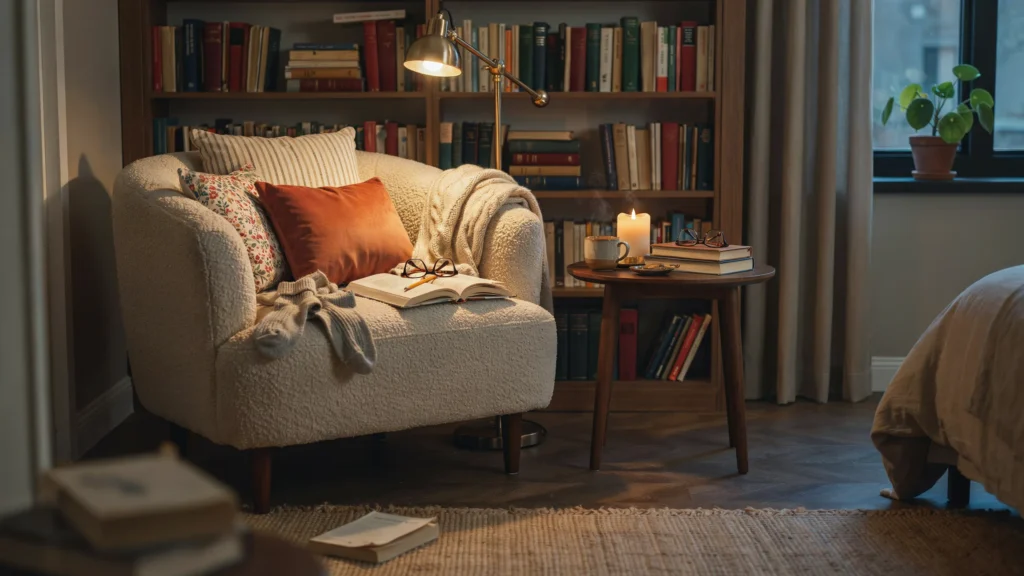
For a softer touch, consider a corner reading nook. A small armchair or floor cushion tucked into a corner, paired with a wall-mounted reading lamp and a narrow bookshelf, creates a defined relaxation zone within a tiny room. It adds character and function at once.
Layout 5: Strategic Symmetry and Asymmetry
When should you use symmetrical vs. asymmetrical layouts in a small bedroom?
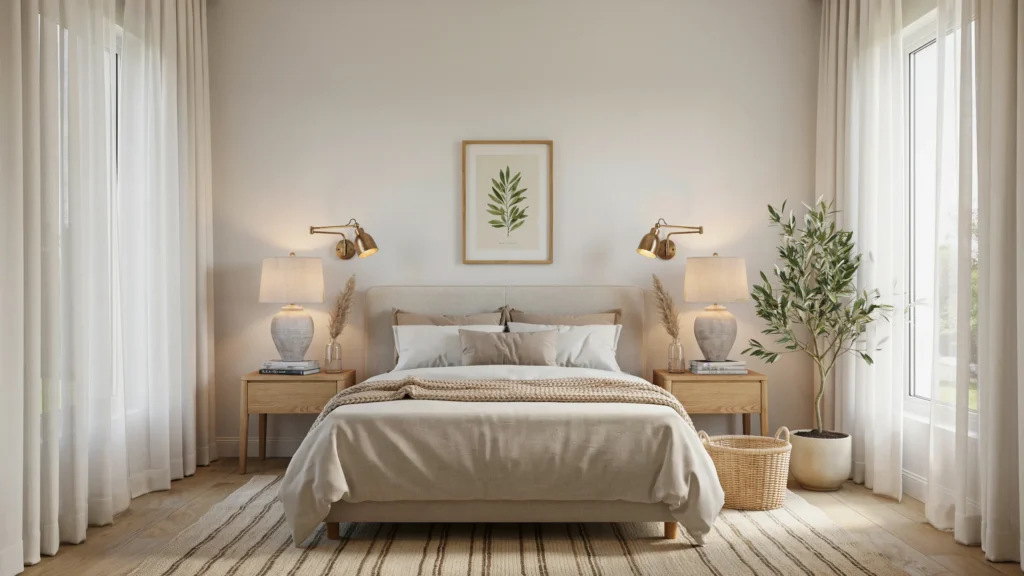
Symmetry creates calm. When both sides of the bed are mirrored matching nightstands, matching lamps, balanced artwork the room feels ordered and intentional. This is particularly useful in tiny bedrooms, where visual clutter quickly becomes overwhelming. A symmetrical layout gives the eye a clear pattern to follow, which reads as spacious rather than cramped.
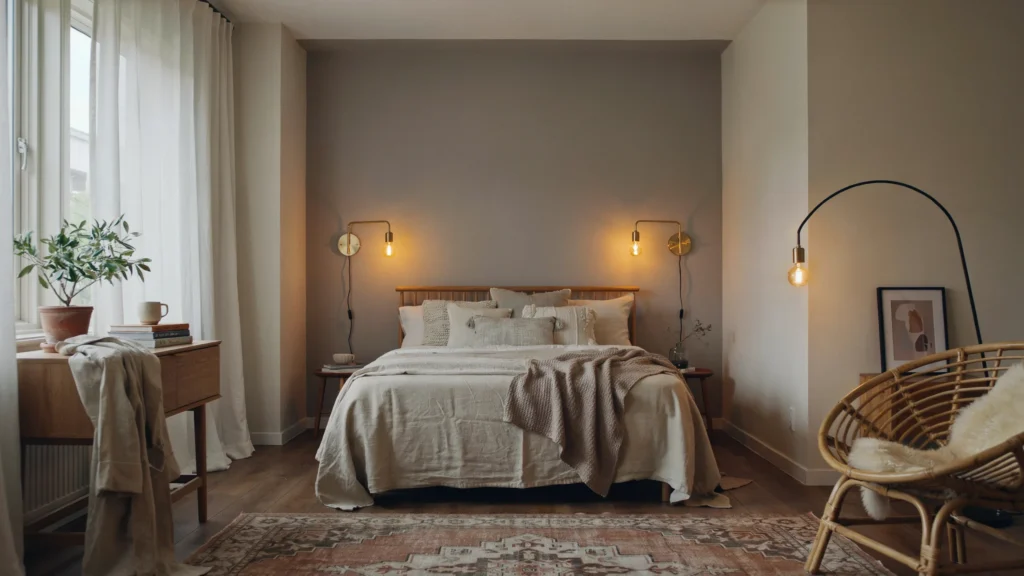
Asymmetry, used correctly, adds personality. If one wall has a window and the other doesn’t, forcing a symmetrical layout will look awkward. Instead, work with the room’s natural asymmetry. A taller lamp on one side, a different-sized piece of art on the other these intentional imbalances create visual interest without chaos.
The key in both cases is scale and proportion. A large piece of furniture next to a tiny one looks out of place in a small room. Aim for pieces that feel proportionate to one another and to the room itself. When in doubt, smaller is better.
Lighting as a Space Expander
Light both natural and artificial has a dramatic impact on how large a room feels.
For natural light, keep window treatments light and minimal. Sheer curtains let sunlight filter through while maintaining privacy. Avoid heavy drapes that block light and visually shrink the room.
For artificial lighting, think layered. Recessed ceiling lights provide ambient illumination without taking up floor or surface space. Wall-mounted sconces replace bulky bedside lamps and free up nightstand surface area. If you prefer a floor lamp, choose one with a slim profile and a small footprint.
One rule of thumb: avoid placing a large lampshade at eye level when seated on the bed. It blocks sightlines and makes the room feel more enclosed.
Color Palettes and Visual Tricks
Color is one of the fastest ways to change how a room feels without moving a single piece of furniture.
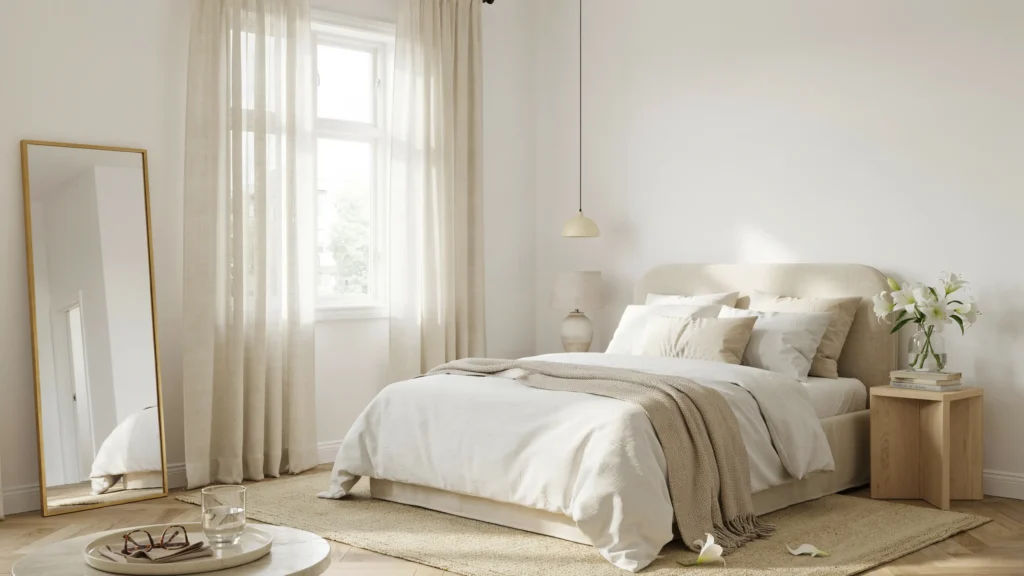
Light walls reflect more light and push the room’s boundaries outward. White, soft gray, warm ivory, and pale sage are all strong choices for a tiny bedroom. Paint the ceiling the same color as the walls (or slightly lighter) to draw the eye upward and make the room feel taller.
Monochromatic schemes where walls, bedding, and furniture share a similar color family create a seamless look that minimizes visual breaks. Fewer breaks mean fewer perceived boundaries, which reads as more space.
Mirrors deserve a special mention. A full-length mirror on the back of a door or leaning against a wall reflects the room to itself, effectively doubling the perceived depth. Position it across from a window for maximum effect.
Minimalist decor rounds out the approach. Every decorative item should earn its place. If it doesn’t add meaning or visual interest, it adds clutter.
Personalizing Your Tiny Oasis
A small room doesn’t have to feel generic. The key is restraint: choosing fewer items, but choosing them carefully.
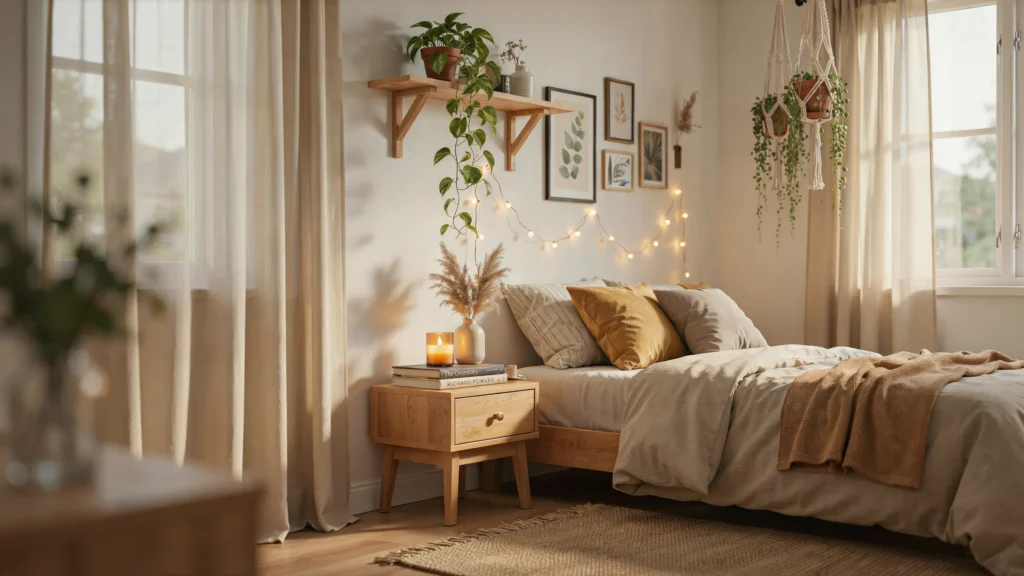
Small plants bring life and freshness to a compact space without overwhelming it. A pothos on a floating shelf or a succulent on the windowsill adds color and texture. Select one or two pieces of artwork that genuinely mean something to you, and hang them at eye level where they can be appreciated.
Accessories work best when they’re purposeful. A beautiful tray on the dresser keeps small items organized. A textured throw over the foot of the bed adds warmth without clutter.
Apply the “one in, one out” rule: whenever something new enters the room, something else leaves. This single habit prevents gradual accumulation and keeps the space feeling intentional over time.
Your Small Bedroom, Reimagined
A tiny bedroom isn’t a limitation it’s a design challenge with a lot of creative solutions.
The five layouts covered here floating arrangements, vertical dominance, multi-functional furniture, corner optimization, and strategic symmetry each approach the problem from a different angle. Combined with smart lighting choices, a cohesive color palette, and thoughtful personalization, they can transform even the smallest room into a space that feels calm, functional, and genuinely livable.
Start with one change. Measure the room, identify the layout that fits your lifestyle, and move from there. Small adjustments pulling the bed away from the wall, adding a floating shelf, swapping a bulky lamp for a wall sconce compound quickly. Before long, the room you once thought was too small will feel like exactly the right size.
Frequently Asked Questions
What is the best furniture layout for a very small bedroom?
The most effective layout depends on the room’s shape and your lifestyle. For most tiny bedrooms, a floating furniture arrangement where pieces are pulled slightly away from the walls combined with vertical storage creates the best balance of space and function. If the room doubles as a workspace, a corner desk layout maximizes floor space while keeping the sleep area clearly defined.
How do I make a tiny bedroom look bigger without renovating?
Light-colored walls, strategic mirror placement, sheer window treatments, and decluttered surfaces are the fastest ways to make a small bedroom feel larger without construction. Replacing bulky furniture with lower-profile, multi-functional pieces also creates significant visual space.
What furniture should I avoid in a small bedroom?
Avoid oversized bed frames, large dressers with more drawers than you need, and bulky upholstered headboards that take up visual space. Also, steer clear of dark, heavy curtains and large, low-hanging pendant lights that cut the room’s vertical space.
Is a loft bed a good idea for a small adult bedroom?
Yes, if the ceiling height allows it (ideally 9 feet or more). A loft bed frees up the floor space beneath it for a desk, wardrobe, or seating area effectively doubling the room’s usable square footage. Choose a sturdy, well-designed frame with a low-profile ladder to keep it practical and safe.
How many furniture pieces should a small bedroom have?
A functional small bedroom typically needs five core pieces: a bed, a nightstand (or two), a dresser or wardrobe, a light source, and some form of seating or desk if needed. Multi-functional pieces like a bed with built-in storage can reduce that number further and free up valuable space.