How to choose the perfect rug for your home, match the material to your room’s traffic level, size it so the front legs of your furniture sit on it, and pick a color and pattern that complements your existing decor. Wool suits living rooms, synthetic fibers handle high traffic areas, and low pile rugs are easiest to clean.
A great rug can pull an entire room together, yet it’s often the last thing people think about when decorating. We obsess over paint colors, hunt for the perfect sofa, and agonize over light fixtures then throw down whatever rug happens to be on sale.
That’s a missed opportunity. The right rug defines your space, softens hard floors, absorbs sound, and adds warmth both literally and visually. The wrong rug, on the other hand, can make a room feel disjointed, cramped, or just plain off.
This guide walks you through everything you need to know: materials, sizing, shapes, color, texture, durability, budget, and where to buy. By the end, you’ll be able to pick a rug with confidence one that fits your space, your lifestyle, and your style.
What are rugs made of, and which material is right for you?
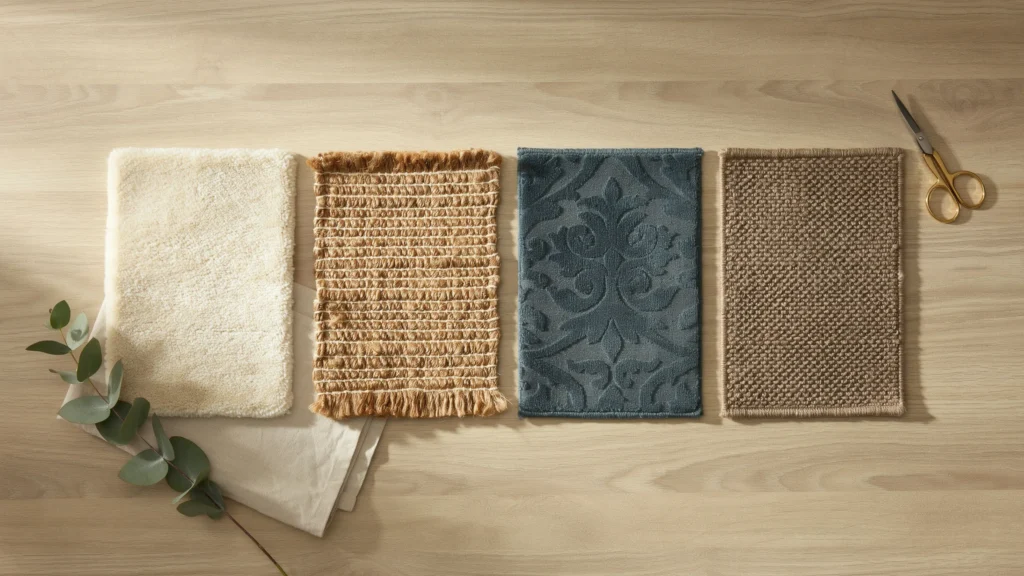
The material is the foundation of any rug. It affects how the rug feels underfoot, how long it lasts, how easy it is to clean, and how much it costs. Rug fibers fall into three main categories: natural, synthetic, and blends.
Natural fibers: wool, cotton, silk, jute, and sisal
Natural fibers come from plants and animals, and each has its own personality.
- Wool is the gold standard for area rugs. It’s soft, durable, naturally stain-resistant, and holds dye beautifully for rich colors. Wool works well in living rooms and bedrooms, though it costs more than most synthetics.
- Cotton is affordable, soft, and easy to wash many cotton rugs are machine washable. It’s great for casual spaces and kids’ rooms, but it wears out faster than wool.
- Silk is luxurious, with a shimmering sheen and incredibly fine detail. It’s also delicate and pricey, so it’s best reserved for low-traffic spots like formal sitting rooms.
- Jute and sisal are plant fibers with a natural, earthy look. They’re tough and eco-friendly, ideal for adding texture. The trade-off: they feel rougher underfoot and can be tricky to clean.
Synthetic fibers: nylon, polypropylene, polyester, and viscose
Synthetic fibers are artificial and engineered for performance and value.
- Nylon is the most durable synthetic, resisting wear and bouncing back from heavy foot traffic. It’s a smart pick for busy households.
- Polypropylene (also called olefin) is budget-friendly, water-resistant, and easy to clean perfect for outdoor spaces, basements, and high-traffic areas.
- Polyester is soft and great at holding vibrant colors, but it flattens over time, so it’s better suited to lower-traffic rooms.
- Viscose (sometimes labeled rayon or art silk) mimics the look of silk at a fraction of the cost. It’s beautiful but delicate and prone to staining.
Blends: the best of both worlds
Blended rugs combine fibers to balance their strengths. A wool-synthetic blend, for example, gives you the softness of wool with the added durability and stain resistance of nylon often at a lower price than pure wool. If you want both comfort and resilience, a blend is often the practical sweet spot.
What size rug do you need for each room?
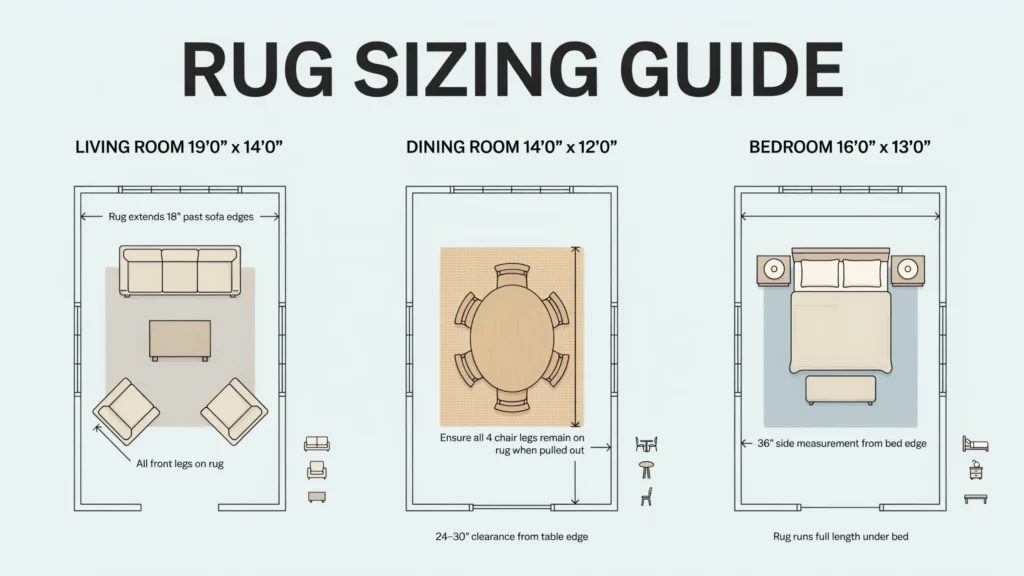
Size is where most people go wrong. A rug that’s too small makes a room feel choppy and unfinished. Here’s how to get it right, room by room.
Living room: anchor your seating area
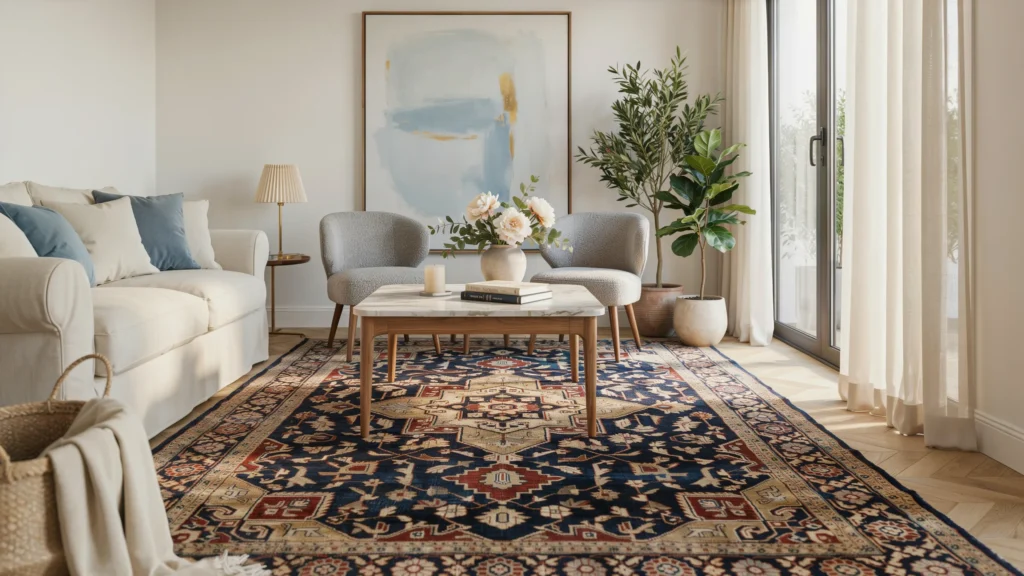
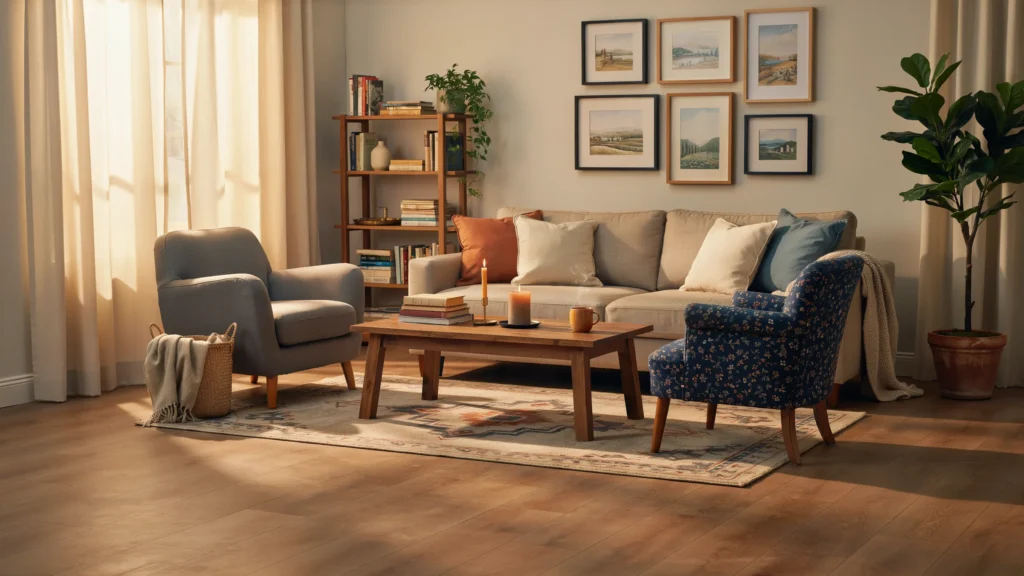
In the living room, your rug should unite the seating arrangement. The ideal approach is to place at least the front legs of your sofa and chairs on the rug. For a more luxurious feel, fit all furniture legs on top. As a rule, leave 10 to 18 inches of bare floor between the rug’s edge and the walls.
Dining room: under the table and chairs
In the dining room, the rug needs to be large enough that chairs stay on it even when pulled out. Measure your table and add at least 24 inches on every side. This keeps chair legs from catching on the rug’s edge every time someone sits down.
Bedroom: a soft landing for your feet
In the bedroom, you want softness underfoot when you wake up. The most popular option is a large rug placed under the lower two-thirds of the bed, extending out on three sides. Alternatively, you can use two runners on either side of the bed for a balanced look.
Hallways and entryways: defining pathways
In hallways, a runner should leave a few inches of floor visible on each side aim for about 4 to 5 inches. For entryways, choose a rug that’s durable and welcoming, sized to fit the space without crowding the door’s swing.
Which rug shape works best for your room?
Most people default to rectangles, but shape is a design tool worth considering.
Traditional rectangles: versatile and classic
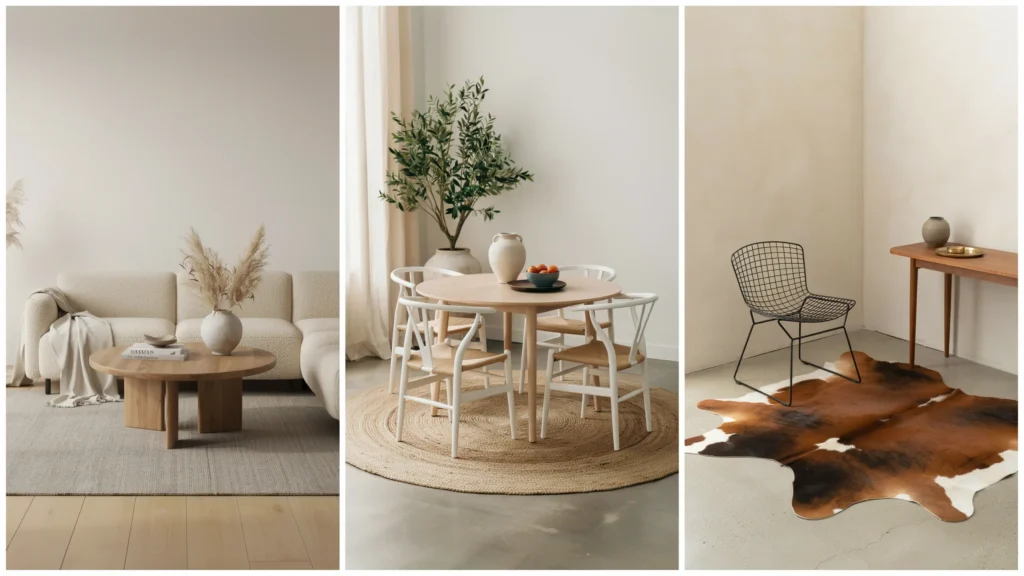
Rectangular rugs are the most common for good reason. They suit nearly every room, follow the lines of most furniture, and come in the widest range of sizes. When in doubt, a rectangle is a safe, classic choice.
Round and oval rugs: adding softness and flow
Round and oval rugs break up the hard angles of a room. They work beautifully under round dining tables, in cozy reading nooks, or in entryways. A round rug can soften a boxy space and draw the eye to a focal point.
Irregular shapes: making a statement
Hide-shaped, abstract, or organically cut rugs add personality and a modern edge. These statement pieces work best in spaces where you want the rug to be a conversation starter rather than a quiet background element.
How do color and pattern change a room’s feel?
Color and pattern set the emotional tone of a space. Used well, they tie a room together; used poorly, they fight with everything around them.
The psychology of color: setting the mood
Color shapes how a room feels. Cool tones like blue and green create calm, making them great for bedrooms. Warm tones like red, orange, and terracotta energize a space and work well in living and dining rooms. Neutrals beige, gray, ivory offer flexibility and let other elements shine.
Patterns: from subtle textures to bold statements
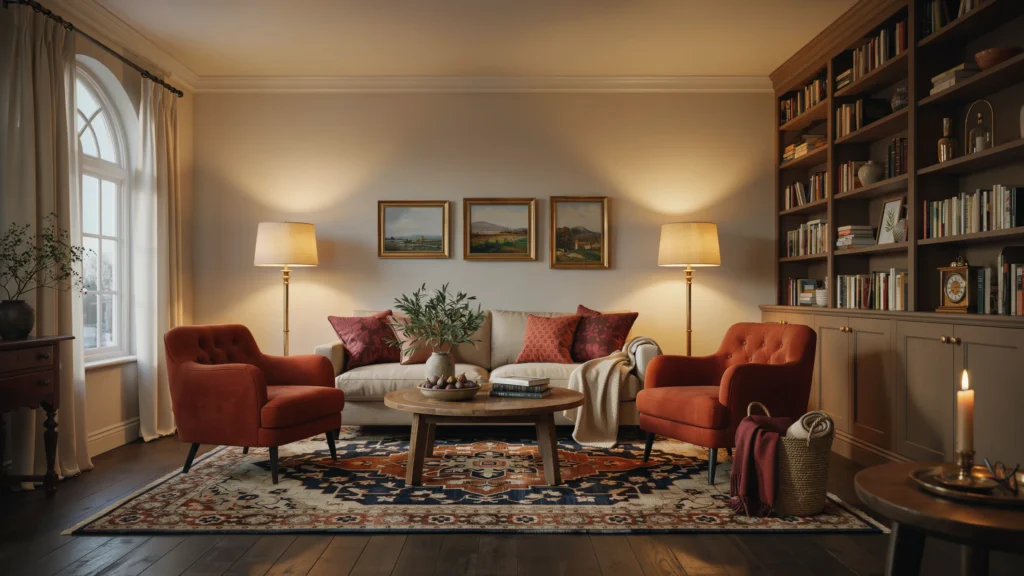
A patterned rug can hide stains and add visual interest, which is handy in busy households. Bold patterns make a strong statement and work best when the surrounding furniture is simple. Subtle, tonal patterns add depth without overwhelming the eye.
Mixing and matching: creating harmony
The trick to combining a rug with patterned furniture is to vary the scale. Pair a large-scale rug pattern with small-scale prints on your cushions or curtains. Stick to a shared color palette across the room, and your pieces will feel intentional rather than chaotic.
What pile height and texture should you choose?
Pile height refers to the length of the rug’s fibers. It affects both comfort and practicality.
Low pile: durability and easy maintenance
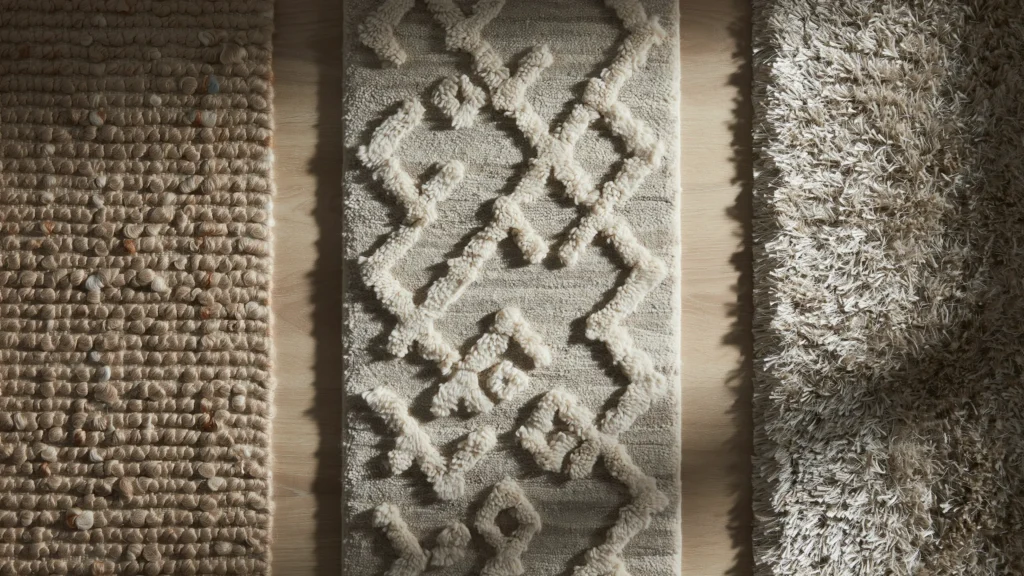
Low-pile rugs have short, tight fibers. They’re durable, easy to vacuum, and a great fit for high-traffic areas, dining rooms, and homes with pets. They don’t trap as much dust and dirt, which makes upkeep simple.
Medium pile: comfort and versatility
Medium-pile rugs strike a balance between softness and easy care. They feel plush underfoot but still hold up to everyday use, making them a versatile choice for most living rooms and bedrooms.
High pile: luxurious comfort
High-pile rugs, including shag styles, are soft, deep, and cozy. They’re perfect for bedrooms and lounge areas where comfort matters most. The downside is maintenance long fibers trap dirt and need more frequent, careful cleaning.
Textures: looped, cut, and shag
Texture adds another layer of character. Looped piles (like Berber) are durable and casual. Cut piles feel softer and more refined. Shag piles are ultra-plush and dramatic. Mixing looped and cut fibers in a single rug creates subtle patterns and dimension.
How do you pick a durable, easy-to-care-for rug?
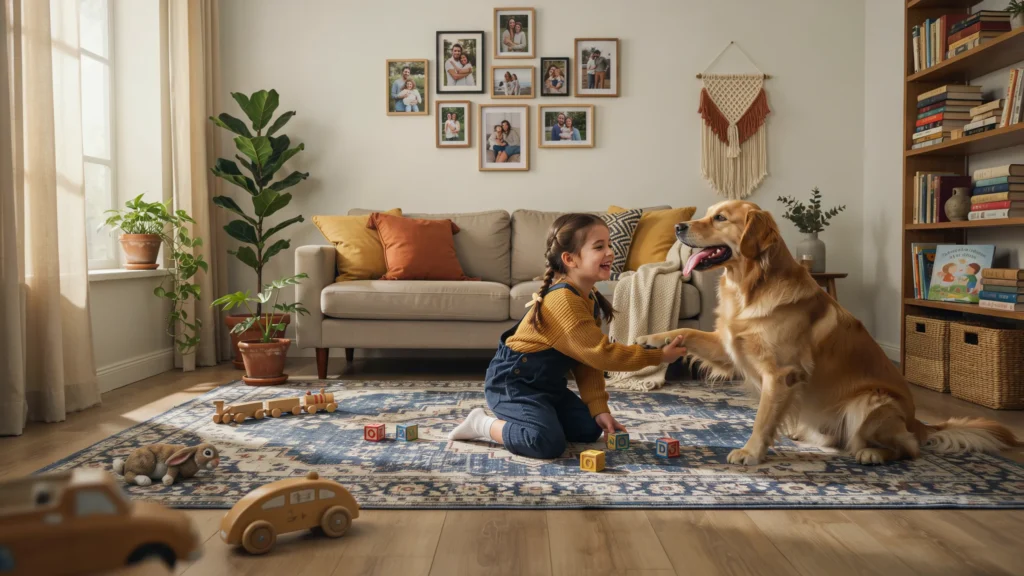
Your rug needs to suit how you actually live. A delicate silk rug and a house full of toddlers and dogs is a recipe for stress.
High-traffic areas: what to look for
For hallways, entryways, and busy living rooms, prioritize durability. Look for low-pile rugs in tough fibers like nylon or polypropylene. Patterned or darker rugs hide wear and stains better than light, solid ones.
Pet-friendly and kid-friendly options
For homes with pets and children, choose stain-resistant, washable materials. Polypropylene and machine-washable cotton are excellent choices. Avoid loop piles in pet households claws can snag and pull the loops loose.
Cleaning and care: keeping your rug pristine
Vacuum regularly to prevent dirt from settling into the fibers. Blot spills immediately rather than rubbing them, which spreads the stain. Rotate your rug every few months so it wears evenly. For deep cleaning, follow the manufacturer’s instructions some rugs are machine washable, while others need professional care.
How much should you spend on a rug?
Rug prices range from under $50 to several thousand dollars. Knowing what drives the cost helps you spend wisely.
What influences rug pricing
Several factors push rug prices up or down:
- Material: Hand-knotted silk and pure wool cost far more than polyester or polypropylene.
- Construction: Hand-knotted and hand-tufted rugs are labor-intensive and pricey. Machine-made rugs are far more affordable.
- Size: Larger rugs naturally cost more.
- Origin and craftsmanship: Handmade rugs from established traditions command premium prices.
When to splurge and when to save
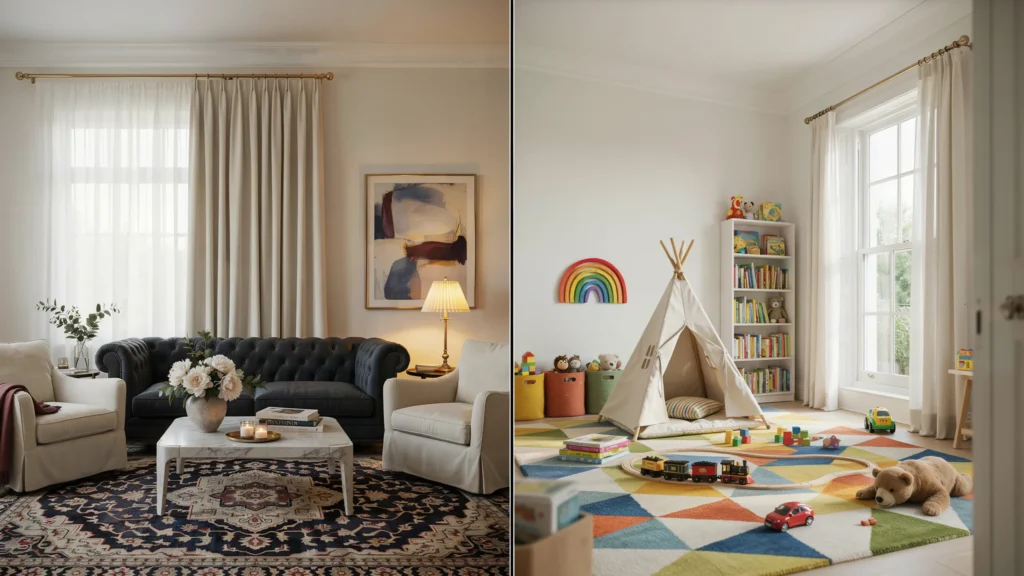
Splurge on rugs for rooms you use and show off most like the living room where quality pays off in longevity and looks. A well-made wool rug can last decades. Save on rugs for low-stakes or transitional spaces, kids’ rooms, and areas where you might want to switch styles often. Affordable synthetic rugs are perfect for these spots.
Where should you buy your perfect rug?
You have three main options, each with its own advantages.
Online retailers: the vast selection
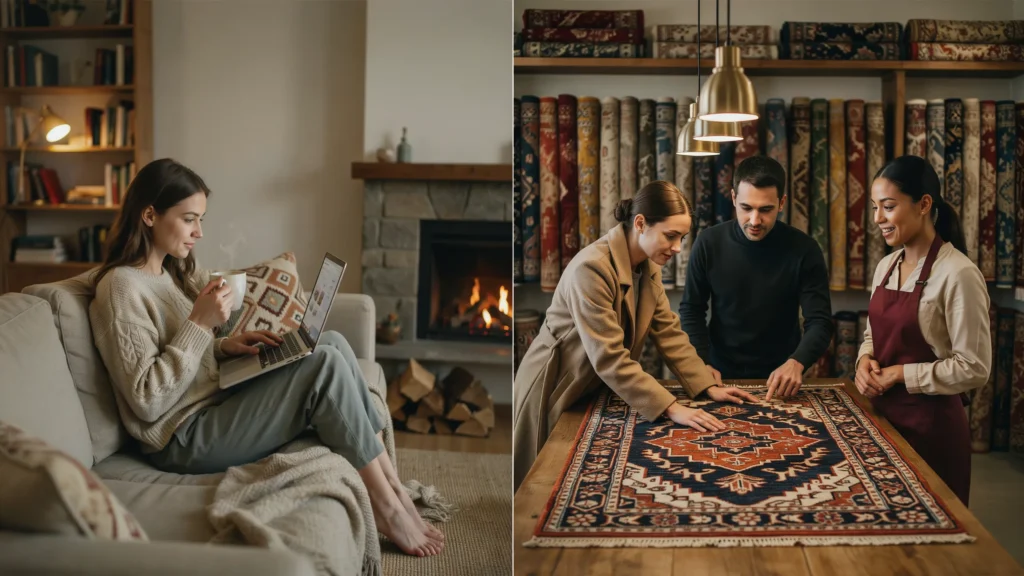
Online shopping offers the widest selection and easy price comparison. You can browse thousands of styles from home and read reviews from other buyers. The catch: you can’t feel the rug before buying, so check return policies and read material descriptions carefully.
Brick-and-mortar stores: touch and feel
Physical stores let you see true colors, feel the texture, and judge the quality in person. Staff can offer advice, and you walk out with your rug the same day. The downside is a smaller selection and often higher prices.
Custom rugs: tailored to perfection
If you can’t find the right size, color, or shape, a custom rug is made to your exact specifications. It’s the most expensive route and takes time, but it guarantees a perfect fit for unusual spaces or specific design visions.
Your home, your rug, your style
Choosing the perfect rug comes down to balancing four things how a room is used, what size fits the space, which material suits your lifestyle, and what look you love. Start with practicality traffic, pets, and kids then layer in style with color, pattern, and texture.
A few final tips for a flawless foundation always measure your space before you shop, order a sample or swatch when buying online, and use a rug pad to protect both your rug and your floor. Don’t be afraid to let your rug be the star of the room.
The right rug won’t just cover your floor it’ll ground your whole space and make it feel finished. Take your time, trust your instincts, and choose something you’ll enjoy walking on every single day.
Frequently asked questions
What is the best rug material for a high-traffic area?
Nylon and polypropylene are the best rug materials for high-traffic areas. Both resist wear and stains and are easy to clean. Wool is also a strong natural option, since it’s durable and naturally stain resistant, though it costs more.
How big should my living room rug be?
Your living room rug should be large enough to fit at least the front legs of your sofa and chairs. For most living rooms, an 8×10 or 9×12 foot rug works well. Leave 10 to 18 inches of bare floor between the rug’s edge and the walls.
Are wool rugs worth the extra cost?
Wool rugs are worth the cost if durability and long term value matter to you. Wool is soft, naturally stain-resistant, holds color well, and can last decades with proper care. For high use rooms like living rooms, the investment usually pays off.
What rug is best for homes with pets?
For homes with pets, choose stain resistant, washable materials like polypropylene or machine washable cotton. Stick to low pile rugs and avoid loop piles, since pet claws can snag and pull the loops loose.
How do I stop my rug from slipping?
Use a non slip rug pad underneath your rug to stop it from slipping. A rug pad also cushions the rug, protects your floor, and helps the rug wear more evenly over time.
Can I put a rug on carpet?
Yes, you can put a rug on carpet to define a space or add visual interest. For best results, choose a low pile rug and use a rug pad designed for carpet to keep it from shifting.