Love the charm of a Victorian home but worried a period-accurate kitchen will feel dark, fussy, or impractical for everyday life? You don’t have to choose between historic character and a kitchen that actually functions well in 2026. The best Victorian-modern kitchens keep the ornate details that make these homes special molding, paneling, cast iron, botanical patterns while pairing them with clean lines, better lighting, and updated materials.
This guide, “12 Victorian Kitchens With a Modern Twist | Design Ideas,” covers 12 Victorian kitchens with a modern twist, along with practical advice on choosing which Victorian elements to keep, how to layer old and new details together, and the most common mistakes homeowners make when blending the two styles. Each idea includes a unique image prompt you can use for Pinterest boards, mood boards, or AI-generated inspiration images.
How to Blend Victorian Charm With Modern Kitchen Design
A successful Victorian-modern kitchen isn’t about recreating a 19th-century room exactly, and it isn’t about stripping out every period detail either. It’s about choosing a handful of authentic Victorian elements and letting them stand out against a simpler, more contemporary backdrop.
Before you start planning, it helps to ask:
- What original details are worth preserving? Fireplaces, original moldings, high ceilings, and cast iron radiators are often the most valuable character features to keep and build around.
- What needs to be updated for daily use? Layout, storage, lighting, and appliances usually need modern upgrades even in the most historically faithful renovations.
- How much contrast do you want? Some homeowners prefer a subtle blend where modern elements are barely noticeable; others prefer bold contrast, like a sleek matte black island sitting beneath ornate ceiling molding.
Once you’ve answered these questions, it becomes much easier to choose two or three ideas from this list that fit your home’s architecture and your own taste, rather than trying to combine every Victorian and modern trend at once.
It also helps to think in terms of “keep, update, and add.” Keep the architectural bones that give the room its Victorian identity. Update the functional elements cabinetry, countertops, appliances for a cleaner, more livable feel. Then add just one or two intentional modern statement pieces, like a pendant light or an island, that tie the whole room together without competing with the historic details already in the space.
Layout is worth planning early too, since Victorian homes were rarely built with modern kitchen workflows in mind. Original kitchens were often small, segmented rooms tucked at the back of the house, sometimes with a separate scullery or pantry. Rather than fighting the original footprint, many successful renovations work with it combining adjacent small rooms where possible, or keeping a compact island instead of forcing in an oversized one that crowds the historic proportions of the space.
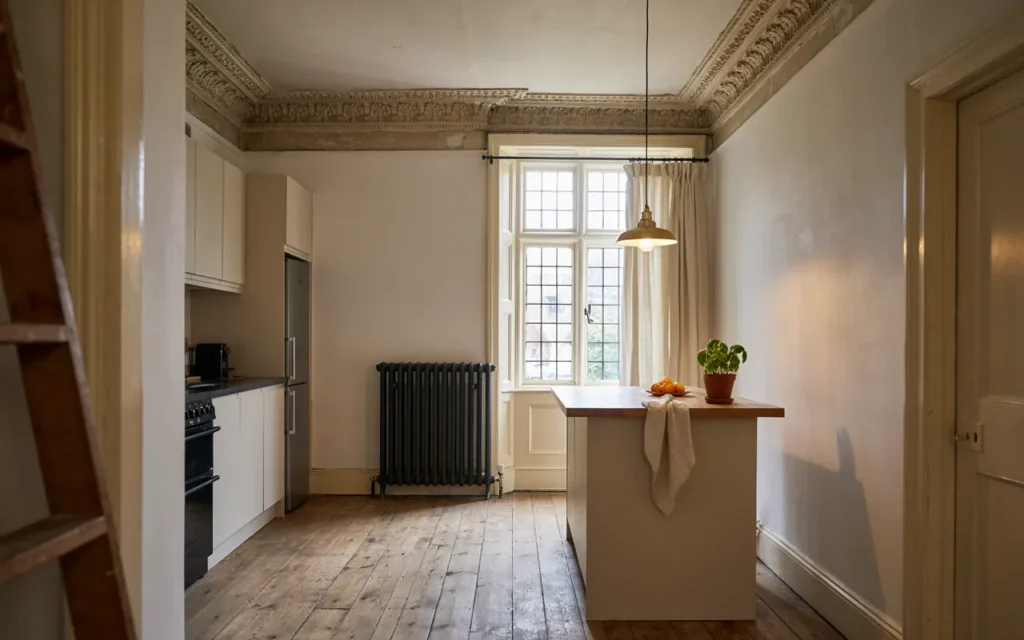
Choosing the Right Victorian Elements for Your Space
Just like picking the right decor for a specific room size, choosing which Victorian features to highlight depends heavily on your kitchen’s existing architecture and how much of the original detail is still intact.
Here’s a simple guide:
- Kitchens with original architectural details: If you still have original moldings, a fireplace, or beadboard paneling, build your entire design around preserving and highlighting these features rather than covering them up.
- Kitchens that have been previously renovated: If most original details were already removed, focus on reintroducing a few authentic touches encaustic tile, brass hardware, or a farmhouse sink rather than trying to fake a fully period interior.
- Small Victorian kitchens: Stick to lighter cabinet colors and one or two statement details, like patterned tile or a single piece of vintage-inspired wallpaper, so the space doesn’t feel visually heavy.
- Larger Victorian kitchens: This is where you can layer in bolder choices dark emerald cabinetry, a reclaimed wood island, or a full accent ceiling without the room feeling cramped.
Material choice matters just as much as color. Genuine cast iron, brass, and encaustic or patterned ceramic tile tend to read as more authentically Victorian than plastic or vinyl reproductions, and they typically age far better over time, which matters if you’re aiming for a look that still feels intentional a decade from now.
It’s also worth considering how each material will wear in a working kitchen, not just how it looks on install day. Unlacquered brass will darken and develop a natural patina with use, which many homeowners actually prefer for the period-appropriate look, while lacquered or plated finishes stay shiny but can chip over time. Similarly, honed stone countertops show fewer scratches and etch marks than polished finishes, making them a more forgiving choice for a busy, lived-in kitchen that still needs to look elegant.
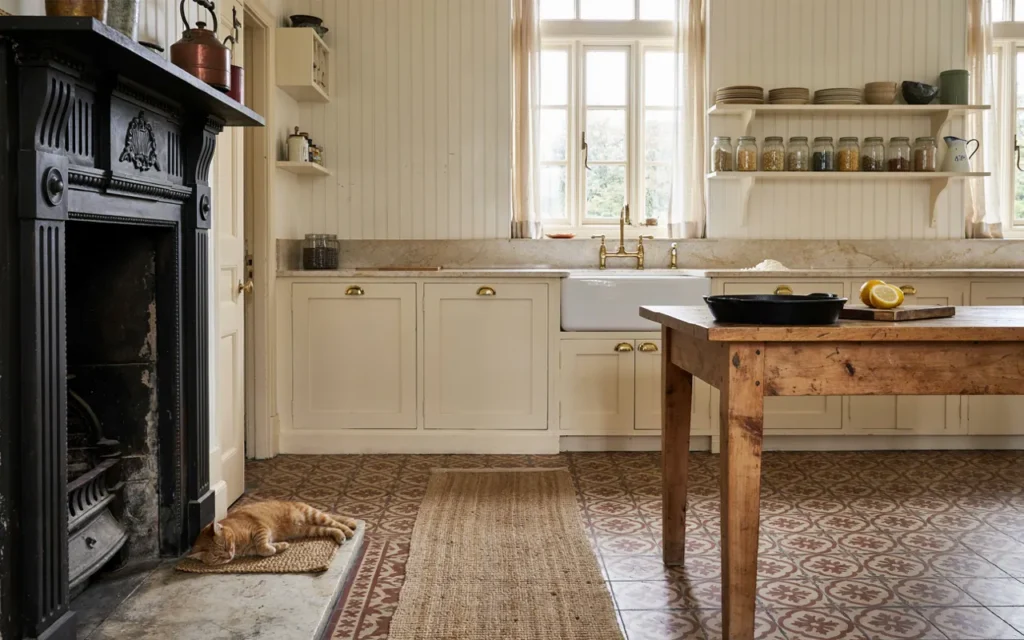
12 Victorian Kitchens With a Modern Twist
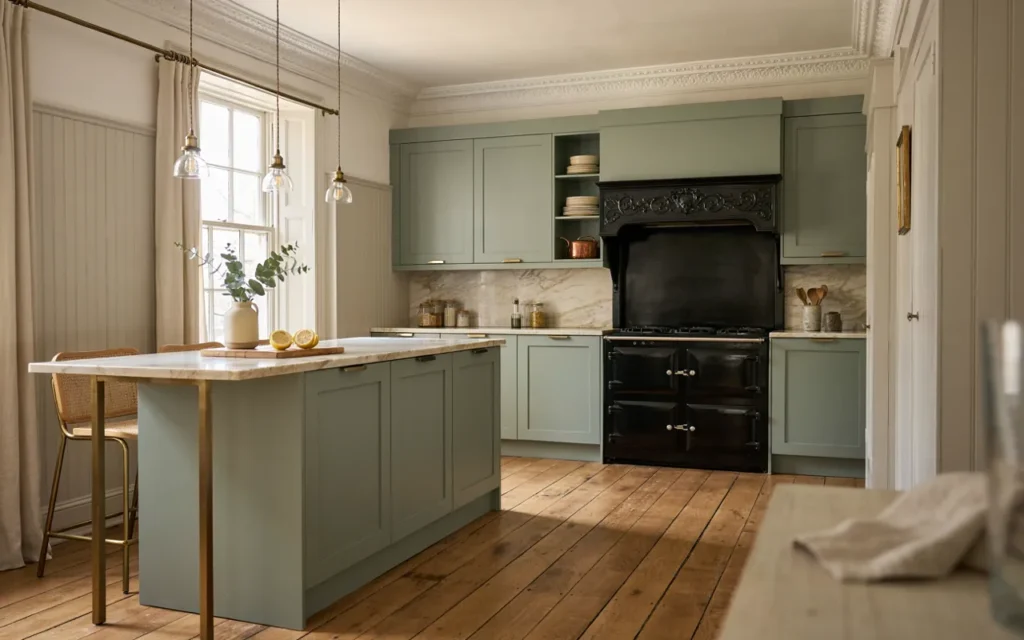
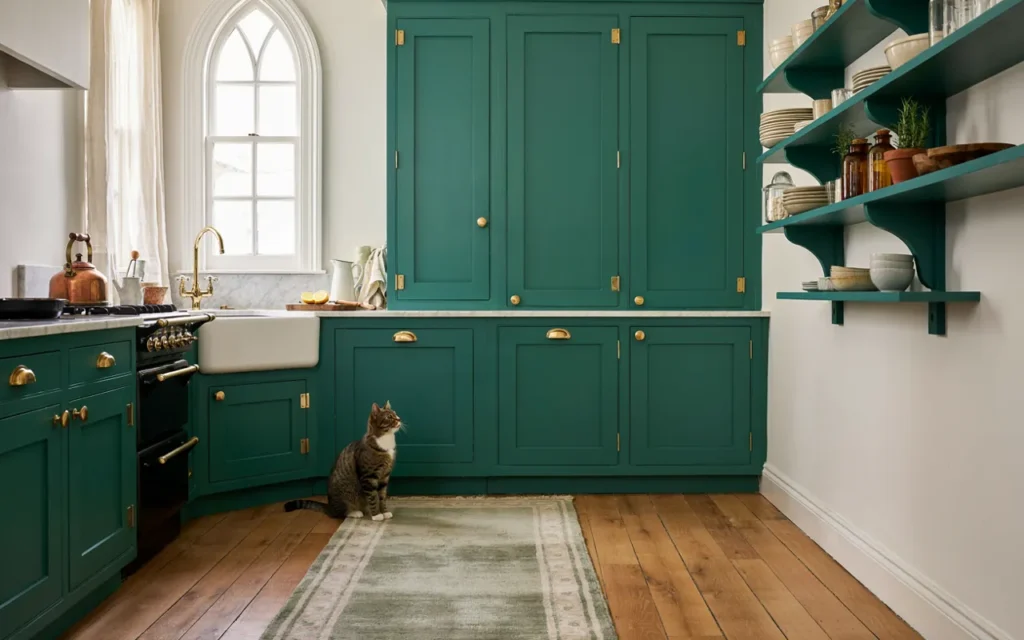
1. Dark Emerald Green Cabinetry With Brass Hardware
Deep emerald or forest green cabinetry is one of the most popular ways to bring Victorian richness into a modern kitchen without using wallpaper or heavy pattern. Pair the cabinets with unlacquered brass hardware, a honed marble or quartz countertop, and simple white walls to keep the overall look from feeling too dark. This combination works particularly well in kitchens with tall ceilings, where the depth of color doesn’t feel overwhelming.
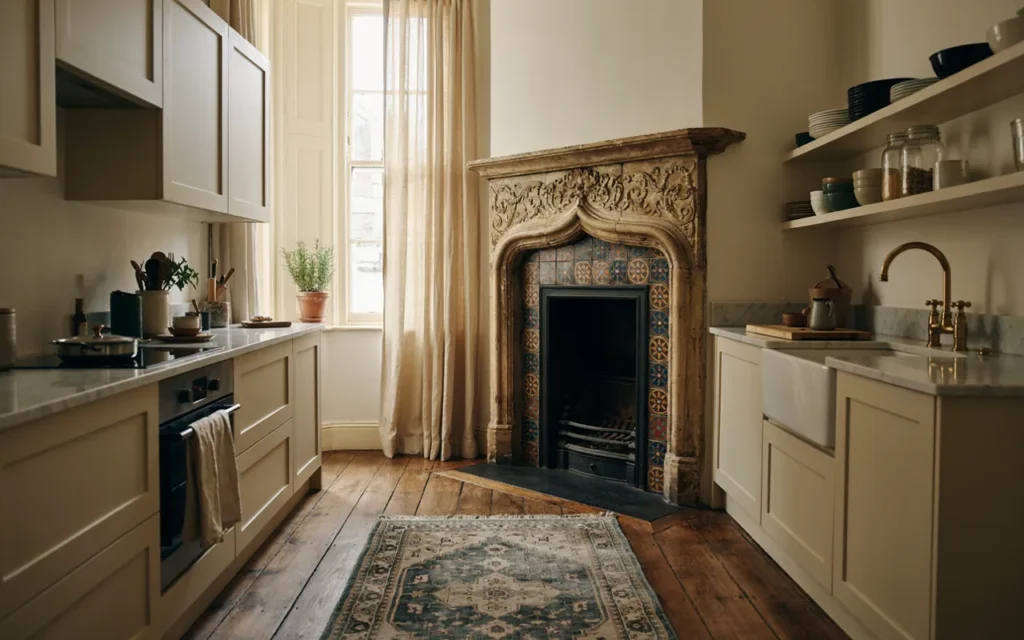
2. Original Victorian Fireplace Turned Kitchen Focal Point
Many Victorian homes still have a fireplace tucked into what is now the kitchen, and rather than removing it, the most striking modern renovations build the entire layout around it. Keep the original mantel and surrounding tile if possible, then flank it with simple, streamlined cabinetry or open shelving so the fireplace remains the visual anchor of the room.
3. Patterned Encaustic Tile Flooring With Sleek White Cabinets
Encaustic or Victorian-style patterned tile flooring is one of the fastest ways to add authentic period character to a kitchen. Balance the busyness of the pattern with clean, handleless or simple shaker-style white cabinetry above, letting the floor do most of the visual work while the rest of the room stays quiet and contemporary.
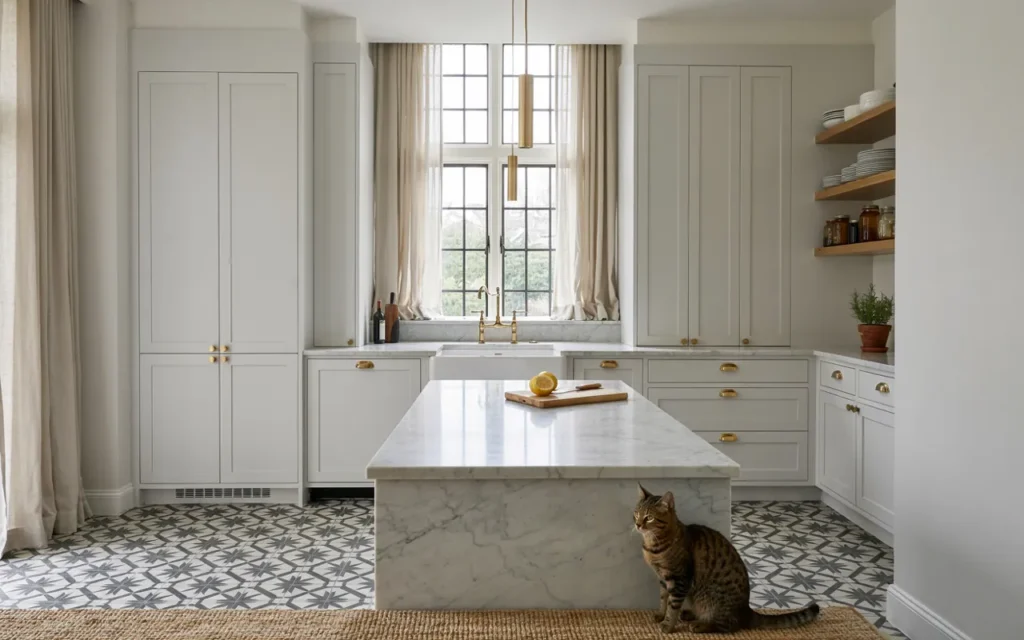
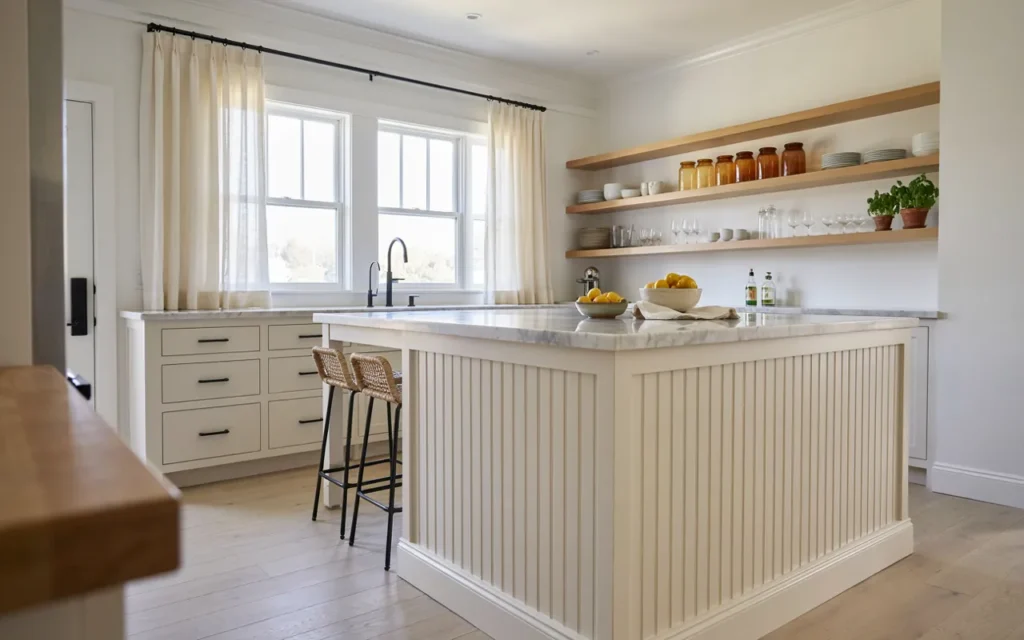
4. Victorian Beadboard Paneling Paired With Matte Black Fixtures
Beadboard paneling along the lower walls or kitchen island is a classic Victorian detail that still reads as fresh today, especially when paired with distinctly modern materials. Matte black faucets, cabinet pulls, and pendant lighting create a strong, current contrast against the traditional grooved paneling.
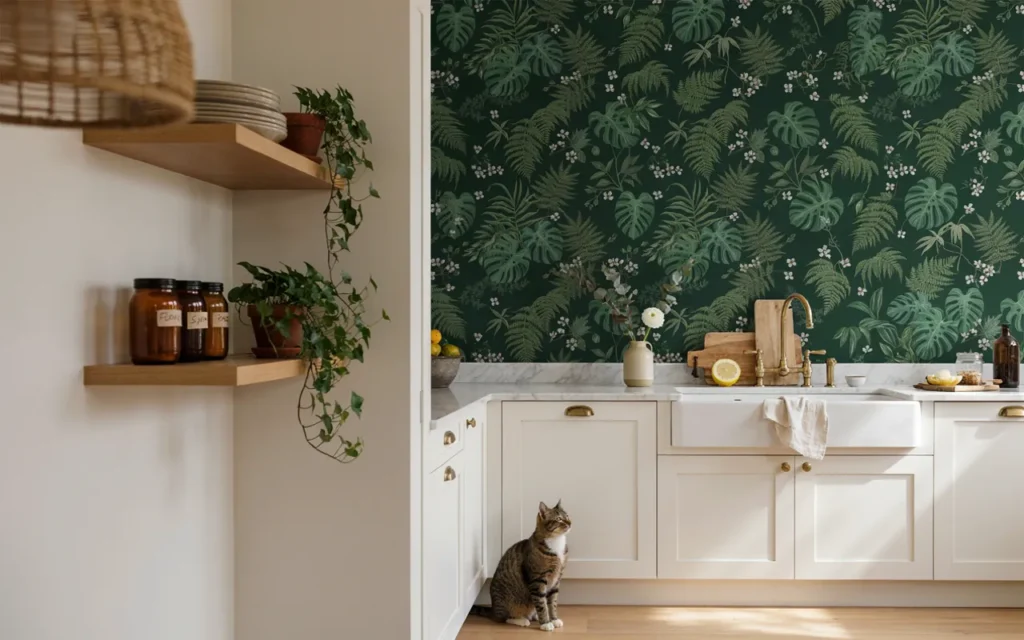
5. Statement Vintage-Inspired Wallpaper in a Modern Kitchen
A single wall or the space above open shelving is the perfect spot for a bold, botanical, or damask-style wallpaper that nods to Victorian pattern-making without covering the entire room. Keep the cabinetry and countertops simple and neutral so the wallpaper has room to be the star of the space.
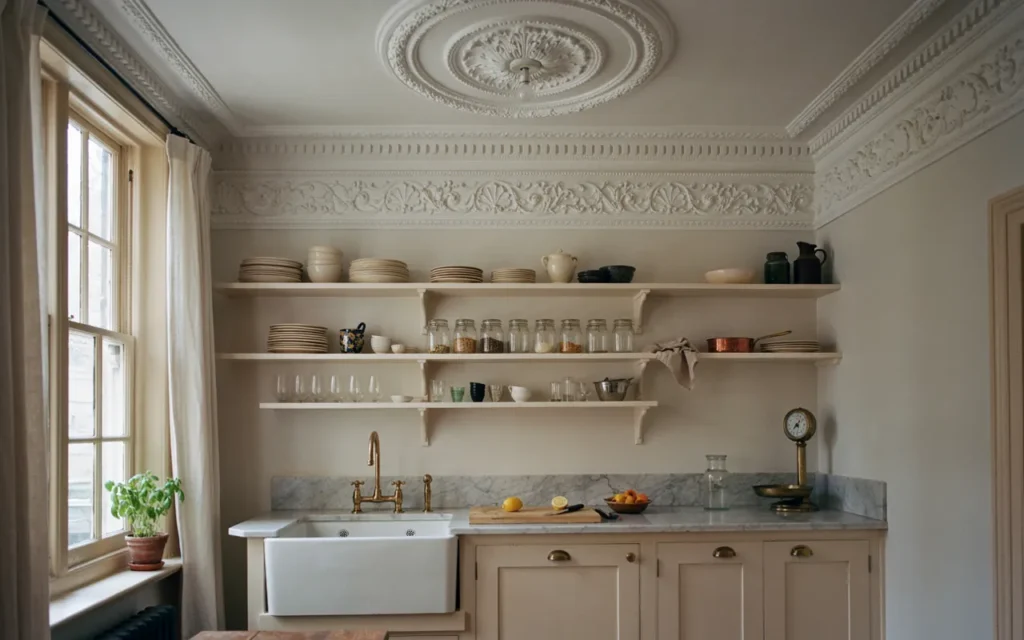
6. Open Shelving Against Ornate Victorian Molding
Swapping upper cabinets for open wood or black metal shelving lets original crown molding, ceiling medallions, or picture rail details remain visible and uncovered. This approach works especially well in kitchens with particularly beautiful original plasterwork that would otherwise be hidden behind cabinet doors.
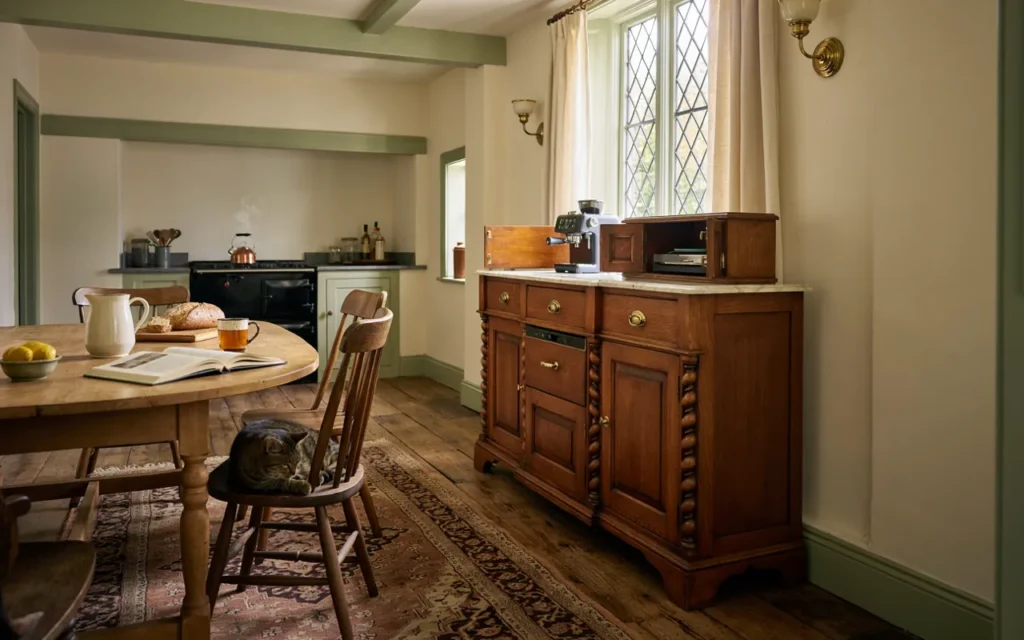
7. Freestanding Butler’s Pantry With Contemporary Appliances
Rather than a fully built-in kitchen, some Victorian-modern renovations use freestanding furniture pieces an antique dresser repurposed as a pantry, for example fitted with a modern countertop and hidden appliances. This keeps the room feeling more like a historic parlor than a showroom kitchen while still offering full modern functionality.
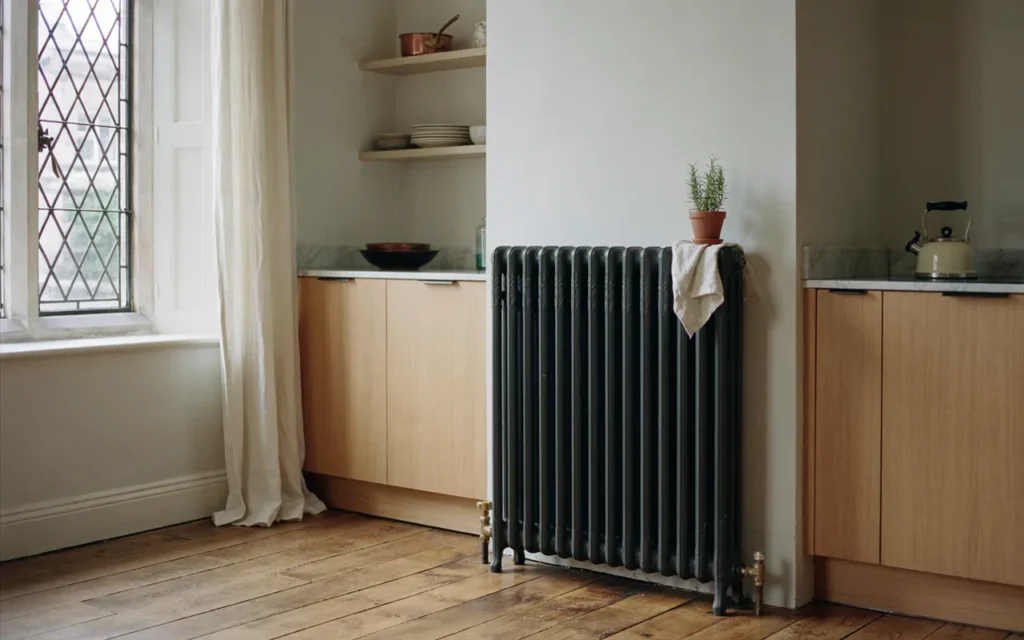
8. Cast Iron Radiator Kept as a Design Feature
If your kitchen still has its original cast iron radiator, keep it rather than replacing it with modern baseboard heating. Paint it a bold contrasting color, like matte black or deep navy, and let it sit as an intentional design feature rather than something to hide behind cabinetry.
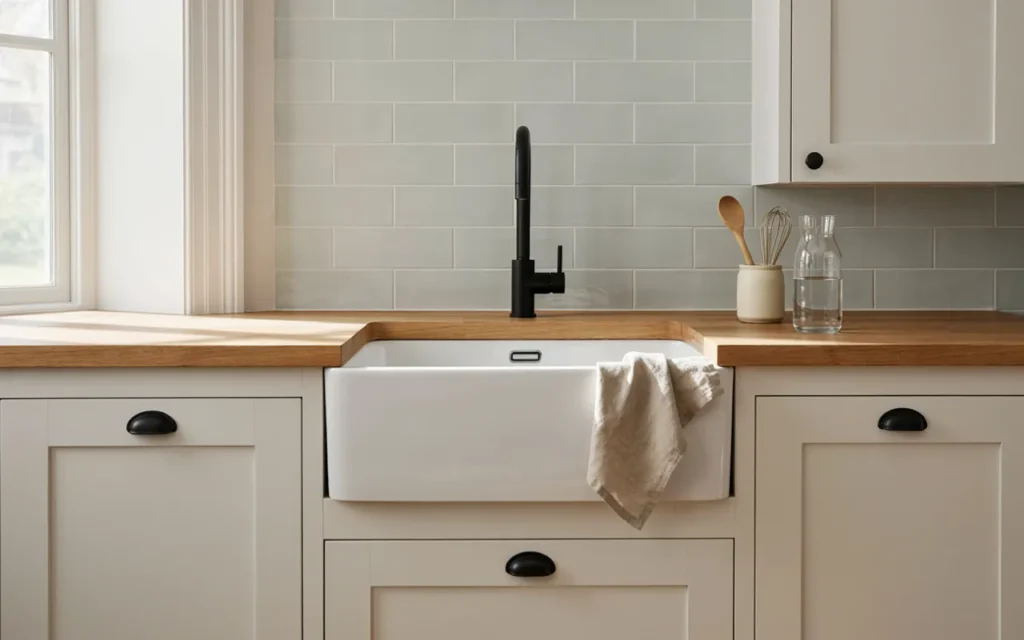
9. Victorian-Style Farmhouse Sink With Minimalist Faucet
A deep, apron-front farmhouse sink has genuine Victorian roots and pairs beautifully with a simple, modern gooseneck or bridge faucet. This combination is one of the easiest ways to nod to the period without committing to a full historic renovation, since it can be added to almost any existing cabinet layout.
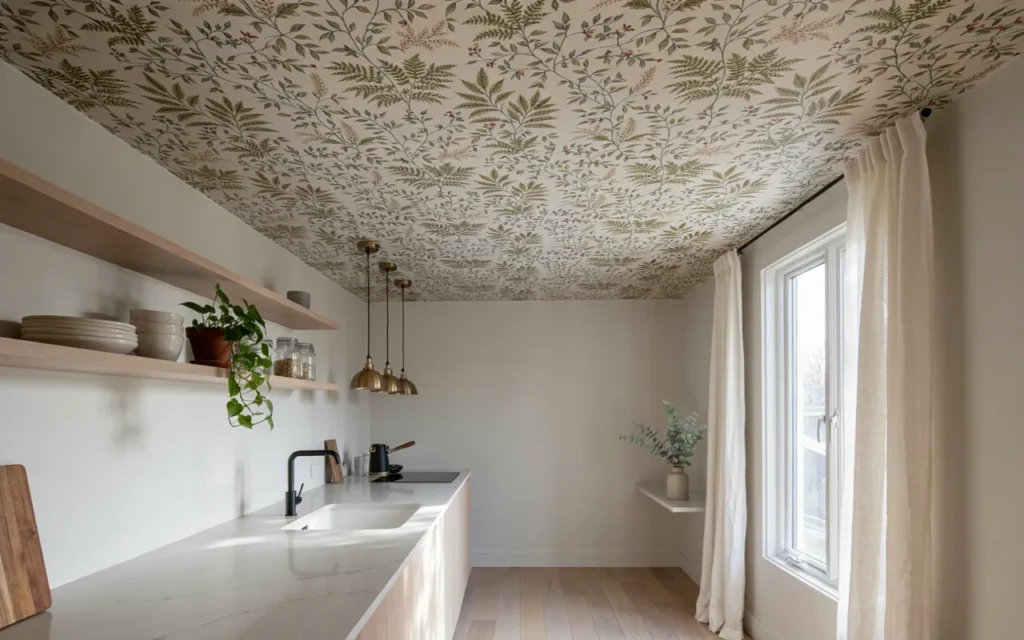
10. Botanical Wallpaper Ceiling With Sleek Quartz Countertops
For a bolder statement, apply a botanical or floral Victorian-style wallpaper to the ceiling instead of the walls, keeping the walls and cabinetry a simple neutral tone. The unexpected placement adds drama and pattern overhead while the quartz countertops and streamlined cabinets below keep the room feeling current and easy to maintain.
11. Reclaimed Wood Island in a Painted Victorian Kitchen
A reclaimed or raw wood island brings warmth and texture into an otherwise painted, more formal Victorian-style kitchen. The contrast between the rustic wood grain and the crisp painted cabinetry surrounding it creates a lived-in, collected-over-time feel that suits older homes particularly well.
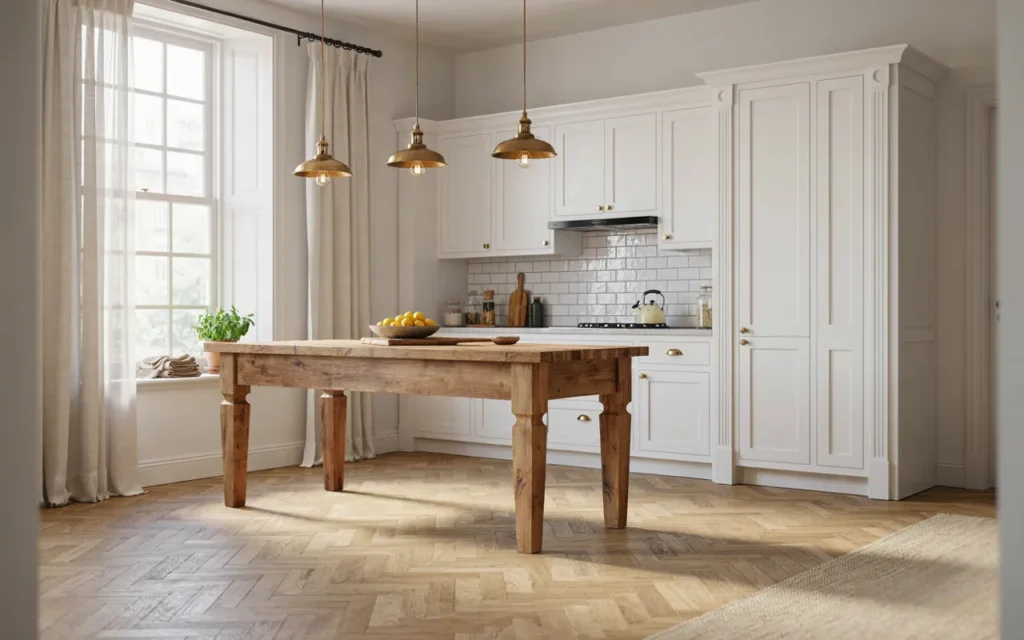
12. Statement Pendant Lighting Bridging Old and New
Lighting is one of the most effective ways to modernize a Victorian kitchen without touching the architecture at all. A cluster of sculptural glass or brass pendant lights above an island or sink instantly signals “current” while still complementing the ornate details of the surrounding room.
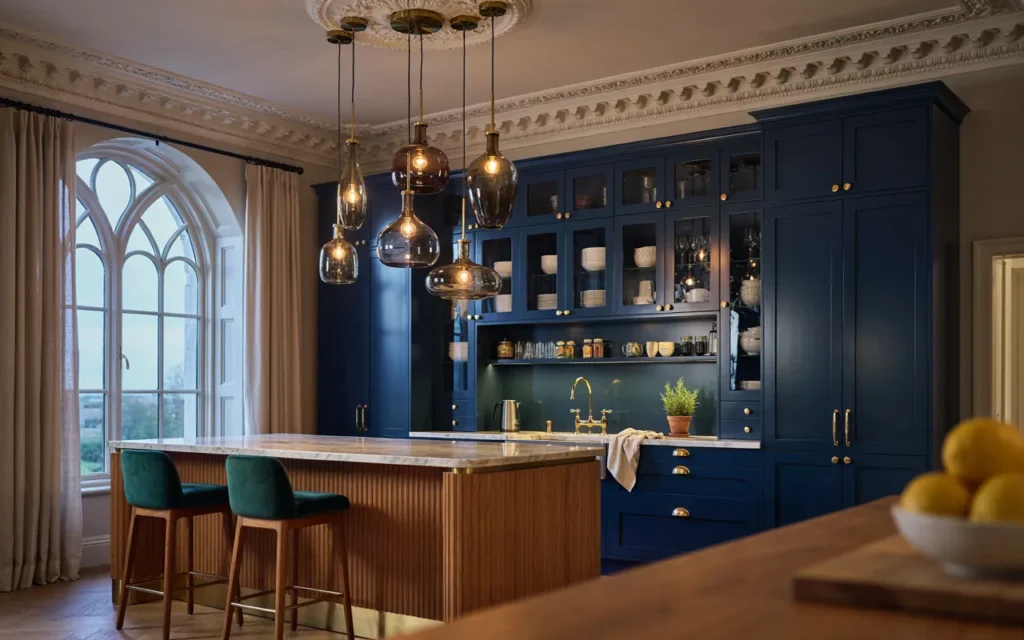
How to Layer Vintage and Contemporary Details
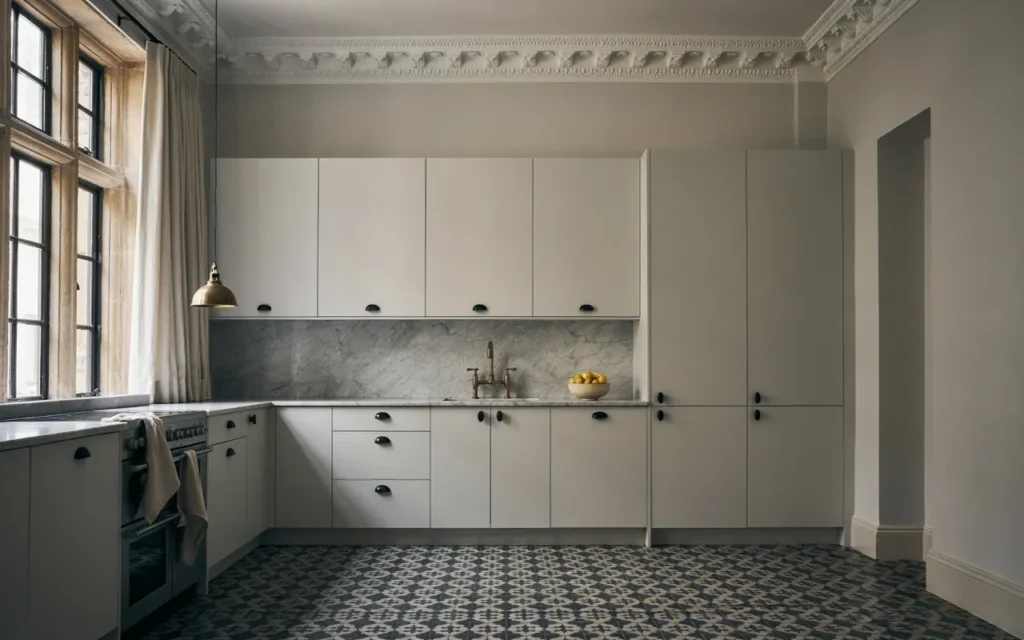
The kitchens that read as intentionally Victorian-modern, rather than accidentally mismatched, tend to follow a simple layering principle: one architectural or structural Victorian element, one modern material update, and one contemporary lighting or hardware choice. For example, pairing original crown molding with sleek white cabinetry and matte black hardware hits all three categories without feeling like two different design eras collided by accident.
Texture also plays a bigger role than most people expect. Combining a few raw or aged materials unlacquered brass that will patina over time, reclaimed wood, or honed rather than polished stone with crisp, modern paint colors keeps the space from feeling either too sterile or too costume-like. Aim for a consistent finish family throughout the room, whether that’s warm brass and wood tones or cooler black and marble tones, rather than mixing several competing metal finishes and wood tones in the same space.
Pattern deserves the same restraint. A kitchen that combines patterned floor tile, patterned wallpaper, and a patterned backsplash all at once will almost always feel busy rather than curated, even if each individual choice is beautiful on its own. Choosing one dominant pattern most often the floor or a single accent wall and keeping every other surface solid or lightly textured gives the eye a place to rest and lets that one Victorian detail feel like a deliberate statement rather than visual noise.
Common Mistakes When Mixing Victorian and Modern Styles
- Removing too many original details. Stripping out every piece of molding, paneling, or original tile in favor of a fully modern kitchen often erases the very character that made the home appealing in the first place.
- Going too far in the other direction. Trying to recreate an exact period kitchen can feel more like a museum exhibit than a livable, modern space, especially if it sacrifices storage and workflow.
- Mixing too many metal finishes. Combining brass, chrome, matte black, and nickel in the same kitchen usually reads as unplanned rather than intentionally eclectic. Pick one or two finishes and stay consistent.
- Choosing reproduction materials that look artificial. Faux encaustic tile or plastic beadboard can undercut the authenticity of the whole design; genuine materials, even in smaller amounts, tend to look far more convincing.
- Ignoring the kitchen’s actual layout needs. A beautiful design that doesn’t account for storage, counter space, or workflow will feel impractical no matter how well the Victorian and modern elements are balanced.
Frequently Asked Questions
What defines a Victorian-modern kitchen style? It’s a design approach that keeps authentic Victorian architectural details molding, paneling, fireplaces, patterned tile while updating cabinetry, lighting, and materials with cleaner, more contemporary finishes for everyday functionality.
What colors work best for a Victorian kitchen with a modern twist? Deep, saturated colors like emerald green, navy, and burgundy pair well with crisp white or cream as a base, while brass or matte black hardware helps bridge the historic and modern elements together.
Can I add a Victorian-style kitchen to a home that isn’t originally Victorian? Yes many homeowners recreate this look in newer homes using architectural details like picture rail molding, beadboard paneling, and reproduction encaustic tile, though it’s worth choosing high-quality materials so the look feels intentional rather than themed.
Is it expensive to blend Victorian and modern kitchen styles? It depends on how much original architecture you’re preserving versus recreating. Keeping and restoring existing details, like an original fireplace or molding, is often more affordable than trying to reproduce them from scratch, while the modern updates cabinetry, countertops, lighting can be scaled to fit almost any budget.
Should I keep original Victorian features even if they’re not in perfect condition? In most cases, yes. Restoring a slightly worn original mantel, radiator, or molding usually preserves more character and value than replacing it with a new reproduction, even if it takes a bit more time and cost upfront.
What kind of lighting works best in a Victorian-modern kitchen? A mix of one statement fixture, such as a sculptural pendant light or chandelier, combined with simple, functional under-cabinet or recessed lighting tends to balance historic elegance with everyday practicality.
How do I keep a Victorian-modern kitchen from feeling too dark? Balance any deep, saturated cabinet colors with plenty of white or light-toned walls, ceilings, and countertops, and make sure the room has strong natural light or layered artificial lighting to prevent it from feeling heavy.
What’s the easiest way to start a Victorian-modern kitchen renovation on a budget? Start with hardware and lighting updates, such as swapping in brass or matte black fixtures and adding a statement pendant light, before committing to larger changes like cabinetry or flooring, since these smaller updates make an immediate visual impact at a lower cost.